
You are sitting at your desk, not on a plane, not diving underwater, and yet your ear keeps making that familiar pop. It is distracting, sometimes uncomfortable, and occasionally worrying. You are not imagining it, and you are definitely not alone.
Ear popping is one of the most common ear-related complaints people search for online. For most people, it happens occasionally and goes away on its own. But when it becomes frequent or painful, it raises a fair question: what is actually going on inside your ear?
This guide breaks it all down in simple, straightforward language so you know exactly why it happens, what you can do about it, and when it is time to call a doctor.
What Actually Happens When Your Ear Pops?
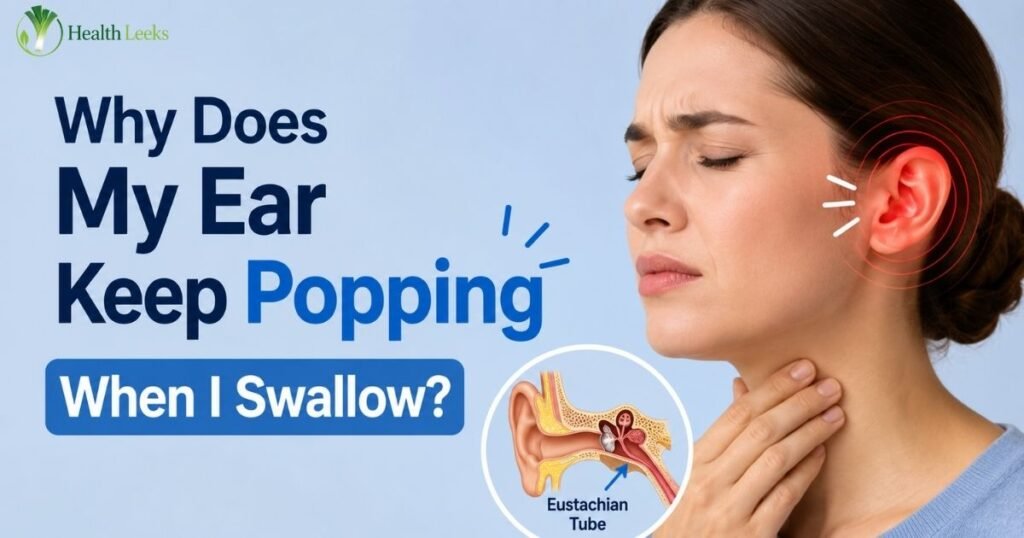
The popping sensation you feel is directly linked to a small structure called the Eustachian tube. This narrow passageway connects your middle ear to the back of your nose and throat. Its main job is to equalize air pressure on both sides of your eardrum and help drain any fluid that collects in the middle ear.
Under normal conditions, the Eustachian tube stays closed. It opens briefly when you swallow, yawn, or chew. That brief opening allows air to flow in or out, balancing the pressure difference between your middle ear and the outside environment.
When that pressure equalizes, you feel or hear a pop. Think of it like a tiny pressure valve releasing. This is completely normal and happens dozens of times a day without you even noticing.
The problem starts when the Eustachian tube does not open and close smoothly as it should. That is when the popping becomes persistent, uncomfortable, or paired with other symptoms like muffled hearing or a feeling of fullness in the ear.
Is Ear Popping Normal?
Yes, in most cases, ear popping is completely normal. Every time you swallow or yawn, your Eustachian tube opens for a split second. This is your body doing exactly what it is designed to do.
You are most likely to notice it in situations like:
- Flying in an airplane during takeoff or landing
- Driving through mountain roads or hilly terrain
- Riding fast elevators in tall buildings
- Scuba diving or swimming in deep water
In these situations, the change in altitude or water pressure forces your Eustachian tube to work harder than usual, making the pop more noticeable.
Occasional popping without pain or hearing changes is nothing to worry about. However, when your ear keeps popping repeatedly throughout the day, especially when you are not changing altitude, that is worth paying closer attention to.
What Causes Popping in the Ear When You Are Not Changing Altitude?
If altitude is not the trigger, something else is likely affecting how your Eustachian tube functions. Here are the most common culprits:
1. Eustachian Tube Dysfunction (ETD) This is the leading cause of persistent ear popping. When the Eustachian tube becomes inflamed, blocked, or fails to open and close properly, pressure builds up inside the middle ear. This leads to repeated popping, a clogged sensation, muffled hearing, and sometimes mild ear pain.
2. Earwax Buildup Excess earwax can partially block the ear canal and affect how pressure is regulated. This can contribute to frequent popping or crackling sounds.
3. Sinus Infections and Nasal Congestion Your sinuses and Eustachian tubes are closely connected. When your sinuses are inflamed due to a cold, flu, or bacterial infection, the mucus can block the Eustachian tube opening. This prevents normal pressure equalization and leads to that stuck, popping feeling.
4. Allergies Seasonal or year-round allergies cause swelling and increased mucus production in the nasal passages. This directly affects Eustachian tube function, triggering ear fullness and popping.
5. TMJ Disorders The temporomandibular joint (jaw joint) sits just in front of your ear canal. When this joint is inflamed, misaligned, or under tension from teeth grinding, it can create pressure and clicking or popping sensations in the ear.
6. Middle Ear Infections (Otitis Media) Fluid buildup from an ear infection can block the Eustachian tube and cause constant pressure, pain, and popping.
7. Middle Ear Myoclonus This is a rare condition where tiny muscles inside the middle ear spasm involuntarily, causing rhythmic clicking or popping sounds. It is usually harmless but can be quite bothersome.
Why Does My Ear Keep Popping When I Swallow?
Swallowing is one of the main actions that causes your Eustachian tube to open. The muscles at the back of your throat, particularly a muscle called the tensor veli palatini, contract during swallowing and pull open the tube momentarily.
For most people, this is a barely noticeable background process. But if your Eustachian tube is partially blocked or inflamed, every swallow becomes a noticeable pop. This is because the tube is struggling to equalize pressure that has built up inside the middle ear.
Common reasons your ear pops specifically when you swallow include:
- Nasal congestion from a cold, sinus infection, or allergy
- Mucus partially blocking the Eustachian tube opening
- Irritation or swelling in the back of the throat
- Acid reflux, which can reach the nasopharynx and irritate the Eustachian tube
If you notice it happens every single time you swallow and it has been going on for more than a week, it is worth getting it checked by a healthcare provider.
How to Cure Ear Popping When Swallowing
The right approach depends on what is causing the problem. If congestion, allergies, or mild Eustachian tube dysfunction is to blame, several home-based strategies can offer real relief.
Quick Home Techniques to Ease It
The Valsalva Maneuver Take a deep breath, close your mouth, pinch your nostrils shut, and gently blow out through your nose. You should feel a pop as air is forced up into the Eustachian tube. Do this gently to avoid putting too much pressure on the eardrum. It helps to sit down first, as it can occasionally cause mild dizziness.
The Toynbee Maneuver Pinch your nose closed and swallow at the same time. Taking a sip of water can make this easier. This technique combines nose pinching with the natural muscle activation of swallowing to help open the tube.
Chewing Gum or Swallowing Repeatedly Simple but effective. Chewing gum or deliberately swallowing several times activates the muscles that open the Eustachian tube and can relieve built-up pressure.
Steam Inhalation Inhaling steam from a bowl of hot water (with a towel draped over your head) or a warm shower helps thin mucus in the nasal passages and reduce congestion that may be blocking the Eustachian tube.
Saline Nasal Rinse or Spray Rinsing the nasal passages with a saline solution helps clear mucus, reduce swelling, and restore normal airflow to the Eustachian tube.
Stay Hydrated Drinking enough water keeps mucus thin and easier to move, reducing the chance of blockage in the Eustachian tube.
Over-the-Counter Options If congestion is the root cause, a nasal decongestant spray (such as oxymetazoline) can help in the short term. Antihistamines are useful if allergies are triggering your symptoms. Avoid using decongestant sprays for more than three days in a row, as overuse can cause rebound congestion.
How to Stop the Ear from Popping or Get Rid of That Popping Sound
Getting rid of persistent ear popping means addressing whatever is causing it. Here is a practical plan:
- Treat the root cause first. If you have a cold or sinus infection, manage that with rest, hydration, and appropriate medication. If allergies are involved, antihistamines and nasal steroid sprays can help.
- Try daily Eustachian tube exercises. Yawning deliberately, swallowing repeatedly, or doing the Valsalva maneuver a few times a day can keep pressure balanced.
- Manage earwax properly. If buildup is the issue, use over-the-counter ear drops designed to soften earwax, or see a professional for safe removal. Never use cotton swabs inside the ear canal.
- Address TMJ symptoms. If jaw tension or grinding is involved, a dentist can recommend a night guard or other treatment options.
- Use a humidifier. Dry air can dry out nasal passages and make congestion worse. Keeping indoor humidity at a comfortable level supports healthy Eustachian tube function.
If these steps do not bring relief within a couple of weeks, medical evaluation is the next step.
Is It Bad to Pop Your Ears?
Popping your ears intentionally using gentle techniques like the Valsalva maneuver is generally safe and can provide real relief. When done gently, it simply encourages the Eustachian tube to open and let pressure equalize naturally.
However, there are a few things to keep in mind:
- Never blow too hard. Excessive force can damage the eardrum or push bacteria from the throat into the middle ear, potentially causing an infection.
- Avoid popping repeatedly in quick succession. Doing it too often can irritate the Eustachian tube.
- Do not pop your ears if you have an active ear infection. Wait until the infection clears before attempting any pressure-equalizing maneuvers.
The natural popping that occurs when you swallow or yawn is always safe. It is your body’s own built-in pressure regulation system doing exactly what it is supposed to do.
When Should You See a Doctor?
Most cases of ear popping resolve on their own within a few days, especially if they are tied to a cold, sinus congestion, or a change in altitude. But certain signs indicate you need professional evaluation.
See a doctor if you experience:
- Ear popping that lasts longer than two weeks without improvement
- Ear pain or significant discomfort that does not go away
- Muffled or reduced hearing
- A feeling of fluid or fullness in the ear that persists
- Ringing in the ears (tinnitus) that does not stop
- Dizziness or balance problems
- Ear popping accompanied by fever
- Discharge or fluid coming from the ear
A GP or ENT (ear, nose, and throat) specialist can examine your ear canal, check the eardrum, and use tools like tympanometry to measure pressure inside the middle ear. If needed, they may prescribe antibiotics for infection, recommend steroid nasal sprays, or in persistent cases, discuss procedures like Eustachian tube balloon dilation or placement of tympanostomy tubes (ear tubes) to help with drainage.
Bottom Line
Ear popping happens when your Eustachian tube opens to equalize pressure between your middle ear and the outside world. This is a normal, necessary function. When it becomes frequent or uncomfortable, it usually points to something affecting the Eustachian tube, such as congestion, allergies, earwax, or an ear infection.
Most cases can be managed with simple home techniques like the Valsalva maneuver, staying hydrated, using saline sprays, or taking over-the-counter decongestants. If symptoms stick around for more than a couple of weeks or come with pain, hearing loss, or dizziness, see a healthcare provider sooner rather than later.
Final Thoughts
A popping ear is usually more of an annoyance than a medical emergency. Your body is simply trying to balance pressure, and sometimes it needs a little help. The key is understanding what triggers it so you can address the cause rather than just the symptom.
If you have been dealing with persistent popping and it is affecting your daily life or sleep, do not ignore it. Eustachian tube dysfunction and related conditions are very treatable, and most people find relief with the right approach.
Your ears do a lot for you. A little attention and care goes a long way in keeping them working properly.