
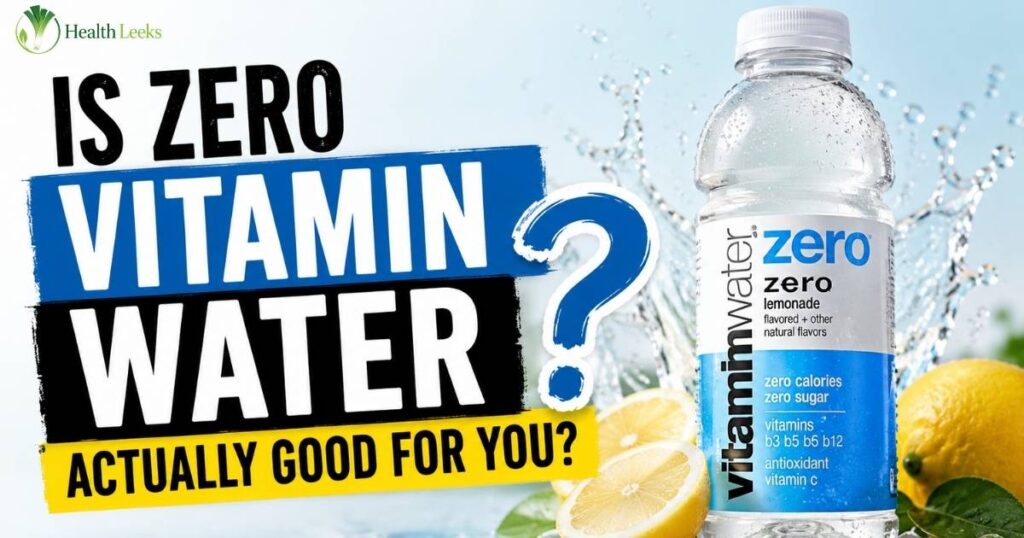
You’ve seen it in every grocery store, gym bag, and office refrigerator. Vitamin Water Zero promises the best of both worlds, great flavor, zero sugar, and a handful of vitamins. Sounds like a smart swap from soda, right? But here’s what the label doesn’t tell you. Beneath the sleek bottle and health-forward branding, there are a few things worth knowing before you make it a daily habit. This article breaks down the real nutrition facts, proven benefits, hidden side effects, and who should actually avoid this drink altogether.
What Is Vitamin Water Zero?
Vitamin Water Zero is a zero-calorie, sugar-free flavored water beverage produced by The Coca-Cola Company. It is the calorie-free version of the original Vitaminwater, which contains cane sugar and roughly 120 calories per bottle.
Instead of sugar, Vitamin Water Zero is sweetened with erythritol (a sugar alcohol) and stevia leaf extract, both plant-derived, low-calorie sweeteners. Each bottle is fortified with B vitamins (B3, B5, B6, B12) and Vitamin C, along with trace electrolytes including potassium, calcium, and magnesium.
It comes in popular flavors like Dragonfruit, Squeezed Lemonade, Acai-Blueberry-Pomegranate, and Rise Orange. On the surface, it looks like a genuinely healthy upgrade. But let’s dig into the actual numbers first.
Vitamin Water Zero Nutrition Facts (Per 20 oz Bottle)
| Nutrient | Amount Per Bottle |
| Calories | 0 |
| Total Sugar | 0g |
| Total Carbohydrates | 4g |
| Protein | 0g |
| Fat | 0g |
| Sodium | Low |
| Vitamin C | 50–100% DV |
| Vitamin B3 (Niacin) | 50–100% DV |
| Vitamin B5 | 50–100% DV |
| Vitamin B6 | 50–100% DV |
| Vitamin B12 | 50–100% DV |
| Potassium | Minimal |
| Calcium | Minimal |
| Magnesium | Minimal |
One thing worth flagging: despite claiming 0 calories, the 4 grams of carbohydrates from erythritol technically yield a small calorie count. Most of it passes through undigested, which is why the label reads zero, but it is not completely inert in the body.
Benefits of Vitamin Water Zero Sugar
Let’s be fair, Vitamin Water Zero does have some real, practical benefits. These are most relevant when you’re comparing it against less healthy drink choices.
Soda Replacement
For people who drink multiple sodas a day, switching to Vitamin Water Zero is a meaningful improvement. You eliminate refined sugar, high-fructose corn syrup, and hundreds of empty calories in one swap. The flavored, slightly sweet taste satisfies the same craving that keeps many people hooked on soda, without the blood sugar spike.
Post-Workout Hydration
After light to moderate exercise, Vitamin Water Zero can help support fluid replenishment. The small amounts of potassium and magnesium contribute to electrolyte balance, though it is worth noting that the electrolyte content is far too low to match a dedicated sports drink. Think of it as a flavored hydration upgrade, not a recovery formula.
Calorie Reduction
Zero calories means zero contribution to your daily energy intake. If you are actively managing your weight and find plain water too bland to drink consistently, Vitamin Water Zero provides a flavorful alternative that keeps total calorie count intact. Over weeks and months, eliminating liquid calories adds up significantly.
Light Vitamin Boost
Each bottle delivers 50 to 100 percent of your daily value for several B vitamins and Vitamin C. For people with poor dietary habits or limited vegetable intake, this can fill a small gap. However, for anyone already eating a reasonably balanced diet, these added vitamins are largely excreted through urine without providing extra benefit.
Is Vitamin Water Better Than Soda?
Yes, but the bar is not very high.
Regular soda is loaded with added sugar, zero nutrients, and directly linked to obesity, type 2 diabetes, and metabolic disease. Vitamin Water Zero, by comparison, has no sugar, no calories, and at least delivers a handful of vitamins. In that direct comparison, Vitamin Water Zero wins without question.
That said, it is still a processed, artificially sweetened beverage. Plain water remains superior for daily hydration. Vitamin Water Zero sits somewhere in the middle, a meaningful improvement over soda but not a health drink by any real standard.
Is Vitamin Water Good When Sick?
Many people reach for Vitamin Water Zero during a cold or flu, reasoning that the added vitamins will speed recovery.
The reality is more nuanced. Staying hydrated when sick is genuinely important, and if Vitamin Water Zero encourages you to drink more fluids, that is a positive. The Vitamin C content may provide mild immune support, though research on megadosing Vitamin C for illness prevention or recovery remains mixed.
What it will not do is replace proper medical care, rest, or a nutrient-dense diet. If you enjoy the taste and it keeps you hydrated, it is a reasonable option when sick. Just do not expect it to act like medicine.
Vitamin Water Side Effects You Should Know About
This is where most marketing stops talking, and where this article starts.
Digestive Discomfort
Erythritol, the primary sweetener in Vitamin Water Zero, is a sugar alcohol. In higher amounts, it can cause bloating, gas, loose stools, and abdominal cramping, particularly in people with sensitive digestive systems or irritable bowel syndrome. The threshold varies per person, but consuming multiple bottles in a day raises the risk considerably.
Increased Sugar Cravings
Sweet-tasting beverages, even zero-calorie ones, can condition your brain to expect sweetness with every drink. Over time, this can increase cravings for sugary foods, stimulate appetite, and potentially undermine calorie-reduction goals. Several studies suggest artificial sweeteners may reinforce the brain’s reward response to sweetness rather than reducing it.
Dental Enamel Erosion
Vitamin Water Zero contains citric acid as a flavoring agent. Citric acid is erosive to tooth enamel with repeated exposure, especially when sipped slowly throughout the day. This does not make it as damaging as cola, but it is more acidic than plain water and should not be treated as enamel-safe by default.
Cardiovascular Concern (Emerging Research)
Emerging research, including a notable 2023 study published in Nature Medicine, has raised questions about erythritol’s potential link to cardiovascular risk, including platelet clotting. The research is early and not conclusive, but it is worth watching, particularly for individuals who already carry cardiovascular risk factors.
Limited Vitamin Absorption
The vitamins in Vitamin Water Zero are synthetic, water-soluble, and delivered in a liquid medium. B vitamins and Vitamin C can degrade when exposed to water, heat, and light over time. Additionally, fat-soluble vitamins require dietary fat for proper absorption, something that is absent from a bottled water drink. In short, the vitamin content may be less bioavailable than the label suggests.
Is Vitamin Water Zero Sugar Good for Diabetics?
This is one of the most frequently asked questions, and the answer requires nuance.
Stevia and erythritol do not cause significant blood glucose spikes on their own, which is why Vitamin Water Zero is generally considered a safer choice for people managing diabetes or prediabetes compared to sugary beverages.
However, there are important caveats:
- Sweet-tasting drinks can trigger appetite and food cravings, which complicates blood sugar management over time.
- Some research suggests that even zero-calorie sweeteners may produce a mild insulin response in certain individuals based on taste alone.
- People with diabetic kidney complications should discuss electrolyte intake with their physician before consuming fortified beverages regularly.
The verdict: Vitamin Water Zero is a better option than juice or regular soda for diabetics, but it should still be consumed in moderation. Plain water or herbal teas remain the safest primary beverage choice.
Who Should Avoid Vitamin Water Zero?
While most healthy adults can drink it occasionally without concern, certain groups should be cautious or avoid it altogether.
People with IBS or Gut Sensitivity
Erythritol is a known gut irritant at moderate to high doses. People with IBS, Crohn’s disease, or general digestive sensitivity may experience worsened symptoms including cramping, bloating, and diarrhea.
Those with Cardiovascular Risk Factors
Given emerging research on erythritol and platelet activity, individuals with existing heart disease, a history of stroke, or high cardiovascular risk may want to limit erythritol-containing products until more definitive evidence is available.
Children
Children should primarily hydrate with plain water and obtain their nutrients from whole foods. The synthetic vitamins and artificial sweeteners in Vitamin Water Zero are unnecessary for growing bodies, and the sweet taste can reinforce unhealthy beverage preferences early in life.
People with Kidney Conditions
The potassium and other electrolytes in Vitamin Water Zero, though minimal, can matter for individuals with chronic kidney disease who need to manage electrolyte intake carefully. Always consult a physician before adding fortified beverages to the diet.
Pregnant Women
Pregnant women should be cautious with any product containing artificial sweeteners or synthetic vitamins in amounts that may exceed daily recommendations. The safety profile of stevia and erythritol during pregnancy is not fully established. Medical guidance is recommended.
Anyone with Dental Concerns
The citric acid in Vitamin Water Zero contributes to enamel erosion over time. People with existing enamel damage, sensitivity, or a high cavity risk should limit acidic beverages and rinse with plain water afterward if consumed.
Healthier Alternatives to Vitamin Water Zero
If you are looking for flavorful hydration without the trade-offs, these options deliver genuine benefits with fewer concerns.
Infused Water
Add slices of lemon, cucumber, mint, ginger, or berries to a pitcher of water. You get natural flavor, trace antioxidants, and real hydration, zero additives, zero sweeteners, and zero processing.
Coconut Water
Natural coconut water contains real electrolytes including potassium and magnesium, light natural sugars, and a pleasant taste. It is best consumed in moderation due to natural sugar content but offers genuinely functional hydration, especially after exercise.
Herbal Teas (Iced or Hot)
Chamomile, hibiscus, peppermint, and green tea offer antioxidants, natural flavor, and hydration with no artificial sweeteners or additives needed. Iced herbal tea is one of the most underrated refreshing drinks available.
Sparkling Water
Plain sparkling water satisfies the craving for carbonation and texture that many people associate with soda. Add a squeeze of fresh citrus for flavor. Check labels to avoid versions with added sweeteners or flavoring agents.
FAQ’s
Is Vitamin Water Zero actually healthy?
It is healthier than regular soda, but it is not a truly healthy beverage. It is best viewed as an occasional drink rather than a daily staple.
Can you drink Vitamin Water Zero every day?
It is generally safe in moderation, but daily consumption may expose you to repeated doses of erythritol and synthetic vitamins that offer little added value if your diet is already balanced.
Does Vitamin Water Zero break a fast?
With zero calories, it technically does not break a caloric fast, but the sweet taste may trigger an insulin response in some individuals, which matters for metabolic fasting purposes.
Is Vitamin Water Zero good for weight loss?
Zero calories means it does not directly contribute to weight gain. However, sweetened beverages can increase sugar cravings, which may indirectly affect dietary choices.
Does Vitamin Water Zero have caffeine?
No. Vitamin Water Zero does not contain caffeine.
Is Vitamin Water Zero safe during pregnancy?
It is best to consult your OB-GYN. The safety of artificial sweeteners during pregnancy is not fully confirmed.
Conclusion
Vitamin Water Zero is not the villain, but it is not the hero its marketing makes it out to be either. It is a useful transitional drink for people quitting soda, a passable hydration option for those who dislike plain water, and a reasonable choice in moderation for most adults.
But it is still a processed beverage with artificial sweeteners, synthetic vitamins, acidic additives, and emerging questions around one of its key ingredients. For everyday hydration, plain water, infused water, and herbal teas remain the smarter long-term choices. Drink it occasionally. Enjoy the flavor. Just do not mistake the label for a health guarantee.