
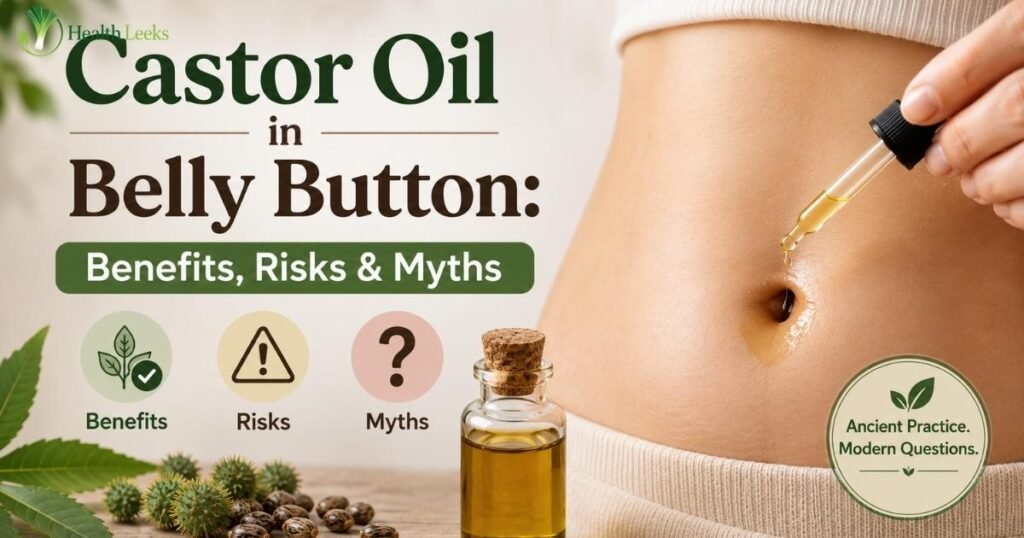
If you have been scrolling through TikTok or wellness blogs lately, chances are you have come across videos of people dripping castor oil into their belly buttons before bed. Some swear it cures bloating. Others claim it helped them sleep better, lose weight, or ease period cramps. But what is really going on here, and how much of it holds up?
This article cuts through the noise. You will get a clear, honest look at what the practice involves, what benefits are realistic, what side effects to watch for, and which claims are simply not supported by science. Whether you are a curious first-timer or someone who has already started using it, this guide gives you everything you need to make an informed decision.
What Happens When You Put Castor Oil in the Belly Button?
When you apply castor oil to your navel, the oil sits on the skin surface and is partially absorbed through the surrounding skin. This is a standard process of topical absorption, nothing more extraordinary than applying any other oil to your body.
The practice is rooted in Ayurveda, an ancient Indian healing system thousands of years old. In Ayurvedic tradition, the navel (called the “nabhi”) is considered a vital energy center connected to countless nerve pathways throughout the body. A concept often associated with this practice is the “Pechoti method,” based on the belief that a gland behind the belly button, known as the Pechoti gland, can absorb oils and deliver them to internal organs through a network of veins and nerves.
Here is the important part: modern anatomy does not recognize the existence of a Pechoti gland. The belly button is, scientifically speaking, a healed scar left behind after the umbilical cord is removed at birth. There are no direct blood vessels connecting it to your digestive system, liver, or hormones.
That said, castor oil itself is a powerhouse topical oil. It is made up of roughly 90% ricinoleic acid, a fatty acid with well-documented anti-inflammatory and antimicrobial properties. The skin around the navel can absorb this oil to a limited, localized extent, and the act of massaging the abdomen has its own benefits. Those two factors together may explain why many people genuinely feel better after the practice.
Benefits of Castor Oil in Belly Button
For Skin and Hydration
Castor oil is a thick, occlusive moisturizer, which means it works by forming a protective barrier over the skin to lock in moisture. When applied around the navel area, it can soften dry, rough skin and improve overall texture.
The ricinoleic acid in castor oil also has antimicrobial properties that may help keep the belly button area clean and reduce the buildup of bacteria in skin folds. Because the navel is a deep, often-overlooked area, it is prone to dryness and minor irritation. A few drops of castor oil regularly can help address that.
Research has also shown castor oil may reduce the appearance of dark spots and improve skin elasticity when applied topically, making it a useful addition to a basic skincare routine.
For Digestion and Constipation Relief
This is one of the most talked-about benefits of navel oiling. While applying castor oil to the belly button will not act as an internal laxative (that only happens when it is taken orally), the abdominal massage that typically accompanies navel oiling does have real value.
Studies have found that abdominal massage can help stimulate bowel movements, reduce bloating, and ease mild constipation. When you rub oil around your navel in circular motions, you are essentially performing a gentle abdominal massage, which may activate the digestive system and support gut movement. Any digestive relief is likely coming from the massage itself rather than the oil penetrating your organs.
For Better Sleep and Relaxation
Many people report that applying warm castor oil to the belly button before bed helps them fall asleep faster and feel more relaxed. There is a credible explanation for this.
A warm oil massage stimulates the parasympathetic nervous system, which is the part of your nervous system responsible for the “rest and digest” state. When you slow down, apply warm oil, and massage your abdomen, your body gets a clear signal to wind down. This kind of intentional self-care ritual before sleep has recognized stress-reduction value independent of which oil you use. Castor oil’s warming sensation may enhance this calming effect.
For Women’s Health
Some women use castor oil on the navel to help ease menstrual cramps, reduce PMS symptoms, and support overall reproductive comfort. Because the navel is located near the lower abdominal region, warm oil applied with gentle massage may help relax the surrounding muscles and reduce the sensation of cramping.
Castor oil’s anti-inflammatory properties may also contribute to reduced discomfort during menstruation. This is not a cure for menstrual disorders, but as a complementary self-care practice, many women find it genuinely helpful.
One important caution: pregnant women should avoid applying castor oil to the belly or navel without consulting a doctor first. Castor oil is a known uterine stimulant and may pose risks during pregnancy.
Castor Oil in Belly Button for Weight Loss
Let us be direct about this one. Castor oil applied to the belly button does not cause fat loss. There is no scientific evidence to support this claim, and institutions like MD Anderson Cancer Center have specifically stated that castor oil is not an effective weight-loss aid.
What castor oil may do is reduce bloating through abdominal massage, which can make the stomach appear flatter temporarily. Some people also notice reduced water retention. These effects can feel significant, but they are not the same as actual fat loss. For sustainable weight management, a balanced diet and regular physical activity remain the only proven approaches.
How to Apply Castor Oil in Belly Button (Step-by-Step Guide)
Applying castor oil to your belly button is simple and takes only a few minutes. Here is how to do it correctly:
- Choose the right oil. Always use cold-pressed, hexane-free, organic castor oil. Processed or low-quality oils may contain additives that irritate the skin.
- Clean the area. Before applying, gently clean your belly button with warm water and a cotton swab. Pat it dry thoroughly. Moisture trapped in the navel can encourage bacterial growth.
- Do a patch test first. Apply a small amount of castor oil to your inner wrist or elbow and wait 24 hours. If no redness or itching appears, you are likely not sensitive to it.
- Apply 2 to 3 drops. Use a dropper or your fingertip to place 2-3 drops of castor oil directly into the navel. You do not need more than this.
- Massage in circular motions. Using your fingertip, gently massage the oil around the belly button and outward in slow circular motions for 2 to 5 minutes.
- Leave it overnight. For best results, apply before bed and allow the oil to absorb overnight. If you are worried about staining your sheets, place a small piece of cotton gauze or a bandage over the navel after application.
- Repeat consistently. Most people apply castor oil to the belly button 3 to 5 nights per week for ongoing benefits.
Castor Oil in Belly Button Before and After: What to Expect
Results from navel oiling are gradual and subtle. Here is a realistic timeline of what most people experience:
In the first few days: The skin around the navel may feel softer and more hydrated. Some people notice a slight warming sensation during massage.
After 1 to 2 weeks: Those using it as part of a bedtime routine often report falling asleep more easily and feeling less tense. Women with menstrual discomfort may notice some reduction in cramping.
After 3 to 4 weeks: Consistent users often report less bloating, improved skin texture around the navel area, and a more established relaxation routine.
What you will not see: dramatic weight loss, detoxified organs, or reversal of hormonal imbalances. Managing expectations is key. This practice works best as a supportive wellness habit, not a medical treatment.
Does Castor Oil in Belly Button Work?
The honest answer is: it depends on what you are hoping for.
Castor oil is proven to work as a topical moisturizer, an oral laxative (when ingested), and a source of anti-inflammatory ricinoleic acid on the skin. These are evidence-backed properties.
When applied to the belly button specifically, the most credible benefits come from:
- The moisturizing effect of the oil on surrounding skin
- The relaxation triggered by warm abdominal massage
- Mild digestive stimulation from the massage itself
- Improved sleep quality through a calming pre-bed ritual
What the science does not support is the idea that castor oil travels through the navel into your bloodstream and directly heals organs. The belly button is a scar, not a gateway. However, that does not mean the practice is without value. Many people experience genuine improvements in how they feel, even if the mechanism is different from what traditional claims suggest.
Side Effects of Applying Castor Oil to the Belly Button
While castor oil is generally safe for most adults when used topically, there are some side effects and precautions to keep in mind:
- Skin irritation. Some people experience redness, itching, or a localized rash, particularly those with sensitive skin. Always do a patch test before your first full application.
- Allergic reactions. Contact dermatitis is possible though rare. If you notice swelling, hives, or persistent itching, discontinue use immediately.
- Pore clogging. Castor oil is extremely thick. Using too much, too often, can clog pores around the navel and lead to minor skin congestion or breakouts.
- Bacterial buildup. If the belly button is not cleaned properly before application, trapping oil in a dirty navel can encourage bacterial or fungal growth.
- Staining. Castor oil is thick and deeply pigmented. It will stain fabric. Use old clothing or cover the area after application.
- Pregnancy risk. Castor oil is a uterine stimulant. Pregnant women should avoid applying it near the abdomen without medical guidance.
- Not suitable for open wounds or infections. If you have any cuts, infections, or active skin conditions near the navel, avoid this practice until fully healed.
Castor Oil Belly Button Detox: Myth vs Fact
The detox claim is one of the most viral aspects of the navel oiling trend, and it deserves a clear-eyed breakdown.
The Myth: Applying castor oil to the belly button detoxifies your liver, kidneys, and digestive system by sending the oil’s healing properties directly into your body through the navel.
The Fact: Your body does not detoxify through your belly button. Your liver and kidneys are responsible for filtering toxins, and they do this work continuously without needing topical oils. No amount of castor oil applied to the outside of your body will accelerate that process.
What may actually be happening: Castor oil can support digestive comfort and reduce bloating when combined with abdominal massage. It moisturizes and soothes the skin. The ritual itself promotes relaxation, which reduces cortisol levels and supports overall well-being. These effects can genuinely make a person feel healthier and lighter. That is not detox in the medical sense, but it is still a real benefit.
The bottom line: treat navel oiling as a soothing wellness practice, not a cleanse.
Summary
Castor oil in the belly button is an ancient Ayurvedic practice that has gone viral for good reason: it is simple, affordable, low-risk, and many people genuinely find it helpful. But understanding what it can and cannot do is essential.
It can moisturize skin, support relaxation, aid sleep, ease menstrual cramps, and provide mild digestive comfort through abdominal massage. It cannot detoxify your organs, trigger fat loss, or replace medical treatment for any condition.
The Pechoti gland theory has no scientific foundation, and the “detox” narrative is not supported by evidence. But used with realistic expectations, this practice is a low-cost, relaxing addition to a wellness routine that many people find genuinely beneficial.
Always use cold-pressed, organic castor oil. Do a patch test before starting. Avoid it during pregnancy. And if you have persistent digestive, hormonal, or skin issues, speak with a healthcare provider rather than relying on navel oiling alone.