
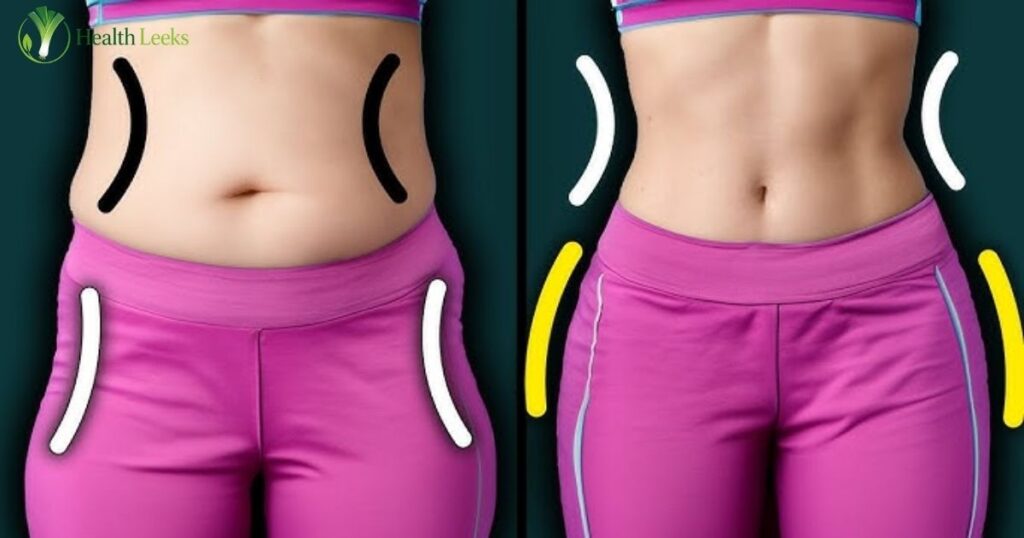
If you have ever stood in front of a mirror wondering why your hips look a certain way, you are not alone. Two of the most searched body shape concerns today are hip dips and love handles. People often confuse the two because they appear in the same general region, around the waist and hips. However, they are fundamentally different in their causes and require completely different approaches to address them.
Mixing up hip dips with love handles can lead to wasted time, frustration, and ineffective fitness strategies. This guide breaks down exactly what each one is, why they form, how they differ, and what you can realistically do about them, all backed by current understanding of anatomy, fat distribution, and fitness science.
What Are Hip Dips?
Hip dips, also called violin hips, high hips, or Venus knots, are the natural inward curves that appear on the outer sides of the hips, just below the hip bone. They create a concave or “dipped” appearance between the iliac crest (your hip bone) and the greater trochanter (the top of your femur or thigh bone).
The key thing to understand is that hip dips are a structural feature, not a fat deposit. They exist because of the way your pelvis is shaped and how high or wide your hip bones sit. Some people have a more pronounced gap between the hip bone and thigh, which makes the dip more visible. Others have a narrower gap that makes it barely noticeable.
Here is what primarily causes hip dips:
- The shape and width of your pelvis
- The distance between your hip bone and femur
- Your natural muscle and fat distribution around the hips and glutes
- Genetics and inherited skeletal structure
Hip dips can be visible on people of all body types, including athletes with very low body fat. They are simply part of the body’s natural anatomical blueprint.
Are Hip Dips Unhealthy?
No. Hip dips are not a sign of poor health, excess weight, or low fitness. They are a completely normal anatomical variation. Their visibility has nothing to do with your diet, exercise habits, or lifestyle. Social media trends have unfortunately framed hip dips as a “problem,” but from a medical and physiological standpoint, they are simply the result of bone structure, something no diet or workout can change.
What Are Love Handles?
Love handles, commonly called a muffin top, refer to the pockets of excess fat that accumulate along the sides of the waist, just above the hips, and can extend toward the lower back. Unlike hip dips, love handles are a fat-based feature, not a structural one.
They sit higher up than hip dips and become especially noticeable when wearing tight-fitting clothing, as the soft fat bulges over the waistband. Love handles are made up of subcutaneous fat, the type stored just beneath the skin, and are one of the more stubborn areas for fat loss due to hormonal and genetic influences on fat distribution.
Causes of Love Handles
Love handles do not appear from a single cause. They typically develop from a combination of factors:
- Excess calorie intake: Consistently eating more calories than your body burns leads to fat storage, often in the abdominal and waist region.
- Sedentary lifestyle: Long hours of sitting and low physical activity reduce calorie burn and encourage fat accumulation around the midsection.
- Genetics: Your genes significantly determine where your body prefers to store fat. Some people are genetically predisposed to carry more fat around the waist.
- Hormonal changes: Elevated cortisol from chronic stress signals the body to store fat around the abdomen. Insulin resistance and hormonal imbalances during aging also contribute.
- Poor sleep: Inadequate sleep disrupts hunger hormones like ghrelin and leptin, increasing appetite and promoting fat gain around the midsection.
- Age: Metabolism naturally slows with age, and fat tends to redistribute toward the waist.
Are Love Handles Harmful?
Love handles themselves are not immediately dangerous, but excess fat around the waist, particularly visceral fat near the organs, is associated with a higher risk of cardiovascular disease, type 2 diabetes, and metabolic syndrome. Monitoring waist circumference alongside overall body composition is a useful health indicator beyond just aesthetics.
Hip Dips vs. Love Handles: The Key Differences
| Feature | Hip Dips | Love Handles |
| Cause | Bone structure and pelvis shape | Excess subcutaneous fat |
| Location | Below the hip bone, on the outer thigh | Above the hip, sides of the waist |
| Texture | Firm indentation | Soft, pinchable fat |
| Affected by weight? | No | Yes |
| Can be reduced with diet? | No | Yes |
| Can exercises eliminate it? | No (only minimize appearance) | Partially, combined with diet |
The simplest way to tell them apart is this: press your fingers into the area of concern. If it feels like a hollow indent with no pinchable fat, it is likely a hip dip. If you can pinch soft tissue there, you are likely dealing with love handles.
Can You Get Rid of Hip Dips?
This is where many people are misled. Because hip dips are determined by bone structure, you cannot eliminate them through diet or exercise. No amount of weight loss or glute training will change the shape of your pelvis. However, building muscle in the right areas can soften their appearance significantlyHow to Minimize the Appearance of Hip Dips
The goal is to add volume and fullness to the muscles surrounding the dip, particularly the gluteus medius, gluteus minimus, and tensor fasciae latae (TFL). When these muscles are well developed, they can reduce how pronounced the indentation appears.
Effective exercises for filling out hip dips include:
- Hip thrusts and glute bridges, target the gluteus maximus and medius
- Side-lying leg raises, directly engage the gluteus medius
- Clamshells, activate the hip abductors and gluteus medius
- Lateral lunges and sumo squats, build outer glute and hip width
- Cable hip abductions, isolate the gluteus medius for targeted hypertrophy
Consistency with progressive overload, gradually increasing resistance over time, is the key to seeing meaningful change in muscle volume.
Building Muscle vs. Spot Reduction
It is critical to understand that spot reduction is a myth. You cannot selectively burn fat from one specific area by exercising it. The only way to “fill” a hip dip naturally is by building muscle mass in the surrounding area, not by losing fat. Fat loss occurs systemically across the whole body. This distinction will save you months of misdirected effort.
Can You Get Rid of Love Handles?
Yes, unlike hip dips, love handles can be meaningfully reduced because they are fat deposits, not structural features. The strategy is straightforward in concept but requires consistency: create a calorie deficit through a combination of improved nutrition, cardiovascular training, and strength exercises that support overall fat loss.
There is no shortcut, and no exercise will burn love handle fat in isolation. But with a sustained, well-rounded approach, noticeable reduction is absolutely achievable.
Targeted Exercises for Love Handles
While spot reduction is not possible, certain exercises strengthen and tone the oblique muscles that lie beneath the love handle fat. As overall body fat decreases, a toned oblique region will appear far more defined.
Top exercises to include in your routine:
- Side planks: Lie on your side, prop up on one forearm, and lift your hips off the floor. Hold for 20 to 30 seconds per side. This deeply engages the lateral core and obliques.
- Russian twists: Sit with knees bent, lean back slightly, and rotate your torso from side to side, holding a weight for added resistance.
- Bicycle crunches: Lie on your back, and bring the opposite elbow toward the opposite knee in a pedaling motion, engaging both the obliques and upper abs.
- Woodchoppers: Using a dumbbell or cable, perform a diagonal chopping motion across your body. This activates the rotational core muscles intensely.
- Mountain climbers: In a high plank position, drive alternate knees toward your chest at pace. This burns calories while engaging the core.
- Plank with hip dips: From a forearm plank, rotate your hips slowly to each side without touching the floor. This directly targets the oblique stabilizers.
Aim for 3 sets of 12 to 15 reps per exercise, three to five times per week, combined with cardio sessions for maximum effect.
Other Factors to Consider
Exercise alone will not remove love handles if your nutrition is not aligned. You must be in a consistent calorie deficit for fat loss to occur. Additionally, managing cortisol through stress reduction, prioritizing 7 to 9 hours of sleep per night, and staying well hydrated all play measurable roles in how quickly the body sheds fat from stubborn areas like the waist.
Natural Ways to Enhance Your Body Shape
Whether you are working on hip dips, love handles, or simply want to feel more confident in your body, a holistic approach always delivers the most sustainable results.
1. Glute and Hip Strengthening
Exercises like glute bridges, hip thrusts, clamshells, and lateral band walks build the muscles around the hips and glutes. This not only improves your overall silhouette but also reduces the visual impact of hip dips by adding volume and roundness to the outer hip area.
2. Core Workouts for a Toned Waistline
A strong core supports your posture and helps define your waistline. Incorporate planks, dead bugs, Russian twists, and side planks regularly. A well-conditioned core creates a naturally slimmer, more sculpted mid-section over time.
3. Cardio and Full-Body Fat Loss
No targeted workout eliminates fat without a calorie deficit. Activities like running, cycling, swimming, jump rope, and HIIT (high-intensity interval training) are effective at burning calories and supporting overall fat loss. Aim for at least 150 minutes of moderate-intensity cardio per week, or 75 minutes of vigorous activity.
4. Nutrition for Fat Reduction
Your diet is the single most powerful lever for reducing love handles. Practical guidelines include:
- Prioritize lean protein (chicken, fish, legumes, eggs) to preserve muscle during fat loss
- Increase fiber intake through vegetables, whole grains, and fruits to stay fuller longer
- Reduce ultra-processed foods, added sugars, and refined carbohydrates
- Limit alcohol, which is directly associated with increased abdominal fat storage
- Maintain a moderate calorie deficit of 300 to 500 calories per day for sustainable fat loss
5. Embrace Healthy Lifestyle Habits
Small daily habits compound into significant results over months:
- Hydration: Drink 8 to 10 glasses of water daily to support metabolism and reduce water retention.
- Sleep: Aim for 7 to 9 hours per night. Poor sleep elevates cortisol and hunger hormones, both of which promote abdominal fat gain.
- Stress management: Practice mindfulness, meditation, or light movement like yoga. Chronically high cortisol levels drive fat storage directly to the waist and midsection.
- Consistency over intensity: Showing up regularly with moderate effort beats sporadic, extreme efforts every time.
Are You Dealing with Hip Dips or Love Handles?
Here is a simple self-check to help you identify which one you are dealing with:
You likely have hip dips if:
- The area below your hip bone curves inward visibly
- It feels firm or hollow when you press on it
- It is present regardless of your weight or fitness level
- It does not change size with weight fluctuations
You likely have love handles if:
- You can pinch soft, pliable fat at the sides of your waist
- The area becomes more prominent with weight gain
- It bulges over tight waistbands
- It has gotten larger or smaller with diet changes
You may also have both simultaneously, love handle fat can sit alongside the hip area and exaggerate the visual appearance of hip dips. In that case, a combined approach of glute-building exercises and overall fat loss strategies is ideal.
Conclusion
Hip dips and love handles are two very different body features that are frequently confused. Hip dips are a permanent, structural characteristic determined entirely by your bone anatomy, they cannot be eliminated, only softened through targeted muscle-building exercises. Love handles, on the other hand, are fat deposits that can be genuinely reduced through a consistent combination of nutrition, cardiovascular exercise, and strength training.
The most important takeaway is this: neither feature is a sign of poor health, laziness, or failure. Your body shape is influenced by genetics, hormones, and bone structure, factors largely outside your control. What you can control is how you nourish your body, how you move, and how you approach your wellness journey.
Work with your body, not against it. Build strength, fuel yourself well, manage stress, and rest properly. Over time, these consistent habits will shape a body that feels strong, healthy, and confident, regardless of whether your hip dips are visible or your waistline is perfectly smooth.
Frequently Asked Questions
Are hip dips the same as love handles?
No. Hip dips are structural indentations caused by bone shape, while love handles are pockets of excess fat along the waistline. They have entirely different causes and require different approaches.
Can squats fix hip dips?
Squats can help build glute and hip muscle mass, which may reduce the visual depth of hip dips, but they cannot eliminate hip dips since they are a skeletal feature.
Do love handles go away with weight loss?
Yes, as overall body fat decreases through diet and exercise, love handles typically reduce in size, although the rate varies based on genetics and hormonal factors.
Why do I have love handles even though I exercise?
Love handles are primarily driven by diet and overall calorie balance. Exercise alone, without a calorie deficit, is often insufficient to reduce stubborn waist fat.
Is it possible to have both hip dips and love handles at the same time?
Yes, it is very common. Love handle fat can accumulate in the same region as hip dips, making the dips appear more pronounced. Both can be present simultaneously.
Do men get hip dips?
Yes. Hip dips can occur in any body regardless of gender, though they are more commonly discussed in women due to differences in pelvis width and fat distribution patterns.