
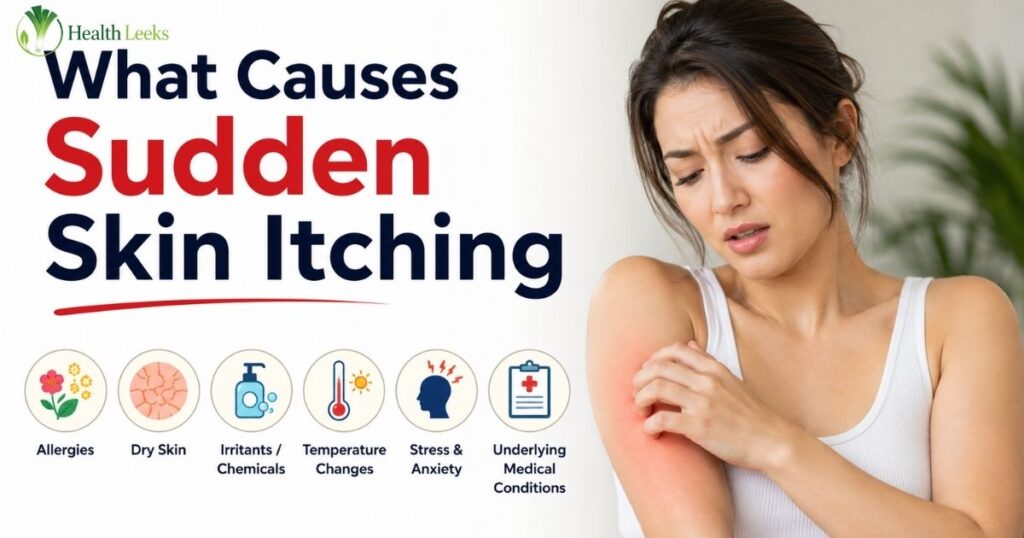
If your skin suddenly starts itching with no clear reason, you are not alone. Sudden skin itching is one of the most common dermatological complaints worldwide, and it affects people of all ages. Sometimes the cause is as simple as dry skin or a new soap. Other times, it may signal something happening deeper inside the body.
This guide breaks down the root causes of sudden skin itching, the clinical types recognized by medical experts, and the most effective treatment options available today.
What Is Pruritus (Itchy Skin)?
Pruritus is the medical term for itchy skin. It is defined as an unpleasant sensation that triggers the urge to scratch. It can be localized (affecting a specific area) or generalized (spreading across the entire body).
When a stimulus, whether internal or external, activates nerve fibers in the skin, those signals travel through peripheral sensory neurons to the brain. The brain then sends a response that makes you want to scratch. That itch-scratch cycle is the defining feature of pruritus.
Chronic pruritus is defined as itching that lasts six weeks or longer. According to research, it affects up to 78% of older adults at some point. While it is often harmless, it can significantly reduce sleep quality, daily functioning, and overall wellbeing when left unaddressed.
What Causes Sudden Skin Itching? 5 Major Causes
Sudden skin itching can arise from a wide range of triggers. Medical professionals generally group them into five main categories.
1. Skin Disorders
Skin-related conditions are the most common cause of sudden itching. When the skin barrier is damaged or inflamed, nerve fibers become more sensitive and reactive. Common dermatological causes include:
- Atopic dermatitis (eczema): Causes red, inflamed, intensely itchy patches that may weep or crust over.
- Psoriasis: Produces thick, scaly plaques that itch and burn.
- Contact dermatitis: Triggered when the skin touches an allergen or irritant such as nickel, latex, fragrances, or certain plants like poison ivy.
- Urticaria (hives): Raised, itchy welts that appear suddenly, often as an allergic reaction.
- Fungal infections: Ringworm, athlete’s foot, and similar infections create circular, scaly, itchy patches.
- Scabies and lice: Tiny mites or parasites that burrow into the skin and cause intense, relentless itching.
- Dry skin (xerosis): One of the most frequent culprits, especially in older adults and during winter months when humidity drops.
If the skin shows visible redness, scaling, rash, or bumps alongside the itching, a skin disorder is likely the cause.
2. Systemic (Internal) Disorders
Itching without any visible skin changes is a red flag that something internal may be going on. Several systemic conditions are known to cause generalized pruritus, including:
- Kidney disease: Chronic kidney disease leads to a buildup of waste products in the blood that irritate nerve endings. Itching in kidney disease often affects the back and legs.
- Liver disease: Cholestasis (bile flow obstruction) causes bile salts to accumulate under the skin, triggering intense itching, particularly on the palms and soles.
- Thyroid disorders: Both an overactive and underactive thyroid can disrupt skin hydration and nerve signaling, resulting in itching.
- Diabetes: High blood sugar damages small nerve fibers in the skin, causing neuropathic itch.
- Blood disorders: Conditions like polycythemia vera (too many red blood cells) are notorious for causing water-induced itching (aquagenic pruritus).
- Malignancy: In older adults with unexplained chronic itching and no skin lesions, malignancy including lymphoma and certain solid tumors should be considered and ruled out.
3. Psychiatric Issues
The connection between the mind and skin is real and well-documented. Psychological and neurological conditions can produce or worsen itching without any physical skin disease present. These include:
- Anxiety and stress: Stress triggers the release of histamine and other inflammatory mediators in the body, which can cause hives or worsen existing itchy conditions.
- Depression: Often co-exists with chronic itch, creating a cycle where poor mental health worsens the itch and persistent itching deepens depression.
- Obsessive-compulsive disorder (OCD): Compulsive scratching or skin picking behaviors can mimic or intensify pruritus.
- Delusional parasitosis: A condition where a person strongly believes insects or parasites are crawling under their skin, despite no physical evidence.
- Neuropathic itch: Results from damage or dysfunction of the peripheral or central nervous system, such as after shingles (postherpetic itch) or due to multiple sclerosis.
4. Medications and Substances
Many common medications can trigger sudden itching, either as an allergic reaction or a direct pharmacological side effect. Drugs known to cause pruritus include:
- Opioids (morphine, codeine)
- ACE inhibitors used for blood pressure
- Certain antibiotics
- Chemotherapy agents
- Diuretics
- Antimalarial medications
- NSAIDs (ibuprofen, aspirin)
If itching starts shortly after beginning a new medication, consult your healthcare provider before stopping the drug. Topical substances like harsh soaps, fragranced lotions, laundry detergents, and fabric softeners can also be overlooked triggers worth investigating.
5. Pregnancy
Mild itching is common during pregnancy due to the skin stretching as the body changes. However, some pregnancy-specific conditions cause more serious pruritus:
- Intrahepatic cholestasis of pregnancy (ICP): A liver condition that causes severe itching, particularly on the hands and feet, usually in the third trimester. It requires medical management.
- PUPPP (Pruritic Urticarial Papules and Plaques of Pregnancy): An itchy rash that typically begins in stretch marks on the abdomen during the third trimester.
- Pemphigoid gestationis: A rare autoimmune condition causing intensely itchy blisters during pregnancy.
Any new or severe itching during pregnancy should be evaluated by a doctor promptly.
What Are The Types of Pruritus?
The International Forum for the Study of Itch (IFSI) has established a globally recognized clinical classification system for chronic pruritus. This system divides cases into three groups based on what is (or is not) visible on the skin.
Group I: Pruritus on Diseased (Inflamed) Skin
In Group I, itching occurs alongside visible, inflamed skin lesions. The underlying cause is typically a dermatological condition. Examples include:
- Atopic dermatitis
- Psoriasis
- Contact dermatitis
- Urticaria
- Drug-related skin reactions
- Bullous pemphigoid
- Scabies
In these cases, treatment focuses primarily on resolving the underlying skin disease. Since the skin shows clear inflammatory changes, diagnosis is usually more straightforward.
Group II: Pruritus on Non-Diseased Skin
Group II is characterized by itching on skin that appears completely normal. There are no primary skin lesions visible at first. This type of pruritus is usually caused by:
- Systemic diseases (kidney, liver, thyroid)
- Neurological conditions (neuropathic itch)
- Psychiatric or psychosomatic disorders
- Hematological malignancies
- Drug-induced reactions without a skin rash
This group requires a thorough internal workup. Blood tests, imaging, and organ function assessments are typically needed to find the root cause.
Group III: Pruritus With Excessive Chronic Scratch Lesions
Group III describes patients whose skin has developed significant secondary lesions from long-term scratching, rubbing, or picking. The original cause may belong to Group I or II, but the chronic mechanical trauma has now become the dominant feature. Secondary skin changes seen in this group include:
- Excoriations and crusting
- Lichenification (thickened, leathery skin)
- Prurigo nodularis (firm, intensely itchy nodules)
- Lichen simplex chronicus
These patients require a combination of anti-itch therapy, wound care, and psychological support to break the itch-scratch cycle.
Treatment for Itchy Skin
Treatment depends entirely on what is causing the itch. That said, several approaches are widely used across different types of pruritus:
Topical treatments:
- Corticosteroid creams to reduce inflammation (short-term use)
- Calcineurin inhibitors (tacrolimus, pimecrolimus) for eczema-prone areas
- Topical antihistamines for localized allergic reactions
- Moisturizers with ceramides to restore the skin barrier
Oral medications:
- Antihistamines such as cetirizine, loratadine, or diphenhydramine for allergic itch
- Antifungal agents for fungal skin infections
- Prescription biologics like dupilumab for moderate-to-severe atopic dermatitis
- Pregabalin or gabapentin for neuropathic pruritus
- Antidepressants or anti-anxiety medications when psychiatric factors are involved
Home care and lifestyle measures:
- Apply fragrance-free moisturizer immediately after bathing while skin is still damp
- Use cool compresses or ice packs to numb itchy nerve endings temporarily
- Wear loose-fitting, breathable cotton clothing
- Switch to fragrance-free laundry detergents and avoid fabric softeners
- Take lukewarm (not hot) showers, as heat worsens itching
- Aloe vera gel can soothe irritated skin naturally
Treating the underlying cause: For systemic conditions, treating the root problem (managing kidney disease, correcting thyroid levels, treating infections) often resolves the itch significantly.
When to Seek Help for Sudden Skin Itching
Most mild itching resolves on its own or with basic home care. However, medical attention is needed when:
- Itching lasts more than two weeks without improvement
- Itching is severe enough to disrupt sleep or daily activities
- There are signs of skin infection, such as redness, warmth, swelling, or discharge
- Itching covers the entire body with no obvious cause
- You notice unexplained weight loss, night sweats, fatigue, or jaundice alongside the itching
- Itching begins during pregnancy, especially in the third trimester
- You experience difficulty breathing, facial swelling, or a rapidly spreading rash (signs of anaphylaxis – call emergency services immediately)
A dermatologist can perform a physical exam and run diagnostic tests including a complete blood count, liver function tests, kidney markers, thyroid levels, and iron studies to identify the cause.
FAQ’s
What causes sudden itching all over the body with no rash?
Itching without a visible rash often points to an internal issue such as liver disease, kidney disease, thyroid disorders, blood conditions, or medication side effects. A medical evaluation is recommended.
Can stress really cause your skin to itch?
Yes. Stress triggers histamine release in the body, which can cause hives and worsen existing itchy conditions like eczema or psoriasis.
Is sudden skin itching at night a sign of something serious?
Nighttime itching can result from dry skin, scabies, eczema, or systemic conditions. If it is persistent and disrupting sleep, consult a doctor.
How long does pruritus last?
Acute pruritus usually resolves within a few days to weeks. Chronic pruritus, by definition, lasts six weeks or longer and typically requires professional treatment.
Can liver problems cause itching?
Yes. Liver conditions that reduce bile flow (cholestasis) cause bile acids to build up in the bloodstream, leading to itching, particularly on the palms and soles.
Does drinking more water help with itchy skin?
Staying hydrated supports skin barrier function and can help with dryness-related itching, but it will not resolve itch caused by internal disease or skin disorders on its own.
What is the fastest way to stop itching?
Applying a cool compress, using a topical corticosteroid cream, or taking an over-the-counter antihistamine can provide fast, short-term itch relief.
Final Thoughts
Sudden skin itching ranges from a minor annoyance to a signal of something more serious going on beneath the surface. Understanding whether your itch is linked to a skin condition, an internal disorder, medications, mental health, or pregnancy is the first and most important step toward effective relief.
If home remedies and over-the-counter options do not bring relief within a couple of weeks, or if the itching is severe or unexplained, seeking a professional diagnosis is always the right move. A healthcare provider can identify the exact cause and recommend a targeted treatment plan that actually works, rather than guessing at the root of the problem.