
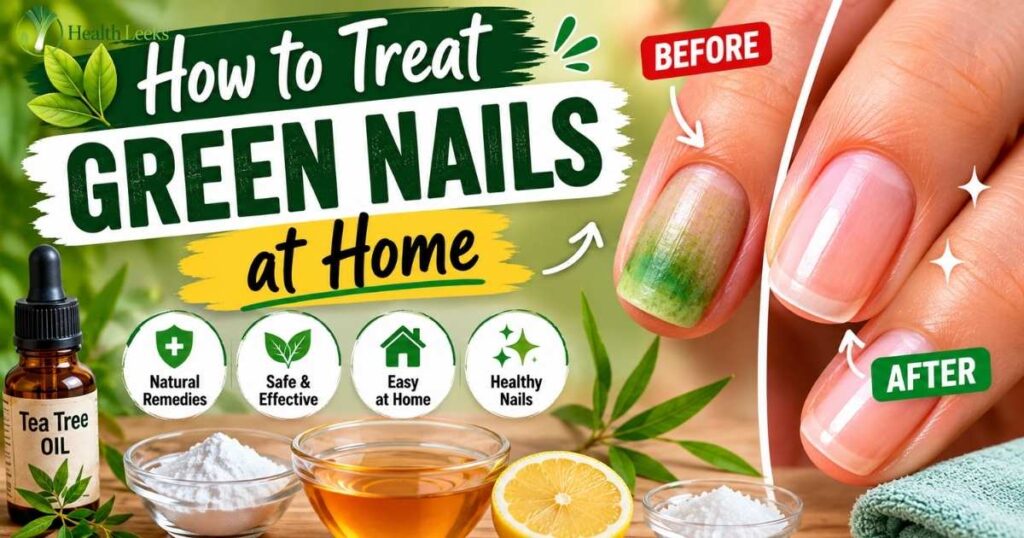
You noticed it while washing your hands or removing nail polish. A streak of green under your nail, maybe light and easy to dismiss, maybe dark enough to make your stomach drop. Either way, you want answers fast.
The good news? Most green nail cases are completely treatable at home. The discoloration looks alarming, but it rarely signals anything dangerous. What it does signal is a bacterial or fungal environment that needs immediate attention before it spreads or deepens.
This guide walks you through everything you need: what causes green nails, who is most at risk, how to treat them step by step, and a realistic recovery timeline. By the end, you will know exactly what to do tonight to start healing.
What causes the green color?
The green pigment comes from pyocyanin and pyoverdin, natural compounds produced by Pseudomonas aeruginosa bacteria. These pigments penetrate the nail plate, which is why the stain cannot simply be scrubbed away. It must grow out or be treated directly at the source.
What Causes Green Nails?
Green nails, clinically known as chloronychia or green nail syndrome, are almost always caused by a bacterial or fungal infection taking hold in a moist, trapped environment beneath the nail. The condition accounts for roughly 1 to 4 percent of all nail infections, yet many people mistake it for simple bruising or polish staining and ignore it far too long.
Three Main Causes of Green Nails
Understanding the root cause is critical because it directly determines which treatment will work.
- Pseudomonas aeruginosa bacterial infection. This is the most common culprit. Pseudomonas is an opportunistic bacterium that thrives in warm, wet spaces. When moisture becomes trapped between an artificial nail, press-on, or acrylic and the natural nail plate, the bacteria colonize rapidly. The waste they produce stains the nail green, dark green, or blue-green. The shade often deepens as the infection progresses.
- Onycholysis (nail lifting). When the nail plate separates from the nail bed, even slightly, it creates a gap where bacteria and fungi can enter and grow. Onycholysis can result from trauma, aggressive manicuring, chemical exposure, or underlying skin conditions like psoriasis. Once the nail lifts, infection follows more easily.
- Concurrent fungal infection (onychomycosis). A pre-existing fungal infection weakens the nail’s natural barrier, making it far easier for Pseudomonas bacteria to take hold alongside the fungus. This combined infection requires treatment targeting both organisms simultaneously.
Who Is Most at Risk?
Green nail syndrome does not discriminate, but certain groups face a significantly higher risk. Research published in the American Family Physician identifies specific occupational and lifestyle factors that increase vulnerability.
People at elevated risk include:
- Dishwashers, cleaners, and kitchen workers who keep hands wet for hours daily
- Healthcare workers including nurses and caregivers
- Nail technicians and salon clients who frequently wear acrylics or artificial nail extensions
- Gardeners and landscapers with regular soil and water exposure
- Anyone with a history of nail trauma, psoriasis, or eczema
- Individuals who are immunocompromised due to diabetes, cancer treatment, or other conditions
If you fall into any of these categories, knowing the early signs of green nail syndrome means you can act before the infection deepens.
The Importance of Early Detection
Catching green nails early makes treatment significantly faster and more effective. A mild case confined to one small area can clear up within three to four weeks. A case left untreated for months may take three to four times longer, and by then the bacteria may have spread across more of the nail bed.
Watch for these early warning signs:
- A faint yellowish-green tinge appearing under the nail tip or edges
- Slight separation of the nail from the nail bed at the sides or tip
- Mild tenderness or puffiness around the nail fold
- Thickening of the nail plate over time
Don’t ignore lifting nails
Nail lifting, technically called onycholysis, is both a cause and a symptom of green nail syndrome. If you notice any part of your nail detaching from the nail bed, do not push it back down or apply a new artificial nail on top. That trapping of moisture and bacteria is precisely what allows the infection to take hold and worsen. Trim the lifted portion, keep the area clean and dry, and begin treatment immediately.
How to Get Rid of Green Nail Fungus and Treat Green Nails at Home
Before applying any remedy, prepare the nail properly. Trim the affected nail as short as safely possible. If there is any lifting, carefully trim that detached portion away. Gently file the nail surface to improve product penetration. Wash the area thoroughly with soap and water, then dry it completely. This preparation step is non-negotiable. Applying solutions over a moist or lifted nail reduces their effectiveness significantly.
Apply Antifungal or Antibacterial Solutions
The following treatments are evidence-informed and widely recommended by dermatologists and podiatrists for home use:
White vinegar soaks (acetic acid treatment)
Diluted acetic acid is one of the most commonly recommended first-line home treatments. Mix one part white vinegar with six parts water. Soak the affected nail for 10 to 15 minutes. Dry the nail completely afterward, as any residual moisture creates an ideal environment for bacteria to continue growing. Repeat twice daily. Vinegar lowers the pH of the nail environment, making it inhospitable for Pseudomonas bacteria.
3 percent hydrogen peroxide solution
Hydrogen peroxide acts as a potent antibacterial and cleaning agent. Mix equal parts hydrogen peroxide and water. Apply with a cotton ball directly to the affected nail, working it gently under any lifted edges. Allow it to bubble and dry fully. Use once daily alongside vinegar soaks for a more comprehensive approach.
Tea tree oil
Tea tree oil offers natural antimicrobial properties effective against both bacteria and fungi. Because it is strong in undiluted form, mix it with a carrier oil such as coconut or jojoba in a 1:1 ratio. Apply to the affected area with a cotton swab twice daily. Tea tree oil addresses the possibility of a concurrent fungal component, making it a particularly useful option when the cause is unclear.
Over-the-counter antifungal creams or drops
If a fungal infection is suspected alongside the bacterial infection, an OTC antifungal product containing clotrimazole or terbinafine can be applied directly to the nail bed. This is especially worth considering if your nails are thick, crumbly, or have been discolored for a long time.
Keep nails completely dry between treatments
This step is as important as any topical treatment. Bacteria require moisture to survive and reproduce. Wear gloves when washing dishes, cleaning, or gardening. After handwashing, dry under and around each nail deliberately. At night, ensure nails are dry before sleeping.
Your Recovery Timeline
One of the most frustrating aspects of treating green nails is how long the visible stain persists even after the infection is under control. Nails grow slowly, roughly 3 millimeters per month for fingernails. The discolored nail must grow out before you see a fully clear nail again. Patience and consistency are the most important treatment tools you have.
Week 1–2
Start All Treatments Simultaneously
Begin the full protocol immediately: vinegar soaks twice daily, hydrogen peroxide once daily, and tea tree oil twice daily. Remove any artificial nails and do not reapply them. Trim the nail as short as possible and file the surface lightly. Keep the nail completely dry between treatment sessions. At this stage you are eliminating the active bacterial environment and preventing further spread.
Week 3–4
Assess and Adjust
Check for any change in the size or shade of the green area. If the discolored patch is stable or shrinking, the treatment is working. If the green area appears to be growing or the nail is becoming more lifted, add an OTC antifungal to your routine, as a dual infection may be involved. New nail growth emerging at the base should appear healthy and clear. Continue all hygiene practices without exception. This is typically the phase where people feel tempted to stop treatment because improvement is slow. Stopping early is the most common reason infections return.
Week 5–8
Noticeable Improvement
The healthy nail growing from the base should now be clearly visible. The discolored portion continues to grow toward the tip and can be trimmed away as it reaches the free edge. Maintain twice-daily treatments and strict dryness routines. If you have been consistent, the green area should be noticeably reduced in size by the end of week eight.
Week 9–12
Near-Complete Recovery
The discolored portion should be mostly grown out and trimmable. Continue preventive practices, including occasional vinegar soaks, to discourage recurrence. If the nail shows little to no improvement by week twelve despite consistent home treatment, consult a doctor. Prescription options including topical ciprofloxacin drops or oral antibiotics may be needed for stubborn or severe cases.
Prevention: Stop It Coming Back
Green nails have a high recurrence rate when the underlying habits that caused the infection are not addressed. These practices will protect your nails long-term:
- Always prep nails thoroughly before applying any artificial nail product. Clean, dry, and lightly buff the surface.
- Never apply press-on nails or acrylics over even slightly lifted nails or any sign of discoloration.
- Wear waterproof gloves for all wet work, including dishwashing, cleaning, and gardening.
- Dry your nails thoroughly after every handwash, bath, or swim. Use a clean towel or a gentle blast of cool air.
- Avoid using the same nail file or buffer on multiple nails without sanitizing between them.
- Take regular breaks from artificial nails to allow your natural nail to breathe and recover.
- Sanitize nail tools with rubbing alcohol before and after each use.
- Replace disposable tools like emery boards after each use if an infection was present.
When to See a Doctor
Home treatment is effective for most mild to moderate cases of green nail syndrome. However, some situations genuinely require professional care. Seek medical attention if:
- There is no improvement after four weeks of consistent home treatment
- The infection is spreading to multiple nails
- You notice significant pain, swelling, pus, or warmth around the nail
- You are immunocompromised, diabetic, or have circulatory issues
- The nail is almost entirely detached from the nail bed
- Green discoloration appears on the skin surrounding the nail
A doctor may recommend topical ciprofloxacin drops applied directly to the nail bed, oral fluoroquinolone antibiotics for more severe cases, or in rare situations, partial nail removal to allow direct treatment of the nail bed.
Final Thoughts
Green nails are one of those conditions that look far worse than they actually are. The stain is striking, but the underlying infection is almost always manageable at home with the right approach. What makes the difference is acting quickly, treating consistently, and understanding that the visible discoloration will take weeks to grow out even after the infection clears.
Start with vinegar soaks and hydrogen peroxide today. Keep your nails short, dry, and free of artificial enhancements until the infection resolves. Follow the week-by-week plan above and you will see results. If home treatment is not working by week four, do not wait longer to see a doctor. The sooner the cause is identified and treated properly, the sooner you get clear, healthy nails back.