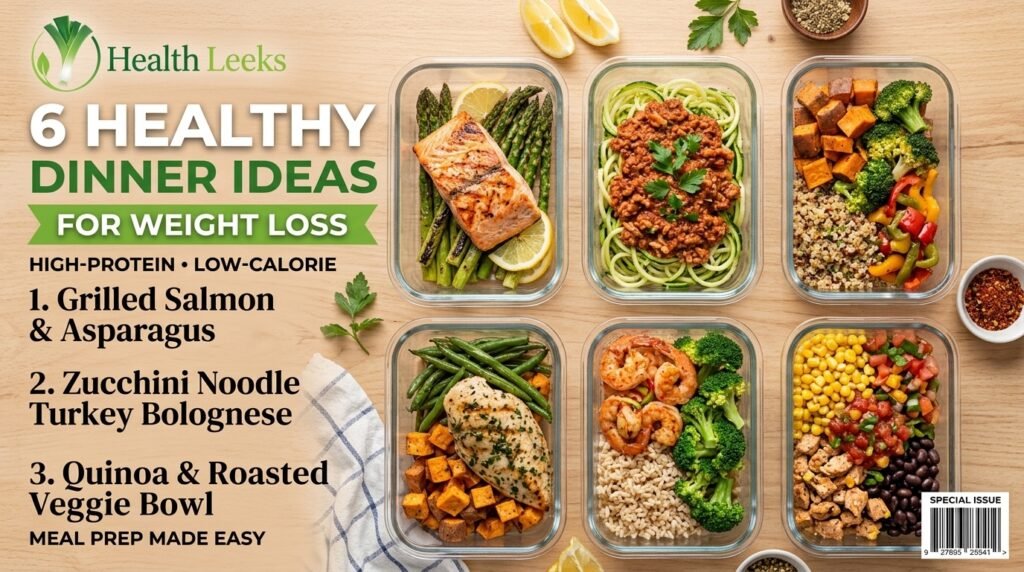
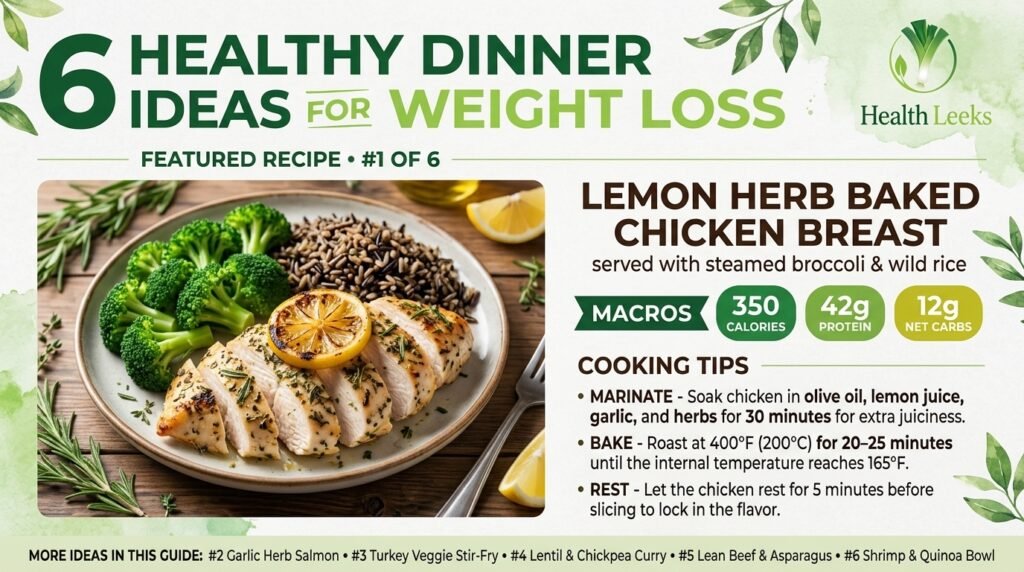
6 healthy dinner ideas for weight loss start with lean protein, plenty of vegetables, and a sensible portion of whole grains or starchy vegetables. Each dinner below follows that balance, with estimated nutrition under 500 calories per serving. Estimates vary by portion, brand, oil, and cooking method, so treat them as guides, not exact values.
A healthy dinner does not need to be complicated, expensive, or bland. Herbs, spices, citrus, vinegar, and roasting bring flavour without heavy sauces or large amounts of added fat. Vegetable volume also helps a plate feel full, while protein and fibre support lasting satisfaction after eating.
How to Build a Healthy Weight Loss Dinner
The Plate Method
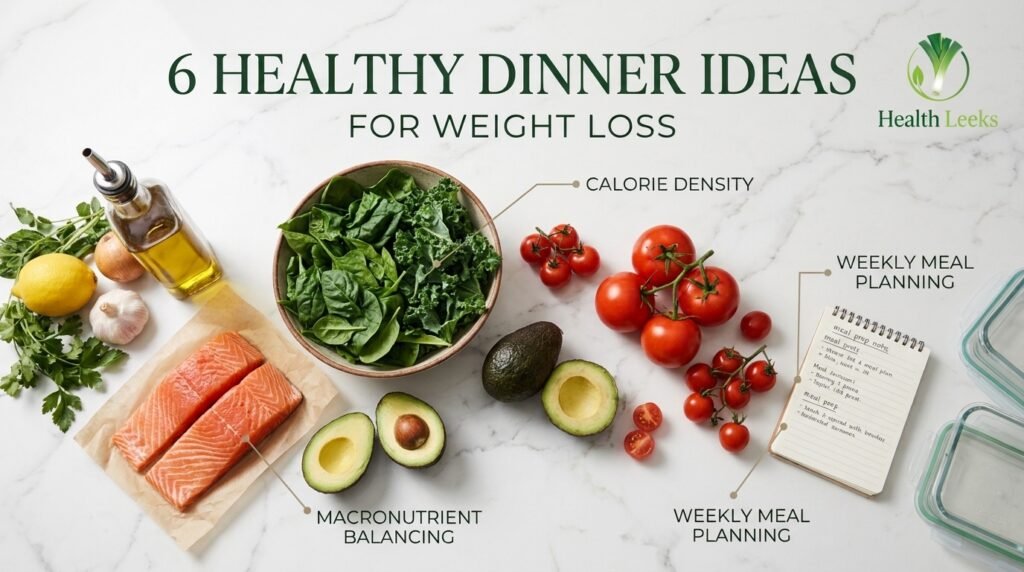
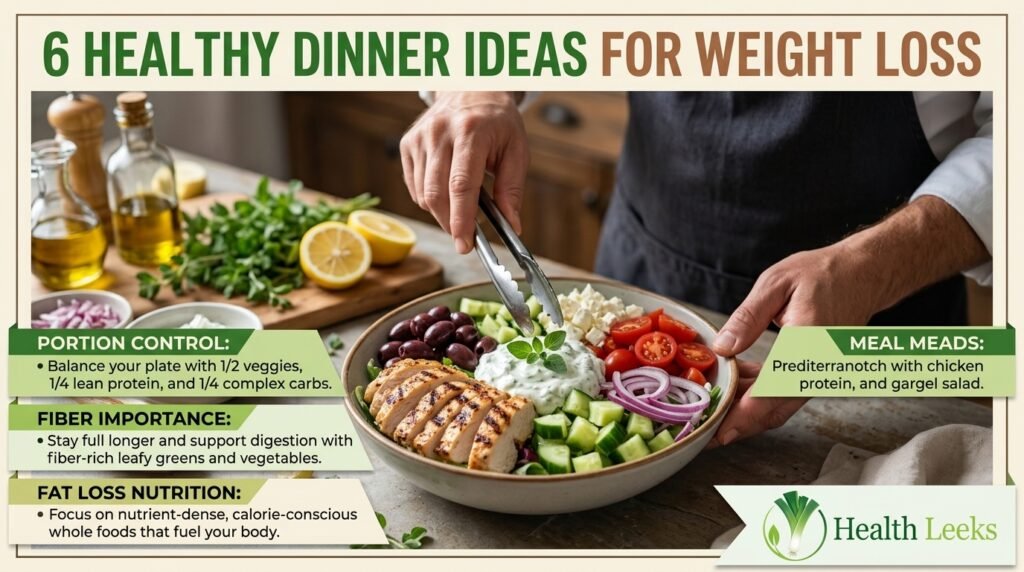
Fill half the plate with non-starchy vegetables, such as green beans, asparagus, peppers, spinach, or salad. Fill one quarter with lean protein, such as chicken, fish, turkey, lentils, or beans. Fill the remaining quarter with whole grains or starchy vegetables, such as quinoa, brown rice, or sweet potatoes.
The plate method works without counting every gram, since it controls proportions visually. Sauces, oils, and dressings still count, so measure oil and pour dressing in small amounts. A balanced plate, eaten slowly, often feels more satisfying than a small plate of one food type.
Protein, Fibre, and Volume
Protein supports satiety and helps preserve muscle during weight management, alongside activity and adequate overall nutrition. Fibre from vegetables, beans, lentils, and whole grains slows eating and adds bulk. Together, protein and fibre make a moderate-calorie dinner feel complete.
Vegetable volume matters because vegetables add fibre, water, and flavour for relatively few calories. Roasted, grilled, and raw vegetables all count, so choose textures you enjoy. Enjoyment matters, since a dinner you like is easier to repeat than a dinner you dread.
Portion and Sauce Control
Portions change calories more than ingredient choices alone, especially for oils, cheese, sauces, and grains. Measure cooking oil with a spoon rather than pouring freely from a bottle. Serve sauces on the side, so each person controls the amount added.
Cheese adds flavour and protein, but small amounts go further when grated finely or crumbled. Nuts and seeds add crunch and nutrients, but portions should stay small, such as one tablespoon. Small, deliberate choices keep a healthy dinner balanced without strict tracking.
Dinner 1: Grilled Chicken, Sweet Potatoes, and Green Beans
Grilled chicken with sweet potatoes and green beans offers lean protein, slow-digesting carbohydrates, and crisp vegetables in one sheet pan or grill session. Estimated nutrition is about 420 calories, 40 grams protein, and 6 grams fibre per serving. Actual values vary with chicken size, potato portion, and oil used.
Ingredients
- Chicken breast, 4 ounces per serving, boneless and skinless
- Sweet potatoes, 1 medium per serving, peeled and cubed
- Green beans, 1 cup per serving, trimmed
- Olive oil, 1 teaspoon per serving, measured
- Garlic, 1 clove per serving, minced
- Paprika, salt, and black pepper, to taste
- Lemon wedges, for serving
Method
- Heat the oven to 425 degrees Fahrenheit and line a sheet pan with parchment paper.
- Toss sweet potatoes with half the oil, paprika, salt, and pepper.
- Roast sweet potatoes for 15 minutes, until edges begin to soften.
- Season chicken with garlic, salt, and pepper, then add it to the pan.
- Add green beans with remaining oil, and roast for 15 to 18 minutes more.
- Check chicken with a thermometer until it reaches 165 degrees Fahrenheit internally.
- Rest chicken for 5 minutes, then serve with lemon wedges.
Why It Works
Chicken provides high protein with relatively low fat when skinless and grilled or roasted. Sweet potatoes add fibre, potassium, and natural sweetness that pairs well with savoury chicken. Green beans add crunch, volume, and colour without many calories.
Roasting at high heat creates flavour through browning, without breading or heavy sauces. Lemon brightens the whole plate and reduces the need for salty sauces. Leftovers also reheat well, making this dinner useful for next-day lunch.
Swaps and Leftovers
Swap chicken for tofu, tempeh, or chickpeas for a vegetarian version, adjusting cooking time accordingly. Swap sweet potatoes for butternut squash or carrots when preferred, keeping portions similar. Use frozen green beans when fresh beans are unavailable, with a slightly shorter roasting time.
Store leftovers in sealed containers in the refrigerator for 3 to 4 days. Reheat until steaming hot, reaching 165 degrees Fahrenheit for poultry leftovers. Slice leftover chicken for salads, wraps, or grain bowls the next day.
Dinner 2: Cod, Quinoa, and Asparagus
Cod with quinoa and asparagus offers lean fish, a complete grain, and tender green vegetables in about 25 minutes. Estimated nutrition is about 400 calories, 35 grams protein, and 5 grams fibre per serving. Fish cooks quickly, so timing and temperature matter more than complex seasoning.
Ingredients
- Cod fillets, 4 ounces per serving, fresh or thawed
- Quinoa, 1/2 cup dry per 2 servings, rinsed well
- Asparagus, 1 cup per serving, trimmed
- Olive oil, 1 teaspoon per serving, measured
- Lemon zest and juice, from half a lemon per 2 servings
- Dill or parsley, 1 tablespoon per serving, chopped
- Garlic, 1 clove per serving, minced
- Salt and black pepper, to taste
Method
- Cook quinoa in water or low-sodium broth, following package directions, usually 15 minutes.
- Cover quinoa and rest for 5 minutes, then fluff with a fork.
- Heat a nonstick pan over medium heat with measured oil.
- Season cod with salt, pepper, and garlic, then place it gently in the pan.
- Cook cod for 3 to 4 minutes per side, until it flakes easily.
- Check fish until it reaches 145 degrees Fahrenheit internally.
- Roast or steam asparagus for 5 to 7 minutes, until tender-crisp.
- Serve cod over quinoa with asparagus, lemon, and herbs.
Why It Works
Cod provides lean protein with a mild flavour that suits citrus and herbs. Quinoa adds fibre and protein, plus a satisfying grain texture that pairs well with fish. Asparagus adds volume, colour, and a fresh contrast to the soft fish and grain.
Lemon and herbs replace heavy butter sauces without losing brightness. Cooking fish just until it flakes prevents dryness, which is the most common cod mistake. A simple pan method also keeps cleanup easy on busy weeknights.
Swaps and Leftovers
Swap cod for salmon, shrimp, or tofu, adjusting cooking time and temperature guidance for each protein. Swap quinoa for brown rice or cauliflower rice, keeping grain portions similar. Use frozen asparagus or green beans when fresh asparagus is out of season.
Store fish leftovers in the refrigerator for 1 to 2 days, since fish spoils faster than poultry. Reheat gently until steaming, without overcooking, or serve leftover fish cold over salad. Do not keep cooked fish beyond safe storage times, even when it still smells fine.
Dinner 3: Turkey Meatballs and Zucchini Noodles
Turkey meatballs with zucchini noodles offer a pasta-style dinner with fewer refined carbohydrates and more vegetables. Estimated nutrition is about 350 calories, 30 grams protein, and 4 grams fibre per serving. Zucchini noodles cook in minutes and absorb sauce flavour well.
Ingredients
- Ground turkey, 4 ounces per serving, lean
- Zucchini noodles, 2 cups per serving, fresh or frozen
- Canned diced tomatoes, 1/2 cup per serving, no salt added when possible
- Egg, 1 per 4 servings, beaten, as a binder
- Whole grain breadcrumbs, 2 tablespoons per 4 servings
- Garlic and Italian seasoning, to taste
- Olive oil, 1 teaspoon per serving, measured
- Parmesan, 1 tablespoon per serving, optional
- Salt and black pepper, to taste
Method
- Mix turkey, egg, breadcrumbs, garlic, seasoning, salt, and pepper gently.
- Form small meatballs, about 1 inch wide, without packing them tightly.
- Heat oil in a nonstick pan over medium heat.
- Brown meatballs for 8 to 10 minutes, turning gently, until cooked through.
- Check meatballs with a thermometer until they reach 165 degrees Fahrenheit internally.
- Add tomatoes to the pan and simmer for 5 minutes.
- Warm zucchini noodles in the sauce for 2 minutes, until just tender.
- Serve meatballs and sauce over zucchini noodles with Parmesan when using it.
Why It Works
Turkey meatballs provide lean protein in a familiar, family-friendly form. Zucchini noodles add vegetable volume and a pasta-like base without a large grain portion. Tomato sauce adds flavour, moisture, and acidity that balances the mild turkey.
Gentle mixing keeps meatballs tender, since overmixing makes ground meat tough. Small meatballs cook faster and more evenly than large ones. A light cheese topping adds flavour without turning the dish into a heavy pasta bake.
Swaps and Leftovers
Swap turkey for chicken, lentils, or plant-based mince, adjusting cooking times and binders accordingly. Swap zucchini noodles for whole grain pasta in a smaller portion, such as 1/2 cup cooked, when preferred. Use frozen zucchini noodles when fresh noodles are unavailable, draining excess water well.
Store meatballs and sauce separately from noodles when possible, for better texture. Refrigerate leftovers for 3 to 4 days, and reheat until steaming hot. Freeze meatballs and sauce for up to 3 months, then thaw safely in the refrigerator before reheating.
Dinner 4: Lentil and Vegetable Chili
Lentil and vegetable chili offers plant protein, high fibre, and deep flavour from spices and tomatoes. Estimated nutrition for a bean and vegetable chili version is about 450 calories, 20 grams protein, and 8 grams fibre per serving. Lentils cook without soaking and hold up well in batch cooking.
Ingredients
- Brown or green lentils, 1/2 cup dry per 2 servings, rinsed
- Kidney beans or black beans, 1/2 cup cooked per serving, rinsed when canned
- Canned diced tomatoes, 1 cup per 2 servings
- Onion, 1/2 medium per 2 servings, diced
- Bell pepper, 1/2 per 2 servings, diced
- Carrots, 1 medium per 2 servings, diced
- Garlic, 2 cloves per 2 servings, minced
- Chili powder, cumin, and paprika, to taste
- Olive oil, 1 teaspoon per serving, measured
- Low-sodium vegetable broth, as needed for simmering
Method
- Heat oil in a large pot over medium heat.
- Cook onion, pepper, and carrots for 5 minutes, until softened.
- Add garlic and spices, stirring for 1 minute until fragrant.
- Add lentils, beans, tomatoes, and broth, then bring to a gentle boil.
- Reduce heat and simmer for 25 to 30 minutes, until lentils are tender.
- Add broth in small amounts when chili becomes too thick.
- Season with salt, pepper, and a squeeze of lime when available.
- Serve with a small portion of whole grain crackers or brown rice when desired.
Why It Works
Lentils and beans together provide plant protein and exceptional fibre, which supports lasting fullness. Vegetables add volume, colour, and texture, while spices create depth without sugar or heavy fat. Chili also improves the next day, as flavours meld during storage.
Batch cooking suits busy weeks, since one pot feeds several meals. Portion chili into single-serving containers immediately after cooking for easy lunches. A small grain portion completes the plate without turning chili into a heavy, grain-dominated dish.
Swaps and Leftovers
Swap lentils for chickpeas or a bean-only version, adjusting simmer time accordingly. Add corn, zucchini, or sweet potatoes for seasonal variety, keeping vegetable portions generous. Top with plain yoghurt instead of sour cream for a lighter, protein-rich topping when dairy suits you.
Refrigerate chili for 3 to 4 days, and freeze portions for up to 3 months. Thaw frozen chili safely in the refrigerator, then reheat until boiling and steaming throughout. Stir well during reheating, since thick chili heats unevenly in some containers.
Dinner 5: Quinoa and Black Bean Stuffed Peppers
Quinoa and black bean stuffed peppers offer a colourful, filling dinner with plant protein, fibre, and whole grains in an edible container. Estimated nutrition is about 500 calories, 20 grams protein, and 8 grams fibre per serving. Peppers soften during baking while the filling stays hearty and seasoned.
Ingredients
- Bell peppers, 1 large per serving, tops removed and seeds cleaned
- Cooked quinoa, 1/2 cup per serving
- Black beans, 1/2 cup per serving, rinsed when canned
- Canned diced tomatoes, 1/4 cup per serving
- Corn, 1/4 cup per serving, fresh or frozen
- Onion and garlic, diced and minced, to taste
- Cumin and chili powder, to taste
- Shredded cheese, 2 tablespoons per serving, optional
- Olive oil, 1 teaspoon per serving, measured
- Fresh cilantro or parsley, for serving
Method
- Heat the oven to 375 degrees Fahrenheit and prepare a baking dish.
- Cook onion and garlic in oil for 3 minutes, until softened.
- Stir in quinoa, beans, tomatoes, corn, and spices, cooking for 2 minutes.
- Place peppers upright in the baking dish, trimming bases slightly when needed.
- Fill each pepper generously with the quinoa and bean mixture.
- Cover with foil and bake for 25 minutes, until peppers soften.
- Uncover, add cheese when using it, and bake for 5 minutes more.
- Rest peppers for 5 minutes, then serve with fresh herbs.
Why It Works
Black beans and quinoa together provide complete plant protein and high fibre in one filling. Peppers add sweetness, crunch, and vitamin-rich colour, while the filling stays satisfying without meat. Baking softens peppers gently, avoiding the need for frying or heavy sauces.
Stuffed peppers also portion naturally, since one pepper equals one serving. That built-in portion control helps with consistent serving sizes. Leftovers reheat well, making stuffed peppers useful for meal prep and packed lunches.
Swaps and Leftovers
Swap black beans for lentils, chickpeas, or ground turkey, adjusting seasoning and cooking time accordingly. Swap quinoa for brown rice or cauliflower rice, keeping grain portions similar. Omit cheese for a dairy-free version, and add a squeeze of lime for brightness instead.
Refrigerate stuffed peppers for 3 to 4 days in sealed containers. Reheat until steaming throughout, covering loosely to prevent drying. Freeze unbaked stuffed peppers for up to 3 months, then bake from thawed for best texture.
Dinner 6: Spinach and Feta Stuffed Chicken
Spinach and feta stuffed chicken offers lean protein with a creamy, savoury filling and roasted vegetables. Estimated nutrition is about 380 calories, 40 grams protein, and 4 grams fibre per serving, before adding a grain or extra vegetables. Feta adds strong flavour in a small amount, so a little goes far.
Ingredients
- Chicken breast, 4 ounces per serving, boneless and skinless
- Fresh spinach, 1 cup per serving, wilted and squeezed dry
- Feta cheese, 2 tablespoons per serving, crumbled
- Garlic, 1 clove per serving, minced
- Roasted vegetables, 1 cup per serving, such as zucchini, peppers, or carrots
- Olive oil, 1 teaspoon per serving, measured
- Lemon juice, 1 teaspoon per serving
- Salt, black pepper, and dried oregano, to taste
Method
- Heat the oven to 400 degrees Fahrenheit and prepare a baking dish.
- Wilt spinach in a dry pan, then squeeze out excess water thoroughly.
- Mix spinach, feta, garlic, lemon juice, and oregano in a small bowl.
- Cut a pocket into each chicken breast, without cutting all the way through.
- Fill each pocket with the spinach and feta mixture, then secure with toothpicks when needed.
- Season chicken with salt and pepper, then place it in the baking dish.
- Add roasted vegetables around the chicken with measured oil.
- Bake for 20 to 25 minutes, until chicken reaches 165 degrees Fahrenheit internally.
- Rest chicken for 5 minutes, remove toothpicks, then serve.
Why It Works
Chicken provides high protein with a mild flavour that suits spinach and feta. Spinach adds volume, colour, and nutrients, while feta adds salty, tangy flavour in a small portion. Roasted vegetables complete the plate with fibre and texture, without extra cooking steps.
Stuffing chicken keeps the filling moist and prevents dryness, a common chicken problem. Resting after baking allows juices to redistribute, improving texture. A simple lemon finish brightens the rich feta filling without adding sauce calories.
Swaps and Leftovers
Swap feta for goat cheese or a dairy-free crumble, adjusting salt since feta is naturally salty. Swap spinach for kale, chard, or mushrooms, cooking greens until dry before stuffing. Add a small portion of quinoa or brown rice when a grain side is desired.
Refrigerate leftovers for 3 to 4 days, and reheat until steaming hot. Slice leftover stuffed chicken for salads or grain bowls, keeping portions consistent. Freeze cooked stuffed chicken for up to 3 months, thawing safely in the refrigerator before reheating.
Six Dinners at a Glance
| Dinner | Estimated calories | Estimated protein | Best for |
|---|---|---|---|
| Grilled chicken, sweet potatoes, green beans | About 420 | About 40 grams | Sheet pan simplicity, leftovers |
| Cod, quinoa, asparagus | About 400 | About 35 grams | Quick fish dinner, light flavour |
| Turkey meatballs, zucchini noodles | About 350 | About 30 grams | Pasta-style comfort, family friendly |
| Lentil and vegetable chili | About 450 | About 20 grams | Batch cooking, plant protein |
| Quinoa and black bean stuffed peppers | About 500 | About 20 grams | Built-in portions, meal prep |
| Spinach and feta stuffed chicken | About 380 | About 40 grams | High protein, impressive but simple |
Estimates come from competitor recipe tables in prior research and vary by portion and brand. Recalculate for your exact ingredients when precise tracking matters. Portion size, oil amount, cheese amount, and grain portion change totals more than vegetable choices do.
Shopping List for the Week
Proteins and Dairy
Buy chicken breast, cod, ground turkey, lentils, black beans, chickpeas when swapping, feta, Parmesan when using it, and eggs. Check freezer stock first, since frozen fish, turkey, and vegetables reduce waste. Buy proteins in amounts matching the six dinners, plus one extra portion for flexibility.
Vegetables and Fruits
Buy sweet potatoes, green beans, asparagus, zucchini, bell peppers, spinach, onions, garlic, carrots, corn, and lemons. Fresh vegetables suit roasting and salads, while frozen vegetables suit soups, chilis, and busy nights. Wash fresh produce before use, and store leafy greens dry for longer freshness.
Grains and Pantry
Buy quinoa, brown rice when swapping, whole grain breadcrumbs, canned tomatoes, low-sodium broth, olive oil, and spices. Check pantry stock for chili powder, cumin, paprika, Italian seasoning, oregano, salt, and pepper before shopping. A complete pantry list prevents extra trips and impulse purchases that derail meal plans.
Meal Prep and Storage
Sunday Prep in About 2 Hours
Cook quinoa and lentils in bulk, roast sweet potatoes and vegetables, and portion chili into containers. Wash and chop onions, peppers, and carrots for the week, storing them separately for freshness. Prepare turkey meatballs in advance, cooking or freezing them according to the storage plan.
Label containers with dinner name and cooking date, so older portions are used first. Keep raw proteins separate from cooked foods and ready-to-eat vegetables. Clean surfaces, boards, and hands between raw meat and other foods to prevent cross-contamination.
Storage and Reheating Table
| Food type | Fridge storage | Freezer storage | Reheating note |
|---|---|---|---|
| Cooked chicken and turkey | 3 to 4 days | Up to 3 months | Reheat to 165 degrees Fahrenheit |
| Cooked fish | 1 to 2 days | Up to 2 to 3 months | Reheat gently, avoid overcooking |
| Cooked chili and lentils | 3 to 4 days | Up to 3 months | Reheat until boiling and steaming |
| Stuffed peppers | 3 to 4 days | Up to 3 months | Reheat until steaming throughout |
| Cooked quinoa and grains | 3 to 4 days | Up to 3 months | Reheat with a splash of water |
| Roasted vegetables | 3 to 4 days | Up to 3 months, texture varies | Reheat in oven for crispness |
Food safety guidance from national authorities supports these general storage times, but local guidance and food condition should always win. Discard food with off smells, slimy texture, or uncertain storage history, even when it looks acceptable. When in doubt, throw it out, since foodborne illness costs far more than a replaced portion.
Swaps for Every Diet
Vegetarian and Vegan Swaps
Swap chicken, turkey, and fish for tofu, tempeh, lentils, chickpeas, or black beans, adjusting cooking times accordingly. Swap feta and Parmesan for dairy-free crumbles, nutritional yeast flavour, or simply omit cheese and add lemon and herbs. Check sauces and broths for animal-derived ingredients when following a strict vegan pattern.
Plant proteins often need larger vegetable portions and varied grains to feel equally filling. Combine beans with quinoa or brown rice for a broader amino acid profile across the day. Season plant dinners boldly, since bland plant meals are a common reason people abandon them.
Gluten Free and Dairy Free Swaps
Most dinners here are naturally gluten free when breadcrumbs and sauces are checked carefully. Use certified gluten free breadcrumbs for turkey meatballs, and check broth, spice blends, and canned tomatoes for hidden gluten. Quinoa, rice, and corn are naturally gluten free grains, but cross-contact matters for sensitive people.
Dairy free swaps focus on cheese toppings and creamy fillings, which can be omitted or replaced. Lemon, herbs, and olive oil add flavour without dairy, while plain plant yoghurt can replace sour cream toppings. Read labels for whey, casein, and lactose when dairy avoidance is medical rather than preferential.
| Diet need | Swap protein | Swap grain or base | Swap topping |
|---|---|---|---|
| Vegetarian | Tofu, tempeh, lentils, beans | Quinoa, brown rice, cauliflower rice | Cheese, yoghurt, herbs |
| Vegan | Tofu, tempeh, lentils, beans | Quinoa, brown rice, cauliflower rice | Lemon, herbs, dairy-free crumble |
| Gluten free | Same proteins, checked sauces | Quinoa, rice, cauliflower rice | Cheese, checked for gluten |
| Dairy free | Same proteins | Same grains | Lemon, herbs, plant yoghurt |
| Budget | Beans, lentils, eggs, turkey | Brown rice, frozen vegetables | Herbs, lemon, pantry spices |
Cooking Temperatures to Remember

| Protein | Safe internal temperature | Resting note |
|---|---|---|
| Chicken breast, whole | 165 degrees Fahrenheit | Rest 5 minutes before slicing |
| Ground turkey meatballs | 165 degrees Fahrenheit | Check centre of largest meatball |
| Cod and other fish | 145 degrees Fahrenheit | Fish should flake easily |
| Lentils and beans, plant dinners | Cook until tender, no meat temperature applies | Stir and simmer until soft |
A meat thermometer removes guesswork and prevents both undercooking and dry, overcooked protein. Insert the thermometer into the thickest part, away from bone or filling. Wash the thermometer after raw meat contact, before checking cooked foods again.
Mistakes to Avoid
- Using unmeasured oil, which can add hundreds of calories without flavour benefit.
- Choosing heavy creamy sauces over herbs, citrus, vinegar, and roasting for flavour.
- Skipping protein at dinner, then feeling hungry again shortly after eating.
- Serving grains in unlimited portions, while vegetables stay in a small side portion.
- Cooking fish or chicken without a thermometer, leading to dry or unsafe results.
- Storing leftovers without labels, then discarding them from uncertainty.
- Buying a full week of fresh produce without a prep plan, leading to waste.
- Calling a dinner healthy while adding large cheese, butter, and sauce portions.
- Skipping dinner entirely, then snacking heavily later in the evening.
- Expecting one dinner, or one week, to produce a specific weight outcome.
Tips That Make Healthy Dinners Easier
- Cook double portions of chili, lentils, and meatballs for future lunches.
- Roast a large tray of vegetables while cooking any dinner, for next-day sides.
- Keep frozen vegetables, canned beans, and quinoa stocked for busy nights.
- Season boldly with herbs, spices, citrus, and vinegar before adding salt.
- Serve sauces on the side, so portions stay controlled and flavours stay bright.
- Eat slowly, putting utensils down between bites when possible.
- Drink water with dinner, and keep sugary drinks for occasional, deliberate choices.
- Plan dinners before shopping, and shop from a list, not from hunger.
- Prep one grain and one protein on Sunday, then vary vegetables nightly.
- Choose dinners you enjoy, since repeatable dinners support long-term habits better than perfect dinners.
Frequently Asked Questions
What is a healthy dinner for weight loss?
A healthy dinner for weight loss usually combines lean protein, half a plate of vegetables, and a moderate portion of whole grains or starchy vegetables. Sauces and oils stay measured, while herbs and citrus add flavour. No single dinner causes weight loss alone, since overall eating patterns, activity, sleep, and health factors all matter.
How many calories should dinner be for weight loss?
Dinner calorie needs vary by total daily needs, activity, age, sex, and health goals, so no single number fits everyone. Many competitor dinner tables use under 500 calories per serving as a practical guide for a moderate dinner. A clinician or dietitian can help set an individual target, rather than copying a generic number.
Should I skip dinner to lose weight?
Skipping dinner is not a recommended weight-loss strategy for most people, since it often leads to intense hunger, overeating later, or poor nutrient intake. Regular, balanced dinners support steadier energy and more consistent eating patterns. Seek professional guidance when considering fasting, meal skipping, or restrictive eating patterns.
Can I eat carbs at dinner and lose weight?
Yes, carbohydrates at dinner can fit a balanced eating pattern, especially from whole grains, starchy vegetables, and fruit. Portion size, total daily intake, and food quality matter more than avoiding carbs at one meal. Quinoa, brown rice, sweet potatoes, and beans provide fibre that supports fullness.
Is it bad to eat dinner late at night?
Late eating alone does not determine weight outcomes, but late meals often involve larger portions, takeout, alcohol, and snacking. Choose a balanced, moderate dinner when eating late, and avoid heavy, high-fat meals close to bedtime when they disrupt sleep. Consistent meal timing and sleep quality support overall health better than rigid clock rules.
What protein is best for a weight loss dinner?
Lean proteins such as chicken, fish, turkey, tofu, tempeh, lentils, and beans all suit weight-loss dinners. Variety matters more than one perfect protein, since different proteins offer different nutrients and textures. Choose proteins you enjoy, can cook safely, and can afford regularly.
How much protein should dinner have?
Many healthy dinners in this plan provide about 20 to 40 grams of protein per serving, depending on the main protein. Individual protein needs vary by body size, activity, age, and health conditions. A dietitian can help set a personal target, rather than copying a single recipe figure.
Is rice okay for a weight loss dinner?
Yes, rice can fit a weight-loss dinner when portions stay moderate and vegetables fill half the plate. Brown rice adds more fibre than white rice, while cauliflower rice offers a lower-calorie, vegetable-based alternative. Measure cooked rice portions, since rice portions grow easily when served freely.
What is a good vegetarian dinner for weight loss?
Lentil chili, quinoa and black bean stuffed peppers, chickpea stir-fry, and tofu with vegetables all offer plant protein and fibre. Combine beans or lentils with grains across the day for broader protein coverage. Season plant dinners boldly, since flavour drives repeatability more than any single ingredient.
How do I make dinner filling without many calories?
Fill half the plate with vegetables, include lean protein, add fibre from beans, lentils, or whole grains, and eat slowly. Soups, salads, and roasted vegetables add volume without large calorie increases. Drink water with dinner, and measure oils and sauces, which add calories quickly in small amounts.
How do I portion dinner for weight loss?
Use the plate method as a visual guide, measure grains and oils at first, and serve food in the kitchen rather than at the table when seconds tempt overeating. Hand guides, such as a palm for protein and a fist for grains, help when scales are unavailable. Adjust portions gradually, based on hunger, fullness, and overall eating patterns.
How long do cooked chicken dinners last in the fridge?
Cooked chicken and turkey dinners generally last 3 to 4 days in the refrigerator, when stored promptly in sealed containers. Cooked fish lasts 1 to 2 days, while chili, lentils, and grains last 3 to 4 days. Discard leftovers with off smells, slimy texture, or uncertain storage history.
How do I reheat meal prep dinners safely?
Reheat leftovers until steaming throughout, reaching 165 degrees Fahrenheit for poultry and meat leftovers. Stir thick foods, such as chili, during reheating for even heating. Reheat only the portion needed, and do not repeatedly cool and reheat the same portion.
Can I freeze these six dinners?
Most dinners here freeze well, especially chili, lentils, meatballs with sauce, and stuffed peppers. Fish dinners freeze less well for texture, so eat fish fresh when possible. Label freezer containers with dinner name and date, and thaw safely in the refrigerator before reheating.
What should I drink with a weight loss dinner?
Water, sparkling water, and unsweetened tea suit most weight-loss dinners without adding calories. Sugary drinks, sweetened teas, and alcoholic drinks add calories quickly and can increase appetite for some people. Save sweetened and alcoholic drinks for deliberate, occasional choices, rather than daily dinner defaults.
What is a good dinner after a workout?
A post-workout dinner should include protein for recovery, carbohydrates for energy replenishment, vegetables for volume, and fluids for hydration. Grilled chicken with sweet potatoes, cod with quinoa, or lentil chili all fit that pattern. Individual needs vary by workout intensity, duration, and overall daily intake.
How do I meal prep six dinners in one week?
Cook grains and lentils in bulk, roast vegetables in large trays, and portion chili and meatballs into single servings. Prep dinners in pairs, such as chicken plus fish on one day, then chili plus stuffed peppers on another. Label, refrigerate, and freeze portions according to storage times, rather than cooking all six dinners at once.
Are frozen vegetables okay for healthy dinners?
Yes, frozen vegetables retain nutrients well and reduce waste, cost, and prep time. Choose plain frozen vegetables without added sauces, butter, or salt when possible. Frozen vegetables suit soups, chilis, stir-fries, and roasted sides, though texture differs from fresh vegetables in some dishes.
What cooking temperature should chicken reach?
Chicken breast and ground turkey should reach 165 degrees Fahrenheit internally, checked with a thermometer in the thickest part. Fish should reach 145 degrees Fahrenheit and flake easily. Rest chicken for 5 minutes before slicing, so juices redistribute and texture improves.
Do I need to count calories for every dinner?
No, many people succeed with plate portions, measured oils, and consistent dinner patterns, without counting every calorie. Counting can help for short learning periods, when portions feel uncertain. If counting causes stress, guilt, or disordered patterns, stop and seek professional guidance instead.
What if I am still hungry after a healthy dinner?
Add more vegetables, a larger protein portion, or a fibre-rich side, rather than adding sugary or high-fat extras. Eat slowly, drink water, and wait 15 to 20 minutes before deciding on seconds, since fullness signals take time. Persistent hunger despite balanced dinners deserves professional review, not simply smaller portions.
What if I have diabetes and want a healthy dinner?
Diabetes meal planning depends on medication, blood sugar targets, carbohydrate counting, and individual health factors, so generic dinner lists cannot replace clinician or dietitian guidance. These dinners offer balanced protein, fibre, and vegetable patterns, but portions and carbohydrate amounts must be individualised. Share any dinner plan with your care team before adopting it regularly.
Conclusion
6 healthy dinner ideas for weight loss work best when each dinner balances lean protein, vegetables, and a sensible grain or starchy vegetable portion. Grilled chicken, cod, turkey meatballs, lentil chili, stuffed peppers, and spinach stuffed chicken offer variety without complexity, repetition, or heavy sauces. Estimated nutrition stays under 500 calories per serving in this plan, with actual values varying by portion and brand.
Cook one dinner this week, measure oil and grain portions, and store leftovers safely for easy lunches. Swap proteins and grains to fit vegetarian, gluten free, dairy free, and budget needs, without changing the balanced plate pattern. Healthy dinners support long-term habits when they taste good, cook easily, and repeat comfortably, week after week.