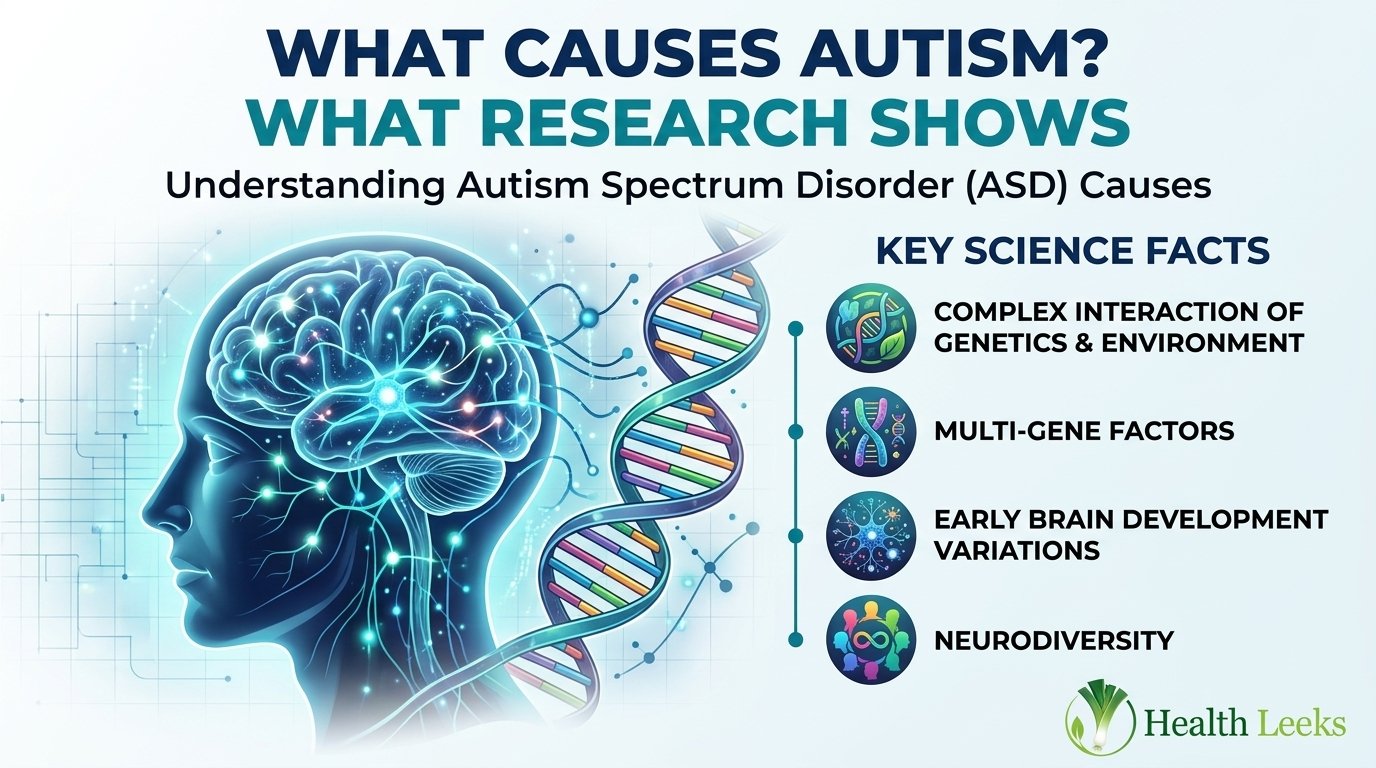
What causes autism is a question many parents ask with worry, hope, and a need for clear facts. No single cause explains autism spectrum disorder, and no one event creates it alone. Genetics, early brain development, and prenatal and birth factors interact in complex ways.
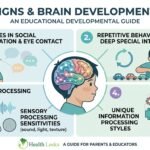
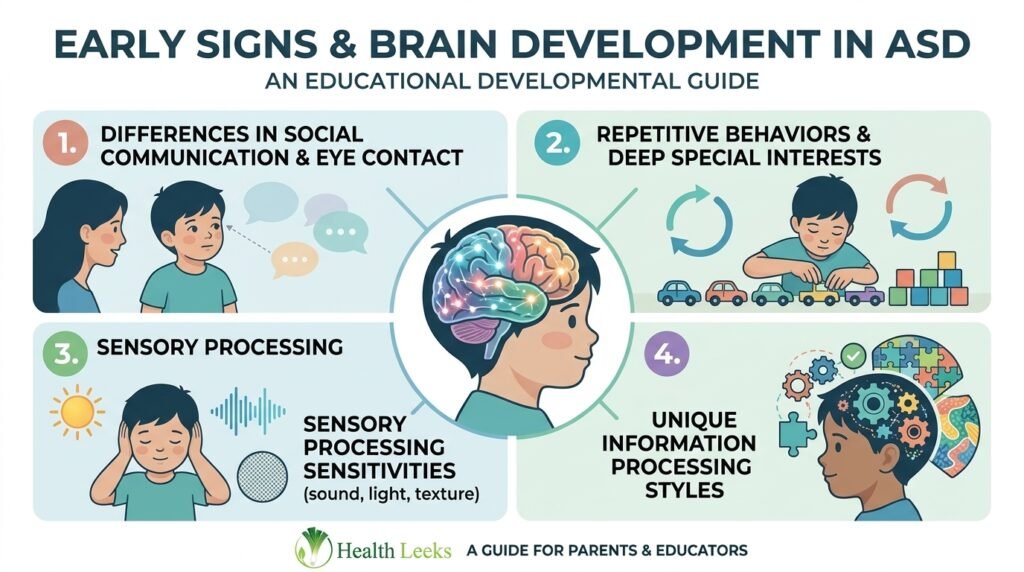
Autism spectrum disorder affects social communication, behavior, interests, and sensory processing in different ways for each person. Support needs vary widely, from low support needs to high support needs. Early differences in brain development often begin before birth, even when signs appear later.
General information only follows here, and nothing here replaces medical advice from a qualified clinician. Families with concerns should speak promptly with a pediatrician or developmental specialist. Early screening and support can help children build communication, learning, and independence skills.
Short Answer: No Single Cause of Autism
The Direct Answer in Plain Language
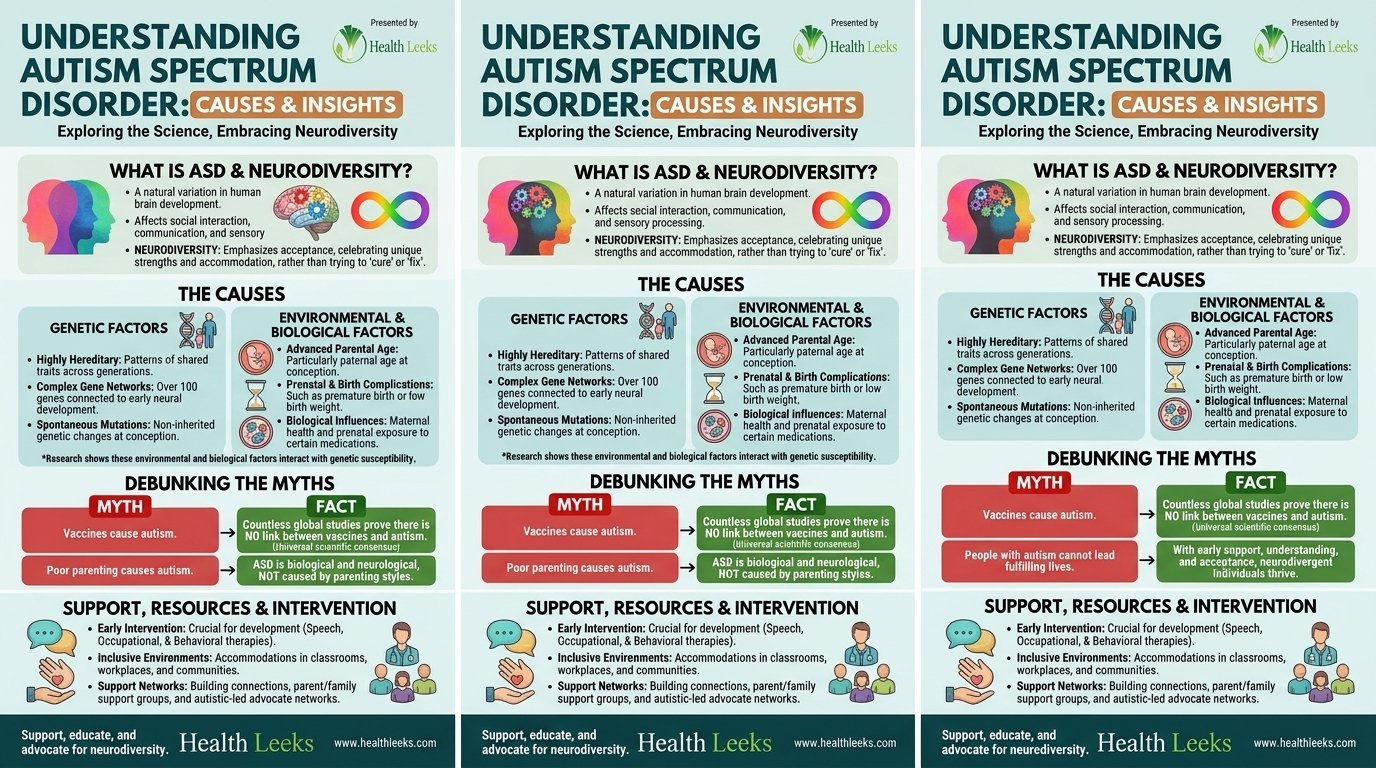
Autism develops from a combination of genetic variation, early brain differences, and prenatal or birth influences. Hundreds of genetic variants can each add a small amount of risk. Prenatal and birth factors may add further risk, mainly in genetically susceptible children.
Most exposed children do not develop autism, even after a known risk factor is present. Most autistic children have no single identifiable trigger that explains their development. Timing matters greatly, because brain development is most sensitive before birth and in early childhood.
Autism is a neurodevelopmental difference, not an illness caught from another person. It is not caused by poor parenting, cold parenting, or a lack of love. It is not a punishment, a choice, or a result of one mistake.
Risk Is Not the Same as Cause
A risk factor raises likelihood in a large population, but it does not guarantee an outcome. A cause produces an effect through a clear biological pathway in an individual case. Many autism factors are risk factors, not proven direct causes for every child.
Autism Speaks stresses this distinction clearly in its cause information for families. Increased risk is not the same as a cause, and most people with a risk factor remain unaffected. Genetic changes linked to autism can also appear in people without autism.
Population studies show patterns, but they cannot assign a personal cause to one child. Two children with similar exposures can develop very differently because their genetic backgrounds differ. Clinicians therefore speak about likelihood, not certainty, for most factors.
Why No Single Test Can Explain One Child
Genetic testing can sometimes identify a variant linked to autism and related health conditions. Most cases, however, involve many small variants acting together, not one clear mutation. A negative genetic test does not rule out autism or explain its origin.
Brain scans cannot diagnose autism or trace it to one prenatal event. Developmental history, behavior, screening, and clinical evaluation together support a diagnosis. Cause research explains groups, while support planning focuses on the individual child.
Parents often want one answer, especially after a new diagnosis or a difficult pregnancy. Science currently offers a system, not a single culprit, and that answer can feel unsatisfying. Understanding the system still helps families reject myths and seek useful support early.
How Common Is Autism Now, and Why Are Rates Rising?
CDC Prevalence Timeline
The CDC Autism and Developmental Disabilities Monitoring Network tracks autism in eight-year-old children at selected sites. In 2022 data, published in April 2025, about 1 in 31 eight-year-olds was identified with autism spectrum disorder. That figure equals 3.2 percent of children in the monitored age group.
Earlier cycles showed lower figures, including 1 in 36 in 2020 and 1 in 150 in 2000. These figures come from 16 sites, not a nationally representative sample of every US community. Site results varied widely, from 1 in 103 in Laredo, Texas, to 1 in 19 in California.
| Surveillance year | CDC ADDM estimate for 8-year-olds |
|---|---|
| 2000 | 1 in 150 |
| 2016 | 1 in 54 |
| 2018 | 1 in 44 |
| 2020 | 1 in 36 |
| 2022, published April 2025 | 1 in 31, or 3.2 percent |
Boys were identified about 3.4 times more often than girls in the latest cycle. Median age of diagnosis was 47 months, just under four years old. Only about half of children were diagnosed by age three in that data.
Why California and Laredo Numbers Look So Different
Local identification systems strongly affect recorded prevalence, even when biology is similar. California has dense developmental services, school identification systems, and specialist access in monitored areas. Laredo may have fewer specialists, different record access, and different screening pathways.
Record review methods also differ by site, school cooperation, and health record availability. A higher recorded rate does not prove that children in one city are biologically more affected. A lower recorded rate does not prove that autism is absent in another community.
Race and ethnicity patterns have shifted in recent ADDM cycles as identification improved. Asian and Pacific Islander, Black, and American Indian and Alaska Native children showed higher recorded rates than White children. Access, awareness, language, and screening history likely explain much of that shift, not biology alone.
DSM-5, Screening, and Awareness Drive Most of the Rise
Diagnostic criteria have broadened over time, from narrower definitions to the current DSM-5 spectrum concept. People with lower support needs who once received another label, or no label, now meet autism criteria. Asperger syndrome and related historical labels now fall under autism spectrum disorder in DSM-5.
Screening tools improved identification, especially the Modified Checklist for Autism in Toddlers, published in 2001. The American Academy of Pediatrics recommended standardized screening at 18-month and 24-month well-child visits in 2007. Earlier screening finds children sooner, but it also raises recorded prevalence in surveillance data.
Public and professional awareness increased, so parents and teachers raise concerns earlier and more often. Schools improved identification systems, and services became more available in many areas. Researchers therefore attribute most of the rise to better recognition, broader criteria, and earlier detection.
Genetic and environmental changes may contribute a small share to the rise, but evidence does not support one new exposure. No single chemical, medicine, or food trend matches the timing and scale of the prevalence change. A rise in diagnoses is not the same as a sudden rise in underlying brain development differences.
Genetics: The Largest Share of Autism Risk
How Heritability Is Estimated, and Why Ranges Differ
Twin studies compare identical twins, who share nearly all DNA, with fraternal twins, who share less. If one identical twin is autistic, the other twin is far more likely to be autistic than a fraternal twin. Family studies also show clustering, with higher risk for siblings and close relatives.
Heritability estimates differ by method, age group, diagnostic criteria, and population studied. Autism Speaks cites a meta-analysis of seven twin studies giving 60 to 90 percent of risk from genome variation. Other reviews cite 64 to 91 percent, while a JAMA estimate cited in research summaries is about 83 percent.
These ranges should never be merged into one settled number for publication or family advice. Heritability describes population variation, not a percentage of cause inside one child. A high heritability estimate still leaves room for prenatal, birth, and developmental influences.
Shared environment contributes a smaller share in many twin models, often only a few percent. Non-shared experiences and measurement differences can also affect estimates in complex ways. Genetics therefore leads the evidence, but genetics alone does not determine every outcome.
Hundreds of Small Variants Versus Rare Large-Effect Variants
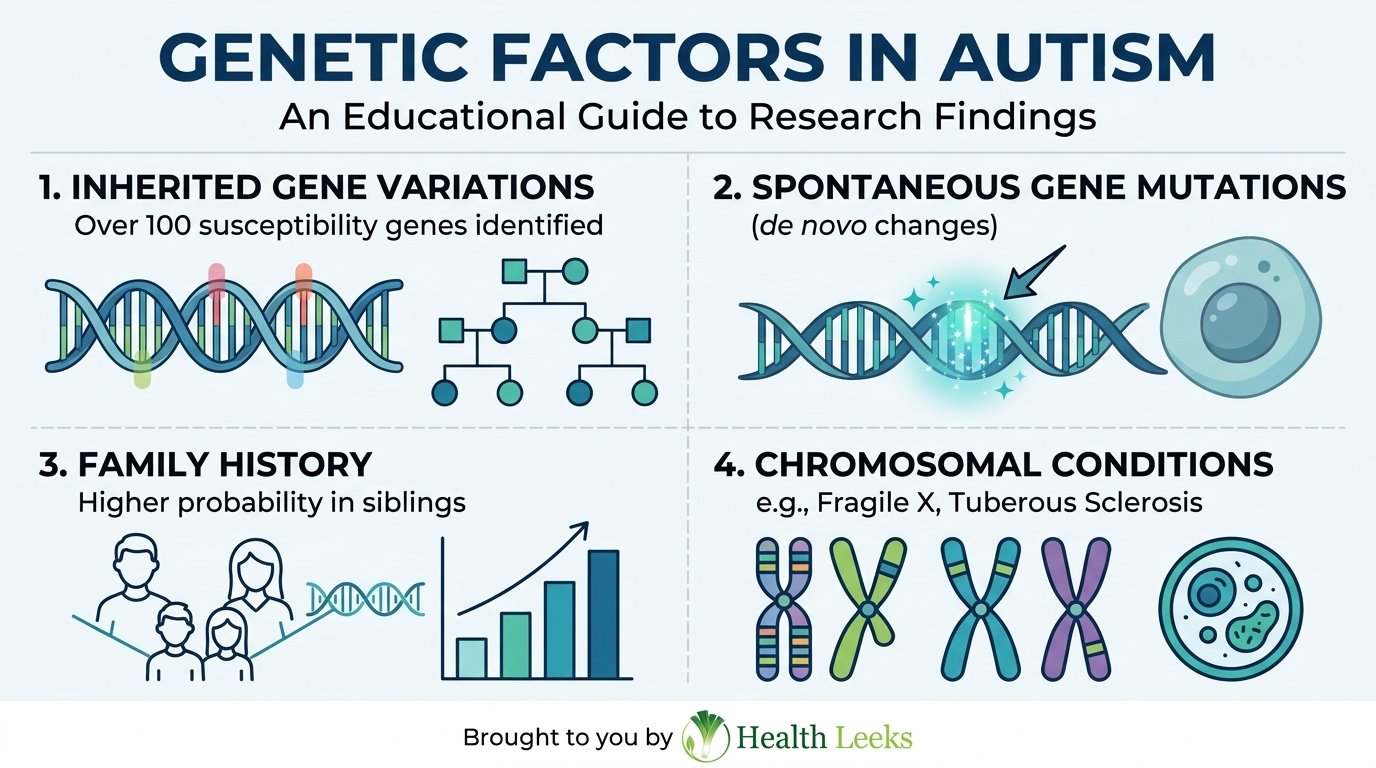
Most autism genetics involves polygenic risk, meaning many common variants each add a small effect. Common variants are frequent in the general population and do not cause autism by themselves. Together, enough small variants can shift brain development toward autism traits.
Rare variants can have larger effects in a smaller share of autistic people. These include gene-disrupting mutations and copy number variants, where DNA segments are deleted or duplicated. Rare variants may also affect intellectual ability, epilepsy risk, language, and motor development.
The Autism Science Foundation notes that a specific genetic cause can be pinpointed in about 15 to 20 percent of autistic people. That figure includes rare single-gene findings and clear chromosomal findings, not every polygenic case. Most autistic people therefore have no single genetic answer, even with modern testing.
Genes linked to autism often affect synaptic signaling, chromatin remodeling, brain cell communication, and early growth. Synaptic signaling controls how neurons pass messages across connections in the brain. Chromatin remodeling controls how genes are switched on or off during development.
No gene is specific to autism alone, and many linked genes also affect other conditions. The same variant can appear in autism, intellectual disability, epilepsy, or ADHD in different people. Genetic risk therefore shapes vulnerability, not one fixed destiny or one fixed profile.
Inherited Versus Spontaneous Gene Changes
Inherited variants pass from a parent who may or may not be autistic. A parent can carry a risk variant without meeting autism criteria themselves. Children inherit a unique combination of variants from both parents, so risk differs among siblings.
Spontaneous, or de novo, variants arise fresh in a child and are not inherited from either parent. De novo mutations occur more often with older paternal age, because sperm accumulate new mutations over time. A lack of family history does not rule out a genetic contribution to autism.
De novo variants can be rare and large-effect, especially in severe or syndromic presentations. Inherited common variants are more typical in autistic people without a clear single-gene syndrome. Both pathways point to early brain development, not to parenting or childhood events.
Genetic counseling can help families understand recurrence risk, testing options, and related health screening. Counselors explain uncertainty clearly, including variants of uncertain significance in test results. Families should never interpret a genetic result alone without clinical guidance and context.
Gene Table: Major Genes and What They Affect
| Gene or variant | Main biological role | Variant pattern |
|---|---|---|
| CHD8 | Chromatin remodeling and gene regulation | Often de novo, rare |
| SHANK3 | Synapse formation and function | De novo or inherited, rare |
| SCN2A | Sodium channel and neuron signaling | De novo or inherited, rare |
| PTEN | Cell growth regulation | De novo or inherited, rare |
| NRXN1 | Synaptic cell adhesion | Often deletion, rare |
| MECP2 | Gene expression regulation | Often de novo, X-linked, Rett link |
| FMR1 | Fragile X protein production | Inherited, fragile X syndrome |
| TSC1 and TSC2 | Cell growth control | Inherited or de novo, tuberous sclerosis |
| 16p11.2 deletion or duplication | Multiple genes in one region | Copy number variant |
| 15q11.2-q13.1 duplication, dup15q | Multiple genes, including UBE3A region | Copy number variant |
Frequency figures for individual genes vary by study, age, and testing method, so Step 2 publication should verify them. SHANK3 is often cited around 1 to 2 percent of autism cases in research summaries. CHD8 is often cited below 1 percent, while dup15q is cited around 1 to 3 percent in one source summary.
Gene names alone do not predict language, intellect, behavior, or support needs for a child. The same gene can produce wide variation, depending on other variants and developmental factors. Clinicians use genetic results alongside developmental history, not as a standalone profile.
Syndromic Autism: When Another Condition Is Involved
Fragile X syndrome is a leading inherited cause of intellectual disability and autism spectrum features. It results from silencing of the FMR1 gene, which affects neuron connections and synaptic pruning. Not every person with fragile X meets autism criteria, and not every autistic person has fragile X.
Rett syndrome involves MECP2 changes and affects brain development, movement, language, and hand use. Rett syndrome is now classified separately from autism in DSM-5, even though traits can overlap. Clinicians distinguish Rett syndrome carefully because its course and health needs differ.
Tuberous sclerosis involves TSC1 or TSC2 changes and benign tumors in the brain and other organs. Autism features occur more often in tuberous sclerosis than in the general population. Epilepsy, intellectual disability, and developmental differences may also occur and need specialist care.
Down syndrome can co-occur with autism, and about 10 percent of autistic children were also identified with Down syndrome, fragile X, tuberous sclerosis, or other genetic conditions in a CDC-cited figure shared by Autism Speaks. That figure should be labeled as a cited surveillance figure, not a personal risk estimate. Co-occurring conditions change support planning, even when autism is the main diagnosis discussed.
Does Autism Run in Families?
Autism often runs in families, and a sibling of an autistic child has higher likelihood than average. Infant-sibling research cited by therapy and research summaries gives a recurrence rate around 20 percent for younger siblings. That figure is a research estimate, not a prediction for any one family.
Parents with one autistic child may also have other relatives with autism or related traits. Broader autism traits can appear in relatives without a formal diagnosis, including social or sensory differences. Family history raises vigilance for screening, but it does not create blame or certainty.
Autism also overlaps genetically with ADHD and other neurodevelopmental conditions in family studies. Shared genetic pathways may affect attention, language, motor control, and social communication. A family history of ADHD alone does not mean a child will be autistic.
Screening siblings early is sensible when a family history exists or concerns arise. Pediatricians can discuss milestone monitoring and referral timing without waiting for severe delays. Early support helps regardless of cause, and it does not require a genetic explanation first.
Early Brain Development: How Genes Become Traits
Synapses, Connectivity, and Pruning in Plain Language
Neurons communicate through synapses, which are connections that pass signals between brain cells. Genes help build synapses, control their strength, and remove weak or faulty connections. Synaptic pruning removes extra connections during early development, shaping efficient brain networks.
In fragile X research, faulty synaptic pruning leaves too many immature dendritic spines in mouse models. Dendritic spines receive signals from other neurons, so their shape affects learning and communication. Human evidence is more complex, and mouse findings cannot be copied directly to children.
Brain connectivity differences in autism may affect social information, language, sensory input, and flexible behavior. Some networks may be overconnected, while long-distance coordination may be less efficient in some studies. No single brain pattern defines autism, and imaging findings vary across people and ages.
Sensory processing differences often reflect how the brain filters sound, touch, light, movement, and body signals. Hypersensitivity means ordinary input feels intense, while hyposensitivity means stronger input is needed. These differences are neurological, not attention-seeking behavior or poor discipline.
Why Differences Start Before Birth
Brain development begins in pregnancy, when neurons form, migrate, connect, and prune in sequence. Genetic programs guide this process, and prenatal exposures can shift timing or signaling. Most cause pathways therefore act early, long before toddler vaccines or school experiences.
Autism traits often appear by age two, although recognition can occur earlier or later. Social smiling, babbling, gestures, and response to name are early milestones clinicians monitor. Loss of language or social skills at any age should prompt prompt clinical discussion.
Early brain differences do not mean brain damage in the usual injury sense. Differences in growth, connectivity, and processing are developmental patterns, not broken parts to fix. Support focuses on learning pathways that work for the child, not on erasing neurodevelopment.
Prenatal timing also explains why postnatal myths fail as single causes for most cases. A condition rooted in prenatal brain development cannot be created later by one food, screen, or parenting choice. Later experiences still matter for support, learning, and wellbeing, but they are not the origin story.
Why Autism Is a Spectrum, Not One Brain Pattern
Autism is called a spectrum because traits, strengths, and support needs vary enormously. Two autistic people may share a diagnosis yet differ in language, intellect, sensory needs, and interests. Support levels in DSM-5 describe current support needs, not intelligence or worth.
Social communication differences may include eye contact, conversation flow, nonverbal cues, and relationship building. Restricted and repetitive patterns may include routines, intense interests, repetitive movements, and sensory responses. Both domains are required for diagnosis, but their expression differs widely.
Strengths often coexist with challenges, including detailed focus, pattern recognition, memory, honesty, and deep interests. Strengths do not cancel support needs, and challenges do not cancel strengths. Good support builds on strengths while reducing barriers in school, work, and daily life.
Co-occurring conditions add further variation, including intellectual disability, epilepsy, ADHD, anxiety, and sleep differences. A cause page should never present one autistic profile as typical for everyone. Individual assessment remains essential for education, health, and family planning.
Prenatal Factors Associated With Higher Likelihood
Advanced Parental Age, Especially Paternal Age
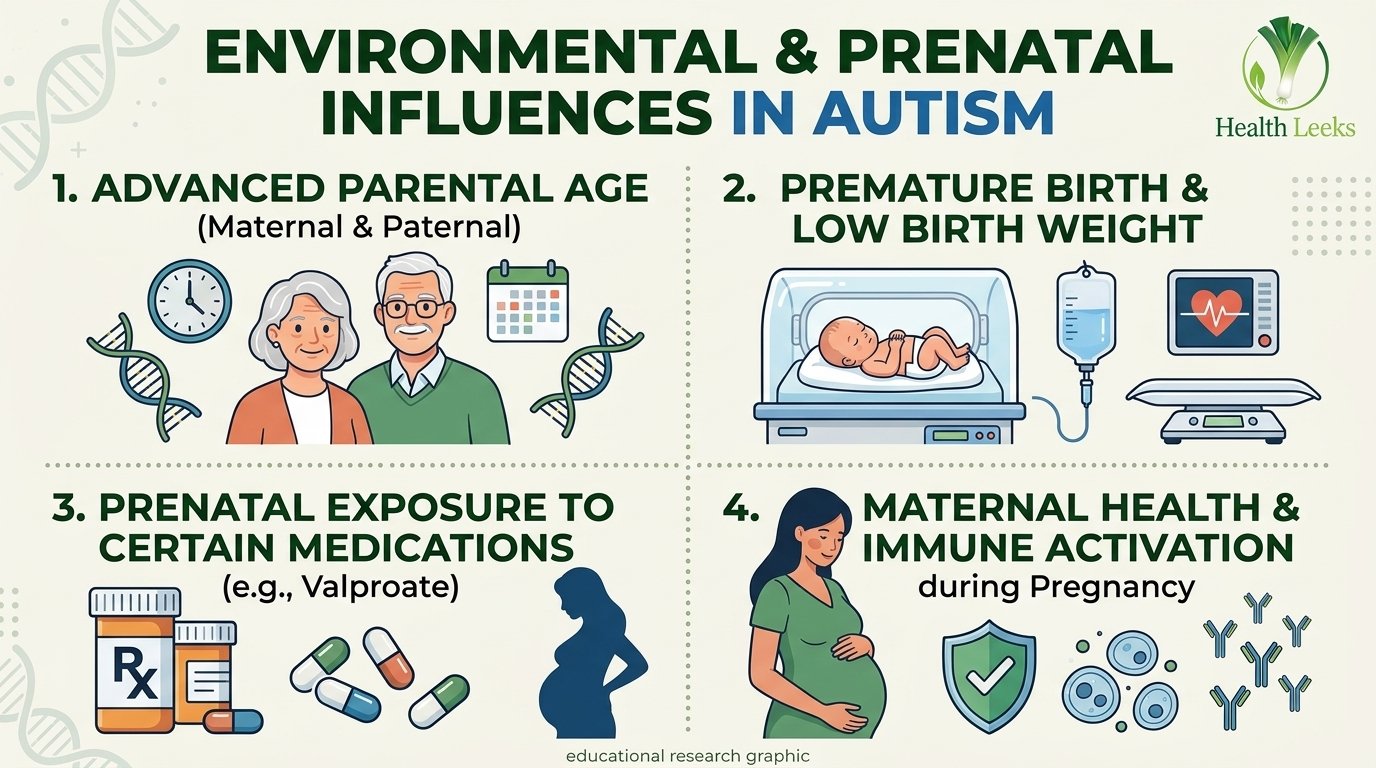
Advanced parental age is one of the most replicated prenatal associations in autism research. Both older maternal and older paternal age show modestly higher likelihood in population studies. Paternal age effects are often stronger, partly because sperm accumulate de novo mutations with age.
Some studies use paternal age above 34 years as a cutoff, while others use age 35 and above. One research summary notes about 18 to 21 percent higher risk per 10-year paternal age increment, but that figure needs primary verification. Cutoffs are study tools, not biological cliffs where risk suddenly jumps.
Older parents should not carry blame for a modest population association. Most children born to older parents are not autistic, even when age-related risk is present. Age also correlates with other factors, including fertility history, health conditions, and pregnancy complications.
Maternal age effects may reflect egg aging, pregnancy health, and obstetric factors as well as genetics. Combined older parental age shows the strongest signal in some studies, but absolute risk remains low. Families benefit more from screening awareness than from age-based fear or guilt.
Short Interpregnancy Interval
Pregnancies spaced less than one year apart are associated with higher autism likelihood in some studies. Autism Speaks lists short spacing among factors linked to increased risk in its cause information. Possible explanations include maternal nutrient depletion, inflammation, and incomplete recovery after birth.
Association does not prove that spacing alone causes autism, and many closely spaced siblings develop typically. Socioeconomic factors, access to care, and pregnancy complications can confound spacing studies. Clinicians discuss spacing as one factor among many, not as a rule for every family.
Birth spacing decisions involve health, family goals, and medical history, so they need individualized discussion. No spacing interval guarantees or prevents autism, and families should not delay needed care over fear. Prenatal vitamins and maternal health support matter more than any single calendar rule.
Maternal Health: Obesity, Diabetes, Hypertension, and Autoimmune Conditions
Maternal obesity, diabetes, hypertension, and immune system disorders are associated with higher autism likelihood in NIEHS summaries. Metabolic conditions may affect fetal brain development through inflammation, blood sugar, oxygen delivery, and nutrient pathways. Effects in population studies are modest, and most exposed pregnancies do not result in autism.
Gestational diabetes and pre-existing diabetes appear in several cohorts, but diabetes alone is not a cause. Maternal obesity may interact with genetics, inflammation, and other pregnancy conditions in complex ways. Hypertension and preeclampsia can affect placental function and fetal oxygen supply, adding further complexity.
Autoimmune conditions and maternal antibodies are under study for effects on fetal brain development. NIEHS-funded research found some maternal antibodies that may interfere with child brain development in some cases. These findings are research signals, not diagnostic tests for individual pregnancies.
Good prenatal care supports maternal and fetal health without promising autism prevention. Blood pressure, blood sugar, weight, and infection care should follow clinician guidance, not internet cause lists. Blaming mothers for metabolic conditions misreads the evidence and harms families seeking care.
Infection, Fever, and Maternal Immune Activation
Severe infection during pregnancy, especially early infection, is associated with higher autism likelihood in some studies. Maternal immune activation means the immune response itself, not only the infecting organism, may affect fetal brain development. Rubella and cytomegalovirus have been studied specifically, but most infections do not lead to autism.
Fever during pregnancy is associated with autism in the Boston Birth Cohort and other research cited by NIEHS. Fever, infection, inflammation, and medicine use are difficult to separate in observational studies. Treating fever itself may matter, but studies cannot assign blame to fever alone.
First trimester timing appears important in several infection studies, when brain structures form rapidly. Later pregnancy infections may still matter, but evidence is less consistent across cohorts. Immune activation research remains active, and mechanisms are not fully established.
Pregnant people should seek care promptly for high fever, severe illness, or concerning symptoms. Vaccination, hygiene, prenatal visits, and infection treatment follow clinician guidance, not fear-based rules. No infection history should be treated as proof of cause for one child.
Prenatal Nutrition: Folic Acid and Prenatal Vitamins
Folic acid and prenatal vitamins are associated with lower autism likelihood in observational studies cited by NIEHS. Women who took prenatal vitamins around conception and in the first month of pregnancy had lower likelihood in CHARGE research. Folic acid appears to explain part of that protective association in study analyses.
Folic acid may reduce the impact of high air pollution and pesticide exposure in some analyses. Multivitamins with or without iron and folic acid were linked to lower autism and intellectual disability likelihood in some cohorts. These are associations, not proof that vitamins prevent autism in any individual pregnancy.
Folate and folinic acid are different forms, and recent claims about folinic acid treatment need careful handling. Small trials in subgroups with folate-receptor antibodies have reported communication gains, but evidence is limited. Folinic acid is not an established autism treatment for all autistic children, and dosing needs specialist guidance.
Standard prenatal vitamin guidance should come from a clinician, obstetrician, or midwife, not a cause article. Folic acid also prevents neural tube defects, which is a separate and well-established benefit. Nutrition supports healthy development broadly, but no vitamin promises a neurodevelopmental outcome.
Birth and Early Childhood Factors
Extreme Prematurity and Very Low Birth Weight
Extreme prematurity and very low birth weight are consistently associated with higher autism likelihood. Children born before 32 weeks show higher diagnosis rates than full-term children in several studies. Very preterm birth affects brain maturation, oxygen delivery, nutrition, and early sensory experience.
Prematurity itself does not cause autism directly in most cases, and many preterm children develop typically. Brain injury, infection, prolonged hospital care, and genetic vulnerability may interact with prematurity. Gestational age, birth weight, and neonatal course together matter more than one cutoff alone.
Neonatal follow-up programs monitor development closely after preterm birth for language, motor, social, and cognitive milestones. Early referral helps when delays appear, regardless of whether autism is later diagnosed. Parents of preterm infants should receive clear milestone guidance and prompt screening pathways.
Birth weight and gestational age should be recorded in developmental histories, but they do not explain every case. Full-term children also develop autism, often with strong genetic contributions and no birth complication. Prematurity is one piece of a larger system, not a standalone explanation.
Birth Complications and Oxygen Deprivation
Birth complications leading to oxygen deprivation are associated with higher autism likelihood in NIEHS and Autism Speaks summaries. Umbilical cord complications, bleeding, and fetal distress can reduce oxygen to the developing brain. Neonatal hypoxia may disrupt vulnerable brain networks during a sensitive period.
Most birth complications do not result in autism, and most autistic children had no severe birth complication. Obstetric care aims to reduce hypoxia risk, but not every complication is preventable or predictable. Families should not assume that a difficult birth caused autism without specialist review of records.
Low Apgar scores, resuscitation needs, and neonatal intensive care stays appear in some risk studies. These markers often reflect broader pregnancy and fetal health issues, not one isolated event. Clinicians interpret birth history alongside genetics, prenatal exposures, and developmental course.
Emergency birth decisions save lives, and hindsight blame helps no family or clinician. Support after a complicated birth focuses on monitoring, early intervention, and family wellbeing. Cause language should stay precise, using association unless a specific injury is established clinically.
Postnatal Factors: What Evidence Does and Does Not Support
Postnatal factors receive less support than prenatal and genetic factors in current cause research. Jaundice, postnatal infection, vitamin deficiencies, and chemical exposures appear in some studies, but replication is weaker. Low levels of care and severe neglect affect development broadly, yet they are not established autism causes.
Early childhood is still crucial for learning, language, social skills, and support, even if it is not the main cause window. Enriched interaction, language exposure, and responsive caregiving support development for every child. Support after birth changes trajectories, even though it does not rewrite prenatal brain development.
Parents sometimes notice regression after illness, fever, or a developmental leap, which can feel causal. Regression of language or social skills should prompt prompt evaluation, regardless of the trigger suspected. Clinicians distinguish regression as a sign from regression as proof of a single cause.
No postnatal food, supplement, or detox product has proven power to reverse autism or remove its cause. Claims about heavy metal detox, restrictive diets, or miracle cures should be treated with skepticism. Families deserve evidence-based support, not costly interventions built on unproven cause theories.
Exposures Under Study: Air Pollution, Pesticides, and Chemicals
Air Pollution and the MET Gene Example
Prenatal air pollution exposure is associated with higher autism likelihood in several US studies. NIEHS-funded research found children of mothers near freeways in the third trimester had about twice the likelihood in one study. Near a freeway meant within about 1,014 feet, or just under three and a half football fields, in that study.
Traffic-related pollution may affect fetal brain development through inflammation, oxidative stress, and placental pathways. A MET gene mutation combined with high air pollution showed increased risk in a well-known interaction study. MET affects brain development and immune signaling, making gene-environment interaction biologically plausible.
Air pollution findings vary by pollutant, timing, location, and study method, so no single dose threshold is settled. Particulate matter, nitrogen dioxide, and traffic proximity are studied most often, but results are not uniform. Moving house cannot be presented as autism prevention, and most exposed pregnancies do not result in autism.
Public health measures to reduce air pollution benefit pregnancy health broadly, beyond any autism association. Indoor air, workplace exposures, and local pollution guidance should follow public health advice. Individual risk cannot be calculated from an address or one pollution reading alone.
Pesticides, Metals, Phthalates, and BPA: Emerging, Not Settled
Certain prenatal pesticide exposures are associated with autism in some cohorts, including organophosphate pesticides and DDT. NIEHS research linked maternal DDT levels in early pregnancy with higher autism risk in offspring. Pesticide type, timing, dose, and genetic susceptibility likely matter, but evidence remains emerging.
Heavy metals such as lead, mercury, and arsenic raise concern because they affect brain development. Seychelles research found no association between prenatal dietary mercury from high fish consumption and autism. Blood mercury levels in autistic children were similar to other children after dietary sources were adjusted in CHARGE research.
Twin baby teeth studies found different metal patterns, with lower manganese and zinc and higher lead at certain periods. Zinc-copper cycles were disrupted in autistic twins compared with non-autistic twins in one study. These are research signals requiring replication, not proof that metals cause autism in individual children.
Phthalates, bisphenol A, flame retardants, and polychlorinated biphenyls are under investigation for early brain effects. These chemicals appear in plastics, household products, and environmental sources, making exposure hard to measure. No single household product has been proven to cause autism, and panic buying or detox claims are unwarranted.
How to Read a Small Association Without Overstating It
Relative risk sounds large even when absolute risk stays low, which misleads many readers. A doubled relative risk from a low baseline still means most exposed children are unaffected. Articles should give absolute context whenever a relative figure is quoted.
Confounding means another factor may explain an apparent link, such as income, location, health, or genetics. Sibling-control studies help reduce confounding by comparing siblings within the same family. Acetaminophen research shows why sibling controls matter, because family factors changed the result dramatically.
Replication means independent studies find similar results in different populations and methods. Single studies, small samples, and unadjusted analyses should be labeled as preliminary. Systematic reviews and large cohorts carry more weight than one headline or one clinic anecdote.
Correlation is not causation, especially for exposures measured after diagnosis or through recall. Prospective cohorts that measure exposure before diagnosis provide stronger evidence than retrospective recall studies. Readers should ask three questions: how large was the study, was it replicated, and was confounding controlled.
Medicines in Pregnancy: Evidence Strength Table
Valproate: The Strongest Medication Signal
Valproate, also called valproic acid, has the strongest medication association with autism in pregnancy research. Valproate treats epilepsy and bipolar disorder, and pregnancy use requires careful specialist planning. Research summaries cite about three times higher autism likelihood with prenatal valproate exposure, but that figure needs primary verification.
Valproate affects fetal brain development through mechanisms that may include gene regulation and neural signaling. Risk rises with dose and timing in some studies, but no safe threshold should be assumed from an article. Epilepsy itself also affects pregnancy outcomes, so confounding must be considered in every study.
People taking valproate must never stop suddenly without specialist guidance, because seizures can endanger parent and fetus. Clinicians discuss alternatives, lowest effective dose, and folic acid supplementation when no alternative exists. Pregnancy planning before conception is the safest time to review epilepsy medicines.
Valproate is a clear example of association with strong replication, unlike most other medicine signals. Even here, most exposed children do not develop autism, and genetic susceptibility likely matters. Valproate history should be discussed clinically, not used to assign blame after diagnosis.
Thalidomide: Historical Example, Not a Current US Pattern
Thalidomide is a historical teratogen linked to birth differences and, in some reports, autism features. Thalidomide caused severe limb differences when used in pregnancy in the late 1950s and early 1960s. Its autism association comes from historical cases, not current US prescribing patterns.
Thalidomide shows that prenatal exposures can affect brain and body development during sensitive windows. Modern thalidomide use involves strict pregnancy prevention programs because of known birth risks. Families should not fear thalidomide as a common current cause, because exposure is now tightly controlled.
Historical examples help explain teratology, which studies how exposures disrupt fetal development. A historical signal does not prove that modern medicines carry the same risk. Each medicine needs its own evidence, dose data, and timing analysis.
SSRIs and Confounding by Maternal Condition
Selective serotonin reuptake inhibitors, or SSRIs, treat depression and anxiety during pregnancy in some people. Early studies suggested a small autism association, with relative risks around 1.2 to 1.5 in some analyses. Later studies found weaker or null results after accounting for maternal psychiatric conditions.
Confounding by indication means the underlying condition, not the medicine, may explain part of the signal. Depression, anxiety, genetics, and healthcare access differ between medicine users and non-users. Sibling studies and adjusted analyses often reduce the apparent SSRI signal substantially.
Stopping antidepressants suddenly can harm pregnant people through relapse, poor sleep, nutrition, and prenatal care disruption. Risk and benefit decisions need psychiatrist, obstetrician, and primary care input together. No article should advise starting or stopping an SSRI based on autism fear alone.
SSRI evidence is therefore moderate and conflicting, not strong and not disproven in every analysis. Step 2 publication should label SSRI findings as confounded and unresolved, not as a settled cause. Maternal mental health itself deserves care, because untreated illness affects pregnancy and family wellbeing.
Acetaminophen in Pregnancy and the 2025 Controversy
Acetaminophen, also called paracetamol, is a common pain and fever medicine in pregnancy. In September 2025, the US Department of Health and Human Services announced a link between prenatal acetaminophen use and autism. The Autism Science Foundation responded that evidence was limited, conflicting, and inconsistent for a causal claim.
A 2024 JAMA sibling study of nearly 2.5 million Swedish children found a small association in standard models. That association disappeared in sibling comparisons, suggesting shared family factors explained the original signal. A Japanese sibling study reached matching conclusions, strengthening the confounding explanation.
The American College of Obstetricians and Gynecologists guidance remained unchanged in 2025 editorial summaries of this debate. Regulatory bodies continued to endorse acetaminophen as an option in pregnancy when used appropriately. Fever itself can pose pregnancy risks, so avoiding all fever treatment is not a safe default.
Pregnant people should discuss pain and fever management with a clinician, pharmacist, or obstetrician promptly. Use the lowest effective dose for the shortest needed time when a clinician advises acetaminophen use. No evidence supports presenting acetaminophen as a proven cause of autism in Step 2 content.
Media headlines in 2025 often simplified a complex observational literature into a single cause claim. Systematic reviews found inconsistent results, dosing problems, recall bias, and indication confounding. Families who used acetaminophen in pregnancy should not carry guilt based on headline claims alone.
What Does NOT Cause Autism
Vaccines, MMR, and Thimerosal: Large Studies, No Link
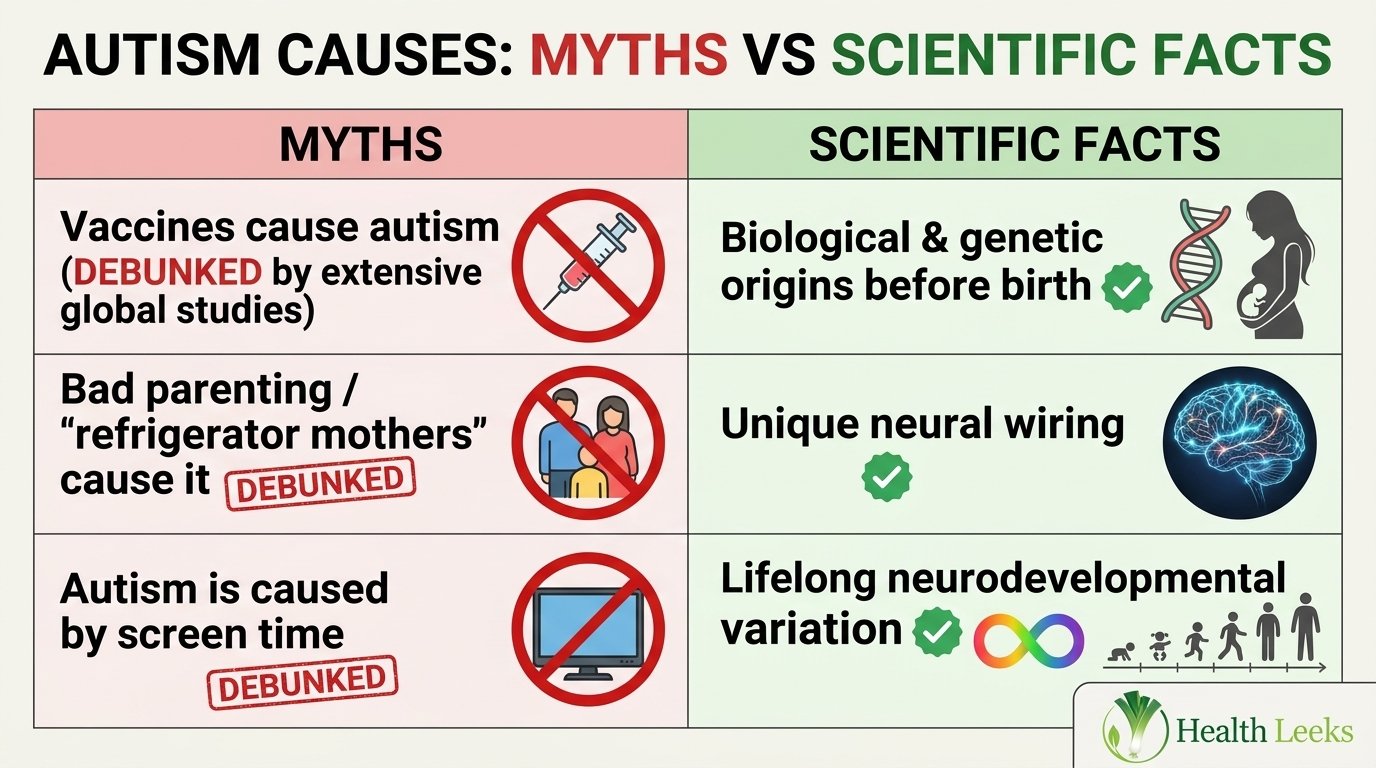
Vaccines do not cause autism, according to decades of research across countries and methods. The CDC, National Academy of Sciences, and World Health Organization have concluded that MMR vaccine is not linked to autism. Thimerosal, a mercury-based preservative, also shows no autism link in large studies.
A nationwide Danish cohort followed 657,461 children and found no increased autism risk after MMR vaccination. That result held even for children with an autistic sibling or other higher-risk features. A 2014 meta-analysis covering more than 1.25 million children reached the same conclusion for MMR and thimerosal vaccines.
A Cochrane review cited in research summaries covered more than 23 million children and found no credible MMR-autism link. That figure should be verified against the primary review before republication, because summaries vary. Even without that figure, cohort and case-control evidence consistently fails to support a vaccine link.
Autism diagnosis often occurs around routine vaccination ages, which creates a timing illusion for families. Signs may become clearer at 12 to 24 months, when MMR and other vaccines are scheduled. Timing coincidence is not causation, especially when unvaccinated children show similar autism rates.
Avoiding vaccines creates real dangers, including measles, whooping cough, and other serious infections. Autistic children may face higher risks from respiratory illness due to health conditions and care barriers. Vaccination decisions should follow pediatric guidance, not disproven cause claims.
The Wakefield Study: History and Retraction
The vaccine scare began with a 1998 paper involving only 12 children and a claimed MMR link. Lead author Andrew Wakefield manipulated data and misreported results, according to later investigations. The paper was retracted for fraud, poor design, and ethical violations, and Wakefield lost his medical licence.
A special US vaccine court in 2009 ruled that parents were not entitled to compensation for vaccine-caused autism claims. Independent teams in Denmark, the UK, and other countries failed to replicate the original claim. Public health damage followed, including lower vaccination rates and measles outbreaks.
Misinformation persists because fear spreads faster than cohort tables and systematic reviews. Social media anecdotes feel personal, while large studies feel abstract to worried parents. Clear cohort sizes, dates, and retraction facts help readers distinguish evidence from repetition.
In November 2025, the Association for Autism and Neurodiversity criticized CDC website wording changes on vaccines and autism. AANE said no new scientific findings prompted the removal of long-standing vaccines do not cause autism language. More than 50 national organizations affirmed the existing vaccine safety evidence after that change.
Step 2 content should therefore cite underlying studies and multiple authorities, not one current CDC sentence alone. Live CDC wording should be re-checked on publication day, because agency pages can change. Consensus remains clear in the study record, even when one webpage changes wording.
Parenting and the Refrigerator Mother Myth
Parenting does not cause autism, and cold or distant parenting theories were disproven decades ago. The refrigerator mother theory blamed mothers for being emotionally cold in the 1950s and 1960s. Research replaced that theory with genetics and early brain development evidence.
Warmth, discipline style, working hours, and screen-time rules do not create autism in children. Autism appears across every parenting style, culture, income level, and family structure. Blame harms parents and delays support, because guilt drains energy from useful help.
Attachment, love, and responsive interaction still matter for every child’s learning and emotional wellbeing. Responsive parenting supports communication and regulation, even though it does not prevent or cause autism. Families deserve support, not suspicion, after a diagnosis or developmental concern.
Fathers also face unfair blame in some online cause theories about age, work, or behavior. Paternal age is a population association, not a moral judgment about fatherhood. Cause language should stay biological and precise, without turning risk factors into parenting verdicts.
Diet, Sugar, Screens, and Birth Control
No credible evidence shows that maternal diet, child diet, or sugar intake causes autism. Gluten, dairy, food additives, and sugar are sometimes blamed online, but cause evidence does not support those claims. Dietary interventions may help specific medical issues, but they do not remove autism or its origin.
Screen time does not cause autism, even though screen use can affect sleep, language exposure, and activity. Screens may reveal traits earlier when a child prefers screens to social play, but preference is not causation. Balanced screen habits support development broadly, without turning screens into a cause story.
Birth control does not cause autism, and no credible study links contraception use to autism risk. Hormonal exposures before conception differ greatly from prenatal exposures during brain development. Myths often confuse timing, correlation, and biological plausibility without evidence.
Everyday habits such as sleep, exercise, and household routines do not create autism in children. Stress during pregnancy is studied as an association, but stress alone is not a proven cause. Families should focus on support and screening, not on auditing every past habit for blame.
Evidence-Strength Table: Strong, Moderate, Emerging, Disproven
| Factor | Evidence strength | Plain-language verdict |
|---|---|---|
| Genetic variation, polygenic and rare | Strong | Largest share of risk, hundreds of variants |
| Advanced parental age | Moderate to strong association | Modest higher likelihood, most children unaffected |
| Extreme prematurity and very low birth weight | Moderate to strong association | Higher likelihood, interacts with genetics and neonatal course |
| Valproate in pregnancy | Strong medication association | Needs specialist pregnancy planning, never self-stop |
| Maternal metabolic and immune conditions | Moderate association | Modest higher likelihood, mechanisms under study |
| Prenatal air pollution | Emerging to moderate | Some cohorts positive, dose and timing unsettled |
| Prenatal pesticides and chemicals | Emerging | Some cohorts positive, replication incomplete |
| Folic acid and prenatal vitamins | Moderate association for lower likelihood | Not a prevention promise |
| SSRIs in pregnancy | Moderate and conflicting | Signal weakens after confounding control |
| Acetaminophen in pregnancy | Unestablished as cause | Sibling studies find no association after family controls |
| Vaccines, including MMR and thimerosal | Disproven as cause | Large cohorts and reviews find no link |
| Parenting and refrigerator mother theory | Disproven | Historical myth, replaced by genetics evidence |
| Diet, sugar, screens, birth control | No credible cause evidence | Do not present as causes |
Evidence strength labels must be checked against primary reviews before republication, because summaries differ. Strong association still does not mean certainty for an individual child or family. Emerging evidence should never be presented with the same confidence as replicated genetic findings.
Can Autism Be Prevented?
What Prenatal Care Can and Cannot Do
No proven method prevents autism, because no single cause can be removed in advance. Prenatal care supports healthy pregnancy through nutrition, infection care, blood pressure control, and diabetes management. Folic acid prevents neural tube defects, but it does not guarantee a neurodevelopmental outcome.
Avoiding valproate in pregnancy when alternatives exist is a specialist decision, not a general prevention rule. Reducing air pollution exposure and avoiding unnecessary chemicals supports pregnancy health broadly. These steps improve overall outcomes, but they cannot promise no autism.
Genetic risk cannot be removed by diet, supplements, detox products, or lifestyle changes. Polygenic risk is present from conception and interacts with development in complex ways. Prevention claims that promise autism avoidance should be treated as marketing, not medicine.
Why No Prevention Checklist Should Promise a Result
Checklists that promise prevention create guilt when a child is later diagnosed despite perfect adherence. Families may blame themselves for normal choices, such as taking a needed medicine or living near traffic. Guilt does not improve support, and it can delay screening and services.
Public health guidance should separate general pregnancy health from autism-specific prevention claims. Smoking cessation, alcohol avoidance, and infection care have clear pregnancy benefits beyond autism research. Those benefits justify guidance on their own, without overstating autism effects.
Research into prevention focuses on risk reduction and early support, not on eliminating neurodevelopment. Early intervention improves communication, learning, and independence for many autistic children. Support is the actionable goal, while prevention remains unproven for autism itself.
If You Are Worried: Screening and Next Steps
Milestones and Screening at 18 and 24 Months
The American Academy of Pediatrics recommends standardized autism screening at 18-month and 24-month well-child visits. Screening also occurs whenever a parent or clinician raises a developmental concern at any age. Screening is not a diagnosis, but it identifies children who need fuller evaluation.
Early milestones include social smiling by six months, babbling by 12 months, and single words by 16 months. Gestures such as pointing or waving usually appear by 14 months in typical development. Two-word phrases usually appear by 24 months, although timing varies among children.
Red flags include no response to name, limited eye contact, loss of skills, and delayed language. Loss of language or social skills at any age deserves prompt clinical discussion, not watchful waiting alone. Parents know their child best, and concerns should be taken seriously at every visit.
M-CHAT is a common toddler screening tool, used alongside clinician observation and developmental history. A positive screen means referral for evaluation, not an automatic autism diagnosis. Screening works best when paired with prompt access to evaluation and support services.
What a Developmental Evaluation Includes
A developmental evaluation reviews medical history, pregnancy and birth history, milestones, behavior, language, and play. Clinicians observe social communication, repetitive behaviors, sensory responses, and learning style directly. Standardized tools such as ADOS may support diagnosis, alongside clinical judgment and history.
Hearing and vision checks matter, because sensory problems can mimic or worsen developmental delays. Genetic, neurological, and medical evaluations may follow when indicated by history or examination. Evaluation teams may include pediatricians, psychologists, speech therapists, and occupational therapists.
Diagnosis uses DSM-5 criteria, which require social communication differences and restricted, repetitive patterns. Support level describes current needs, not a fixed prediction about adulthood. Evaluation should end with a support plan, not only a label or a cause discussion.
Waitlists can be long in many US areas, so early referral matters even before certainty. Families can ask pediatricians about interim support, milestone monitoring, and local early intervention programs. Do not wait for a perfect cause explanation before seeking evaluation or support.
Genetic Testing: What It Can and Cannot Explain
Genetic testing may include chromosomal microarray or whole exome sequencing, depending on clinical guidance. Testing can identify a rare variant linked to autism and sometimes related health risks. Results may guide epilepsy screening, cardiac checks, or family counseling in specific syndromes.
Testing cannot explain most polygenic cases, and a negative result does not rule out autism. Variants of uncertain significance require careful interpretation by genetics specialists, not internet searches. Testing also raises family implications, including recurrence risk and testing for relatives.
Genetic counseling before and after testing helps families understand benefits, limits, and possible incidental findings. Insurance coverage, privacy, and result sharing should be discussed before testing begins. Genetic information should never be used to blame parents or rank children by worth.
Families who decline testing still deserve full support, because support planning does not require a genetic answer. Testing is an option for information, not a requirement for services or acceptance. Clinicians tailor testing recommendations to history, examination, and family goals.
Autism in Girls, Women, and Adults
Why Girls May Be Diagnosed Later
Girls with autism may present differently from boys in social behavior, interests, and communication style. Some girls mask traits by copying peers, rehearsing conversations, or hiding sensory distress. Masking can delay diagnosis, even when support needs are significant.
Diagnostic tools and criteria were developed largely from studies with more boys than girls. Clinicians now recognize camouflaging, internalized anxiety, and different special interests in girls. A girl with strong language skills can still meet autism criteria through social and sensory differences.
Later diagnosis can affect mental health, school support, self-understanding, and access to services. Girls may receive anxiety, depression, or ADHD labels first, while autism remains unrecognized. Cause factors do not differ by sex alone, but recognition pathways clearly do.
Parents and teachers should look beyond stereotypes such as quiet girls or social boys when raising concerns. Any persistent social communication difference plus restricted patterns deserves evaluation, regardless of sex. Early recognition helps girls as much as boys, even when presentation looks subtle.
Adult Diagnosis and the Same Causes
Adults can receive an autism diagnosis after being missed under older, narrower criteria. Some adults learned coping strategies that hid traits at school or work for decades. Life changes such as parenthood, job stress, or mental health difficulties may reveal long-standing differences.
Causes remain rooted in early brain development, even when diagnosis occurs in adulthood. Adult diagnosis does not mean autism began in adulthood or resulted from adult stress. Genetic and prenatal factors from early life still form the cause background for adults.
Adult evaluation reviews childhood history, current social communication, routines, sensory needs, and support impact. School records, family reports, and work history can help reconstruct early development. Diagnosis in adulthood can bring self-understanding, workplace adjustments, and community connection.
Support for adults focuses on communication, employment, relationships, sensory needs, and mental health. Cause discussions should not overshadow practical support, because adults need services now, not only explanations. Acceptance and accommodation matter as much in adulthood as in childhood.
FAQs
What causes autism?
What causes autism is best answered as a system, not a single trigger or event. Genetics, early brain development, and prenatal and birth factors interact to raise likelihood. No one factor explains every case, and most risk factors affect only a small share of outcomes.
Is autism genetic?
Autism is highly heritable in population studies, with twin ranges from 60 to 91 percent depending on method. Hundreds of common variants plus rare variants shape risk through early brain development. Genetics leads the evidence, but environment and timing still interact with genetic risk.
Is there a single autism gene?
No single autism gene exists, and no gene causes autism in every carrier. Hundreds of variants each contribute small effects, while rare variants affect fewer people more strongly. Gene names such as CHD8 or SHANK3 describe pathways, not a universal autism test.
Does autism run in families?
Yes, autism risk is higher when a sibling or close relative is autistic. Infant-sibling research cites about 20 percent recurrence for younger siblings in studied cohorts. Family history increases screening vigilance, but it does not guarantee another diagnosis.
Do vaccines cause autism?
No, vaccines do not cause autism, including MMR vaccine and thimerosal-containing vaccines. Large cohorts, case-control studies, and systematic reviews consistently find no link. The original 1998 claim was retracted after fraud and ethical violations were established.
Does Tylenol in pregnancy cause autism?
No causal link has been established between prenatal acetaminophen use and autism. The largest sibling-controlled Swedish study found no association after family factors were controlled. Clinician guidance on acetaminophen in pregnancy should be followed, not headline claims alone.
Should pregnant people avoid acetaminophen completely?
No blanket avoidance rule follows from autism research, and fever itself can pose pregnancy risks. Pregnant people should discuss pain and fever treatment with a clinician promptly. Use the lowest effective dose only when a clinician advises acetaminophen for a specific need.
Does bad parenting cause autism?
No, parenting does not cause autism, and the refrigerator mother theory was disproven. Autism occurs across all parenting styles, cultures, incomes, and family structures. Responsive, loving parenting supports development, but it neither creates nor prevents autism.
Can diet or sugar cause autism?
No credible evidence links maternal diet, child diet, or sugar intake to autism causation. Gluten, dairy, additives, and sugar myths lack replicated cause evidence. Dietary support may help specific medical issues, but diet does not explain autism origin.
Does screen time cause autism?
No credible evidence shows screen time causes autism, although screens can affect sleep and language exposure. A child who prefers screens may show traits earlier, but preference is not causation. Balanced screen habits support general development without turning screens into a cause.
Do older parents cause autism?
Older parental age modestly raises likelihood, especially older paternal age, but it does not cause autism directly. Most children of older parents are not autistic, and absolute risk remains low. Age is a population association, not a parenting verdict or a reason for guilt.
Does premature birth cause autism?
Extreme prematurity and very low birth weight are associated with higher autism likelihood, not certainty. Brain maturation, oxygen delivery, and neonatal complications may interact with genetic vulnerability. Many preterm children develop typically, and full-term children also develop autism.
Does maternal diabetes or obesity cause autism?
Maternal diabetes, obesity, hypertension, and immune conditions are associated with modestly higher likelihood. Metabolic and immune pathways may affect fetal brain development, but mechanisms remain under study. These conditions alone do not cause autism, and most exposed pregnancies do not result in autism.
Does infection during pregnancy cause autism?
Severe infection and maternal immune activation are associated with higher likelihood in some studies. Rubella, cytomegalovirus, and fever have been studied, but most infections do not lead to autism. Prompt infection care in pregnancy matters, without turning illness history into blame.
Does air pollution cause autism?
Prenatal air pollution is associated with autism in some cohorts, especially traffic-related pollution. A MET gene interaction study supports biological plausibility, but dose, timing, and replication remain unsettled. Air pollution reduction benefits pregnancy health broadly, without promising autism prevention.
Do pesticides cause autism?
Certain prenatal pesticide exposures are associated with autism in some studies, including organophosphates and DDT. Evidence remains emerging, with type, timing, dose, and genetics still under study. No household pesticide has been proven to cause autism in an individual child.
Does valproate in pregnancy cause autism?
Valproate has the strongest medication association with autism among pregnancy medicines studied. Pregnancy use requires specialist planning, because epilepsy itself also affects outcomes. Never stop valproate suddenly without specialist guidance, as seizures can endanger parent and fetus.
Do antidepressants in pregnancy cause autism?
SSRI findings are moderate and conflicting, with signals weakening after maternal conditions are controlled. Depression and anxiety themselves may confound early association studies. Risk and benefit decisions need psychiatrist and obstetrician input, not fear-based stopping or starting.
Does folic acid prevent autism?
Folic acid and prenatal vitamins are associated with lower autism likelihood in observational studies. That association does not prove prevention for any individual pregnancy. Folic acid clearly prevents neural tube defects, which is a separate and well-established benefit.
Can autism be prevented?
No proven method prevents autism, because its causes involve genetics and early brain development. Prenatal care supports healthy pregnancy but cannot promise a neurodevelopmental outcome. Prevention claims from products, diets, or detox programs should be treated with skepticism.
Can autism be cured?
Autism is a neurodevelopmental difference, not a disease with a cure. Support focuses on communication, learning, independence, and quality of life. Early intervention can improve skills and participation, without erasing autism or promising normalization.
Why are autism rates rising?
Rates rise mainly through broader DSM-5 criteria, better screening, greater awareness, and earlier detection. CDC ADDM data rose from 1 in 150 in 2000 to 1 in 31 in 2022 data. Site, access, and identification differences also explain large local variation.
Why is autism more common in boys?
Boys are identified about 3.4 times more often than girls in latest CDC ADDM data. Biological vulnerability and diagnostic bias both likely contribute, with girls more often missed. Girls may mask traits or present differently, leading to later recognition and support.
When should a child be screened for autism?
Standardized screening is recommended at 18 and 24 months, plus any-time screening when concerns arise. Loss of skills, delayed language, and limited social response should prompt prompt evaluation. Parents should raise concerns early rather than waiting for a child to outgrow delays.
Should families get genetic testing for autism?
Genetic testing can sometimes identify a variant and related health risks, but it cannot explain most cases. A negative result does not rule out autism, and uncertain variants need specialist interpretation. Genetic counseling helps families weigh benefits, limits, privacy, and family implications.
Conclusion on What Causes Autism
What causes autism remains a question with a system answer, not a single villain or simple fix. Genetics carries the largest share of risk, early brain development shapes traits, and prenatal and birth factors add modest influence. Most risk factors raise likelihood only slightly, and most exposed children do not develop autism.
Vaccines do not cause autism, parenting does not cause autism, and no single food, screen, or medicine explains the spectrum. Acetaminophen claims from 2025 remain unestablished, and sibling-controlled evidence points to family confounding rather than causation. Valproate and advanced parental age deserve honest discussion, without turning associations into blame or certainty.
Prevalence growth reflects broader criteria, better screening, greater awareness, and earlier detection far more than one new exposure. Site differences, sex differences, and access gaps remind readers that recorded rates measure identification as well as biology. Cause research should guide compassion, not stigma, guilt, or costly unproven interventions.
Families who notice developmental concerns should act early by speaking with a pediatrician and requesting screening. Evaluation, early intervention, genetic counseling when indicated, and school or workplace support can improve participation and wellbeing. Understanding causes helps families reject myths, seek timely help, and support autistic people with clarity and respect.