
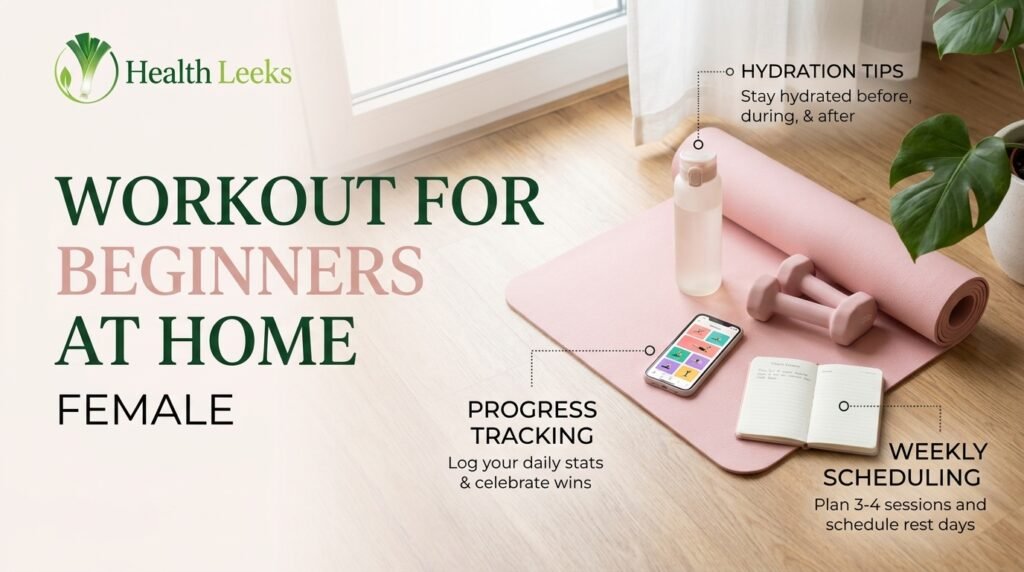
Workout for beginners at home female routines start with simple, repeatable moves that build strength, balance, and confidence without a gym. A good starter plan uses five basic patterns, short sessions, and rest days between strength days. Progress comes from steady practice, not from intense first workouts.
Beginners often fail because plans start too hard, too long, or too complicated. A short full-body routine, done three times per week, beats a long routine done once and abandoned. Mastering basic form first also makes later progress safer and more effective.
Who This Plan Is For
True Beginners at Home
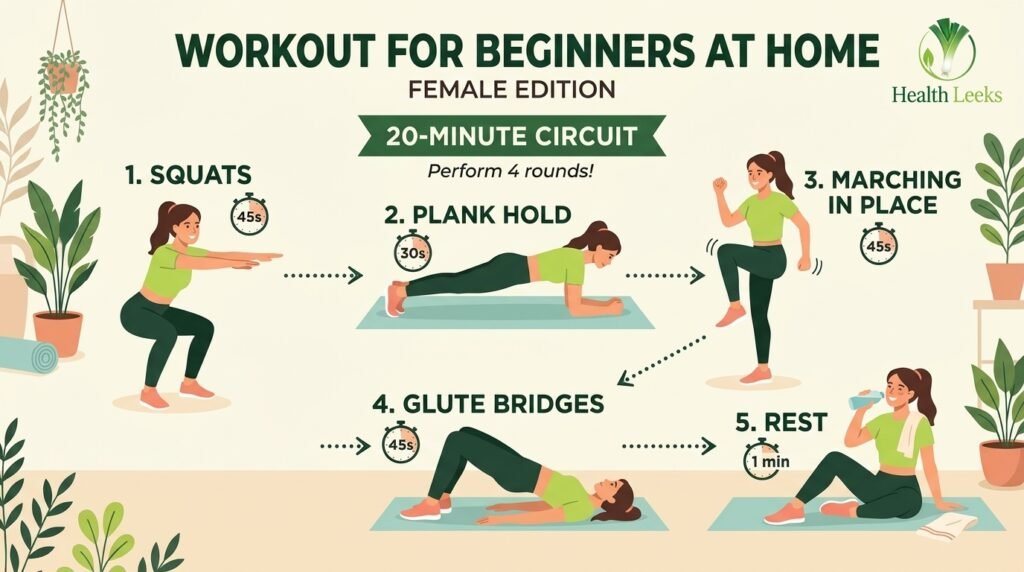
True beginners are people returning after a long break, starting for the first time, or unsure about form and pacing. This plan suits small rooms, apartments, and people who prefer privacy while learning. No gym membership, machine, or prior experience is required.
A small clear space, comfortable clothing, supportive shoes, and water are enough to start. A sturdy chair and a wall provide support for early squats and push-ups. A mat adds comfort for floor work, but it is optional on carpet.
What This Plan Is Not
This plan is not a high-intensity program, a weight-loss promise, or a body-shaping guarantee. It does not claim to target one body area, since spot reduction is not supported as a beginner strategy. Results vary with consistency, sleep, health, and many factors outside exercise alone.
High-impact moves, timed circuits, and advanced core drills belong in later stages, not week one. Jumping, burpees, and fast mountain climbers can wait until basic strength and control improve. Early patience protects knees, shoulders, and confidence.
The Starter Circuit
Warm Up in 5 Minutes
Warm up with gentle marching in place for one minute, keeping steps small and relaxed. Add slow arm circles for 30 seconds, then shoulder rolls for 30 seconds. Finish with easy hip circles and ankle circles, moving only through comfortable ranges.
Warm muscles move more freely and joints feel less stiff during strength moves. Breathing should stay easy enough to talk during warm up. If breathing becomes hard, slow the pace rather than pushing through.
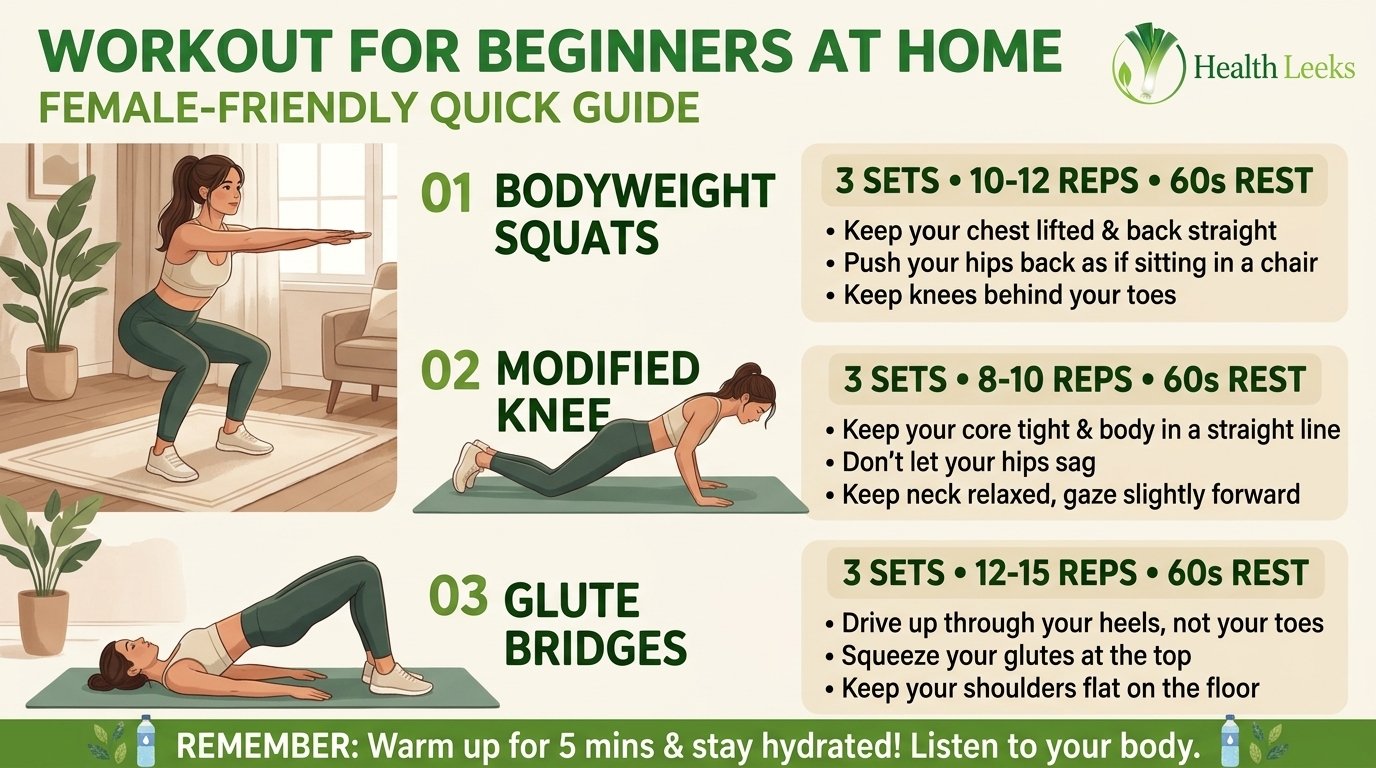
Chair Squat
Stand in front of a sturdy chair with feet hip-width apart and toes slightly turned out. Sit back slowly until your hips touch the chair, then stand by pressing through your heels. Keep your chest tall and your knees tracking over your toes, not collapsing inward.
Chair squats teach the hip hinge and leg strength needed for daily sitting and standing. Start with 8 to 12 slow repetitions, resting 45 to 90 seconds between sets. Use a higher chair or a shorter range when depth feels difficult.
Incline Push-Up
Place hands on a sturdy counter, table, or wall at chest height, with arms slightly wider than shoulders. Step back until your body forms a straight line from head to heels. Bend elbows slowly, lower your chest toward the surface, then press back up.
Incline push-ups build chest, shoulder, and arm strength with less load than floor push-ups. Keep your core firm and avoid letting hips sag or rise. Start with 8 to 12 repetitions, using a higher surface when the move feels too hard.
Glute Bridge
Lie on your back with knees bent, feet flat, and arms relaxed beside you. Press through your heels, lift your hips until shoulders, hips, and knees form a line, then lower slowly. Squeeze your glutes at the top without arching your lower back sharply.
Glute bridges strengthen hips and support posture, walking, and stair climbing. They also teach hip extension without stressing knees. Start with 12 to 15 slow repetitions, pausing briefly at the top of each lift.
Reverse Lunge
Stand tall, step one foot back, and lower until both knees bend comfortably. Keep your front knee over your ankle and your torso upright. Press through your front heel to return to standing, then switch sides.
Reverse lunges challenge balance and leg strength with less forward knee stress than walking lunges for many beginners. Take shorter steps when balance feels shaky, and hold a chair lightly for support. Start with 6 to 8 repetitions per side.
Dead-Bug
Lie on your back with arms reaching toward the ceiling and knees bent over hips. Press your lower back gently toward the floor, then extend one arm and the opposite leg slowly. Return to the start, then switch sides without letting your back arch.
Dead-bug teaches core stability without crunching or straining the neck. Move slowly and breathe normally throughout each repetition. Start with 6 to 8 repetitions per side, stopping when form breaks down.
Bird Dog
Start on hands and knees with wrists under shoulders and knees under hips. Extend one arm forward and the opposite leg back, keeping hips level. Hold briefly, return slowly, then switch sides with control.
Bird dog builds balance, coordination, and trunk stability in a joint-friendly position. Avoid rotating hips open or arching the back as limbs extend. Start with 6 to 8 repetitions per side, using shorter reaches when balance is difficult.
Wall Sit
Stand with your back against a wall and feet a comfortable distance forward. Slide down until knees bend slightly, keeping your back flat against the wall. Hold for 20 to 30 seconds, breathing normally, then stand slowly.
Wall sits strengthen thighs and support knee control without impact or complex balance demands. Keep the hold shorter when knees feel uncomfortable, and avoid deep angles early. Stop when form fails or pain appears, not when a timer demands more.
Cool Down in 5 Minutes
Cool down with slow walking in place for one minute, then gentle stretches for major muscle groups. Stretch calves, thighs, hips, chest, and shoulders slowly, holding each stretch without bouncing. Finish with slow, relaxed breathing for one minute.
Cool down helps heart rate and breathing return to normal gradually. Stretching should feel like mild tension, never sharp pain. Skip any stretch that causes joint pain, tingling, or numbness, and note it for future sessions.
| Move | Starter dose | Main cue | Easy version |
|---|---|---|---|
| Chair squat | 2 sets, 8 to 12 reps | Sit back, press heels | Higher chair, shorter range |
| Incline push-up | 2 sets, 8 to 12 reps | Straight line, firm core | Higher surface, wall version |
| Glute bridge | 2 sets, 12 to 15 reps | Squeeze glutes, level hips | Shorter lift, feet closer |
| Reverse lunge | 2 sets, 6 to 8 per side | Short step, upright torso | Chair support, smaller step |
| Dead-bug | 2 sets, 6 to 8 per side | Flat back, slow limbs | Arms only, then legs only |
| Bird dog | 2 sets, 6 to 8 per side | Level hips, slow reach | Shorter reach, hand support |
| Wall sit | 2 sets, 20 to 30 seconds | Flat back, easy breath | Higher position, shorter hold |
Your First 4 Weeks
Week 1: Learn the Moves
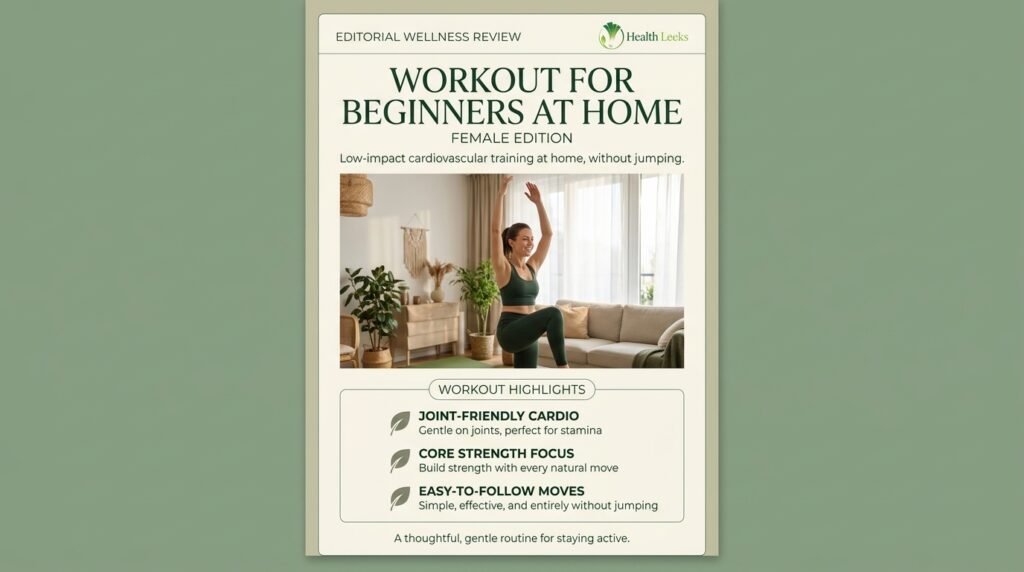
Week 1 focuses on form, comfort, and routine, not on exhaustion or speed. Complete the starter circuit two or three times, on alternate days, with walking on other days. Rest at least one full day between strength sessions for recovery.
Use the easy version of any move that feels awkward or painful. Film yourself briefly, when comfortable, to check knee tracking and back position. Short, correct sessions build confidence faster than long, sloppy sessions.
Week 2: Build Consistency
Week 2 keeps the same moves and dose, while focusing on smoother tempo and steadier breathing. Aim for three strength sessions, each lasting about 20 minutes including warm up and cool down. Add a short daily walk when energy allows, without forcing a step target.
Consistency matters more than adding new moves in week 2. A missed session is not a failed week, so resume at the next planned session. Avoid doubling sessions to catch up, since fatigue increases form errors.
Week 3: Add One Variable Only
Week 3 adds a third set to two or three moves, only when current sets feel controlled. Alternatively, add two repetitions per move, but do not add sets, reps, and difficulty together. Changing one variable at a time makes progress easier to track and safer to manage.
Watch for next-day soreness that lasts more than two days or affects daily movement. Persistent soreness suggests the increase was too large, so return to the previous dose. Progress should feel challenging, not punishing.
Week 4: Review and Choose Next Steps
Week 4 reviews strength, balance, and comfort across all starter moves. Many beginners can complete three sets with good form by this stage, while others need more time. Both outcomes are normal, since starting fitness, age, sleep, and health differ widely.
Choose next steps based on form, not on a calendar alone. Options include adding light resistance bands, increasing range, or adding a new move such as a step-up. Keep the same warm up and cool down, since they support every later stage.
| Week | Strength sessions | Dose change | Focus |
|---|---|---|---|
| Week 1 | 2 to 3, alternate days | Starter dose, easy versions allowed | Form and comfort |
| Week 2 | 3 | Same dose, smoother tempo | Consistency and habit |
| Week 3 | 3 | Add one set or 2 reps, not both | Controlled progression |
| Week 4 | 3 | Review form, choose one next step | Decision point, not a finish line |
Low-Impact Swaps for Every Move
Why Low Impact Matters for Beginners
Low-impact moves keep at least one foot on the floor or reduce landing forces. They protect knees, ankles, and pelvic comfort while still raising heart rate and building strength. Low impact does not mean low effort, since slow, controlled moves can feel challenging.
Beginners with joint concerns, balance concerns, or pelvic symptoms benefit most from low-impact choices. A quiet, joint-friendly routine also suits apartments with downstairs neighbours. Impact can be added later, gradually, when strength and control allow.
Swaps Table
| Instead of this | Use this low-impact swap | Why it helps |
|---|---|---|
| Jumping jacks | Step-out jacks, one foot at a time | No landing force, same rhythm |
| Jump squats | Chair squats, slow tempo | Leg strength without impact |
| Burpees | Step-back plank walkout, slow | Core and arms without jumping |
| Mountain climbers, fast | Slow marching knee lifts | Core control without impact |
| Running in place | Brisk marching, arm swing | Cardio without pounding |
| High knees, fast | Slow high marches, chair support | Hip strength with balance support |
| Lateral jumps | Side steps with small squat | Lateral strength without landing |
| Skipping | Step touches, side to side | Rhythm and coordination, low force |
Quiet Apartment Version
Quiet workouts avoid jumping, stomping, and fast foot strikes that travel through floors. Marching, stepping, and slow strength moves keep noise low while still providing a full session. A mat or rug also reduces sound and adds comfort for floor work.
Schedule quiet sessions at reasonable hours when neighbours are awake, when possible. Soft shoes or socks with grip reduce noise further on hard floors. Quiet does not require whispering or tiny movements, only impact control.
Modifications for Knees, Shoulders, and Back
Knee-Friendly Modifications
Knee-friendly training uses shorter ranges, slower tempo, and support when needed. Chair squats with a higher seat, wall sits at a higher angle, and step-backs instead of lunges reduce knee load. Pain during a move, not mild muscle effort, signals a need to change range or move.
Strengthen hips and glutes alongside knees, since hip weakness often increases knee stress. Glute bridges and side steps support knee tracking during squats and lunges. Seek clinician guidance for swelling, locking, giving way, or pain that persists after rest.
Shoulder-Friendly Modifications
Shoulder-friendly push-ups use higher inclines, narrower hand positions, and shorter ranges. Wall push-ups load shoulders least, followed by counter push-ups, then table push-ups. Avoid overhead pressing or deep dips until shoulder comfort and control improve.
Keep shoulder blades gently down and back during push-ups, without shrugging toward ears. Stop when shoulder clicking, pinching, or sharp pain appears. A qualified professional can assess persistent shoulder symptoms better than a generic routine.
Back-Friendly Modifications
Back-friendly core work favours dead-bug, bird dog, and side-lying moves over sit-ups and fast crunches. Keep the lower back in a neutral, comfortable position, and breathe normally throughout. Slow movement protects the back more than high repetitions or speed.
Avoid rounding heavily under load, twisting fast, or lifting from the floor with a rounded back early. Hip hinge practice with a chair squat teaches safer bending for daily tasks. Seek care for back pain with leg numbness, weakness, or bladder changes.
Wrist-Friendly Options
Wrist discomfort during floor push-ups or planks is common for beginners. Incline push-ups on a counter reduce wrist angle and load compared with floor versions. Fist push-ups or push-up handles change wrist position, but only when they feel comfortable and stable.
Bird dog on forearms, when tolerated, offers another wrist-friendly balance option. Stretch wrists gently after sessions, without forcing painful ranges. Persistent wrist pain, swelling, or numbness deserves professional assessment, not continued pushing.
Weekly Schedules for 15, 20, and 30 Minutes
15-Minute Starter Day
A 15-minute day includes a 3-minute warm up, a 9-minute main circuit, and a 3-minute cool down. Complete one set of each starter move, moving slowly and resting briefly between moves. This schedule suits busy days, low-energy days, and early habit building.
Short sessions still count, since consistency builds strength and skill over weeks. Do not add intense moves to compensate for short time, since intensity without form increases risk. A calm 15-minute session beats a skipped session.
20-Minute Standard Day
A 20-minute day includes a 5-minute warm up, a 10-minute main circuit, and a 5-minute cool down. Complete two sets of each starter move, with 45 to 90 seconds of rest between sets. This length fits most beginners and matches the starter circuit in this plan.
Use the extra time for slower tempo and better form, not for extra exercises. Quality repetitions teach movement patterns that support later progress. Track which moves feel easiest, since those guide the next progression choice.
30-Minute Extended Day
A 30-minute day adds walking, gentle mobility, or a second circuit round to the standard day. Start with 5 minutes of warm up, 20 minutes of main work, and 5 minutes of cool down. Keep intensity moderate, with breathing that allows short sentences.
Extended days suit weekends, days with more energy, or later weeks in the plan. Avoid turning every day into a 30-minute day too early, since recovery still matters. Alternate longer days with shorter days or rest days for balance.
| Day length | Warm up | Main work | Cool down | Best use |
|---|---|---|---|---|
| 15 minutes | 3 minutes | 9 minutes, 1 set | 3 minutes | Busy day, low energy, habit start |
| 20 minutes | 5 minutes | 10 minutes, 2 sets | 5 minutes | Standard starter day |
| 30 minutes | 5 minutes | 20 minutes, 2 to 3 sets or walk added | 5 minutes | Weekend, higher energy, week 3 onward |
Walking, Yoga, and Active Recovery
Walking as Beginner Cardio
Walking is an excellent beginner cardio choice, since it needs no skill, equipment, or jumping. Start with 10 to 15 minutes at a comfortable pace, then add a few minutes per week when comfortable. Brisk walking, where talking is possible but singing is hard, counts as moderate effort for many beginners.
Walking also supports recovery between strength days, by promoting gentle movement without heavy fatigue. Indoor marching, hallway walking, or outdoor walks all count, depending on weather and safety. Choose routes with even surfaces and good lighting for confidence.
Gentle Yoga and Mobility
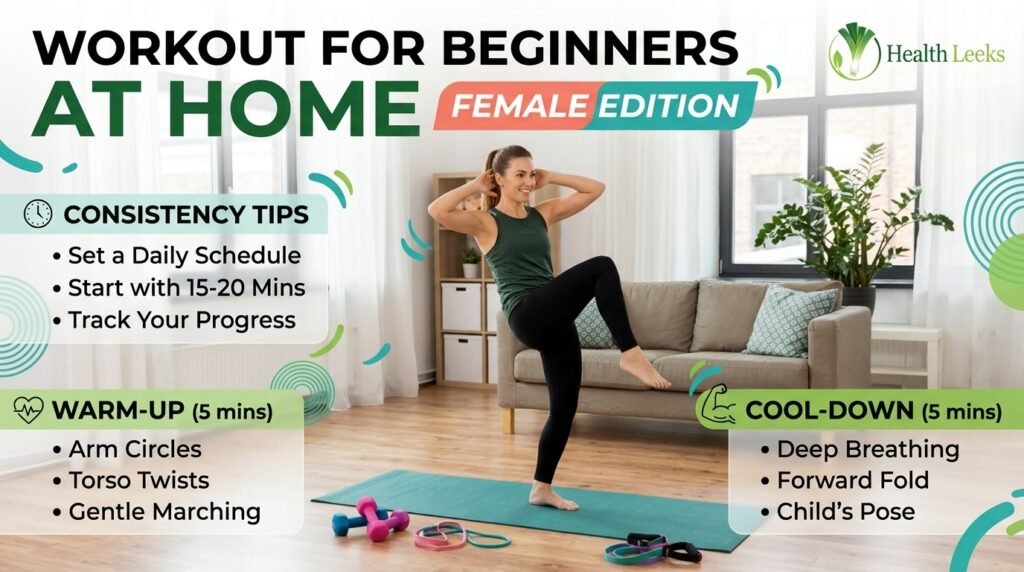
Gentle yoga and mobility work improve flexibility, balance, and body awareness for beginners. Slow flows, seated stretches, and breathing practice complement strength work without adding impact. Avoid deep, forced stretches or advanced balances in early weeks.
Mobility work should feel like mild stretch and control, not pain or strain. Focus on hips, shoulders, ankles, and spine mobility, since those areas support squats, lunges, and push-ups. Short daily mobility sessions often help more than one long weekly session.
Active Recovery Days
Active recovery days use light movement, such as walking, gentle stretching, or slow mobility work. They differ from rest days, which involve no planned exercise and allow full recovery. Both types of days matter, especially after strength sessions that cause next-day soreness.
Schedule active recovery on days between strength sessions, when possible. Keep effort easy, with breathing fully comfortable throughout. If fatigue remains high, choose full rest instead, since recovery supports the next strength session.
Equipment Ladder: None, Band, Light Weights
Stage 1: Bodyweight Only
Bodyweight training uses your own mass as resistance, making it ideal for learning form safely. Chair squats, glute bridges, and incline push-ups all challenge muscles without added load. Mastering these moves builds a foundation for every later stage.
Bodyweight work also suits small spaces, travel, and quiet apartments. No purchase is required to start, and no equipment storage is needed. Progress through reps, sets, tempo, and range before adding external load.
Stage 2: Resistance Bands
Resistance bands add light, variable resistance to squats, bridges, and upper-body moves. Loop bands around thighs for glute bridges and side steps, or anchor bands for rows when space allows. Start with the lightest band that still challenges the last few repetitions.
Bands are affordable, portable, and quiet, but quality and resistance labels vary widely. Check bands for wear, tears, and secure anchoring before each use. Stop when a band snaps, slips, or causes joint pain rather than muscle effort.
Stage 3: Light Dumbbells
Light dumbbells suit later beginner stages, after bodyweight form feels solid. Goblet squats with a light weight, supported rows, and slow step-ups add load gradually. Start with a weight that allows 10 to 12 controlled repetitions without form breakdown.
Dumbbells are optional, not required, for beginner progress. Many beginners progress for months with bodyweight and bands alone. Add weights only when bodyweight moves feel too easy with perfect form, not when boredom alone drives the change.
| Stage | Equipment | Best moves to load | When to move on |
|---|---|---|---|
| Stage 1 | None | All starter moves | Form feels solid for 3 sets |
| Stage 2 | Light band | Bridges, side steps, rows | Bodyweight sets feel easy |
| Stage 3 | Light dumbbells | Goblet squat, row, step-up | Band work feels easy with form |
Habit, Tracking, and Motivation
Habit Stacking for Beginners
Habit stacking links a workout to an existing daily habit, such as morning coffee, lunch break, or evening news. A fixed time and place reduce daily decisions and make starting easier. Lay out clothing and clear space the night before, when possible.
Start with a minimum session, such as 15 minutes, on low-motivation days. Minimum sessions protect the habit without demanding peak effort every day. A short session completed beats a perfect session planned but skipped.
Tracking Without a Scale
Track sessions completed, sets, reps, and how moves feel, rather than body weight alone. A simple notebook or phone note can record date, moves, dose, and energy level. Progress appears as easier reps, better balance, longer holds, and less next-day soreness.
Track non-scale wins too, such as climbing stairs more easily, carrying groceries with less strain, or sitting and standing with less effort. Those daily function gains often matter more than any single number. Review notes every two weeks to spot trends and plateaus.
Motivation and Social Support
Social support helps beginners stay consistent, whether through a friend, family member, or online community. A workout partner, even by video call, adds accountability and enjoyment. Share goals in general terms, without comparing bodies, weights, or progress rates.
Motivation fluctuates, so systems matter more than daily enthusiasm. Prepare backup plans for busy days, travel, illness, and low energy. A backup plan might be a 10-minute walk, a short mobility session, or a full rest day with a planned return date.
Safety and Stop Rules
General Safety Rules
Warm up before strength work, cool down after, and move through comfortable ranges only. Breathe normally, avoid holding breath during effort, and keep movements slow and controlled. Hydrate before, during, and after sessions, especially in warm rooms.
Wear supportive shoes on hard floors, and clear tripping hazards from the workout space. Keep a phone nearby when exercising alone, especially for balance moves. Safety habits protect beginners more than any single exercise choice.
Stop Rules: When to Stop Immediately
Stop immediately for chest pain, severe breathlessness, dizziness, faintness, or sudden weakness. Stop for sharp joint pain, sudden swelling, numbness, or a feeling that something is wrong. Seek urgent care for chest symptoms, severe breathlessness, or neurological symptoms without delay.
Stop a move when form breaks down repeatedly, even without pain. Poor form under fatigue teaches faulty patterns and increases strain. Rest, reduce range, or switch to an easier version, and resume only when control returns.
Soreness Versus Pain
Muscle soreness after new exercise often peaks one to two days later and feels like dull, general muscle tenderness. It usually improves with gentle movement, sleep, and time. Pain, by contrast, feels sharp, localised to a joint, or worsens with specific movements.
Seek clinician guidance for pain that lasts beyond a few days, swelling, bruising without clear cause, or pain that limits daily tasks. Do not train through joint pain in hopes it will disappear. Early assessment prevents small problems from becoming larger setbacks.
Special Situations
Period and Low-Energy Days
Menstruation affects energy, comfort, and motivation differently for each person, so no single workout rule fits everyone. Some people prefer light walking, gentle mobility, or a shorter strength session on heavy days. Others feel comfortable with a normal starter session, with extra rest as needed.
Choose movement based on symptoms, sleep, and comfort on that day, not on a fixed schedule. Cramps, heavy flow, dizziness, or severe pain deserve rest and clinician advice when needed. A flexible plan with backup options supports consistency without forcing effort.
Postpartum and Pelvic Floor Notes
Postpartum return to exercise requires clinician clearance, since recovery varies by birth type, complications, and individual healing. General beginner moves in this plan are not a postpartum programme on their own. Pelvic floor symptoms, such as leaking, heaviness, or pain, need professional assessment, not generic core drills.
Pelvic floor awareness means noticing symptoms during coughing, lifting, jumping, and core work, and seeking guidance when symptoms appear. Avoid high-impact moves, heavy loads, and intense core work until cleared and symptom-free during easier tasks. A qualified pelvic health professional can guide progression safely.
Older Beginners and Joint Concerns
Older beginners benefit greatly from strength, balance, and mobility work, but progression should be slower and more gradual. Chair support, wall support, and shorter ranges make starter moves safer and more comfortable. Balance practice, such as bird dog and heel-to-toe standing, deserves special attention.
Bone health, medication, and existing conditions affect exercise choices, so clinician input matters for older beginners with medical concerns. Avoid sudden, high-impact, or heavily loaded moves without guidance. Steady, low-impact strength work supports daily independence and confidence.
Busy Schedules and Small Spaces
Busy schedules suit short, repeatable sessions in a single room, without setup time. A 15-minute starter session, a 10-minute walk, or a mobility break can fit between work, family, and rest. Split sessions, such as two 10-minute blocks, also count when a single block feels impossible.
Small spaces need only a mat-sized area, a sturdy chair, and a wall. Move furniture briefly when needed, and choose quiet, low-impact moves for shared buildings. A small, consistent space beats a perfect gym setup that is rarely used.
Mistakes to Avoid
- Starting with high-intensity workouts, jumping, or advanced moves in week one.
- Skipping warm up and cool down to save time, which increases stiffness and strain.
- Chasing high repetitions with poor form, instead of slower, controlled repetitions.
- Training through joint pain, sharp pain, or symptoms that need assessment.
- Adding sets, reps, and difficulty together, which hides the cause of fatigue.
- Comparing progress, body, or strength with others, which damages motivation unfairly.
- Buying supplements, bands, or weights before mastering bodyweight form.
- Skipping rest days, then quitting after exhaustion or excessive soreness.
- Using fast, bouncing stretches or forced ranges that strain joints.
- Quitting after one missed week, instead of resuming at the next planned session.
Tips That Help Beginners Succeed
- Keep the same starter moves for four weeks, changing only one variable at a time.
- Practise form in front of a mirror or brief video, when comfortable, once per week.
- Breathe normally, brace gently, and stop when form breaks down.
- Schedule workouts like appointments, with a fixed time and place.
- Prepare clothing, water, and space the night before morning sessions.
- Walk daily, even on rest days, at a comfortable pace.
- Sleep and hydrate consistently, since recovery supports strength gains.
- Track sessions, reps, and comfort, not body weight alone.
- Celebrate function gains, such as easier stairs, carrying, and standing.
- Ask a qualified professional for help with pain, pelvic symptoms, or medical concerns.
Frequently Asked Questions
What is the best beginner workout for women at home?
A gentle full-body bodyweight circuit, done two to three times per week, suits most true beginners. Chair squats, incline push-ups, glute bridges, reverse lunges, and dead-bug cover legs, upper body, hips, and core. Add walking on other days, and progress slowly after four weeks.
How do I start working out at home as a beginner female?
Start with a 5-minute warm up, one set of each starter move, and a 5-minute cool down. Choose easy versions, move slowly, and rest between moves as needed. Repeat the same session two to three times per week, on alternate days, for the first month.
Do I need equipment for a beginner home workout?
No equipment is required for the starter plan, since bodyweight provides enough resistance for learning form. A chair, wall, and comfortable floor space are enough. Bands and light weights become useful later, after bodyweight form feels solid.
How often should a beginner woman work out?
Two to three strength sessions per week, on alternate days, suit most beginners. Walking and gentle mobility can fill other days, with at least one full rest day per week. Daily intense workouts increase soreness and form errors without speeding beginner progress.
How long should a beginner workout be?
A 20-minute session, including warm up and cool down, suits most beginners. Shorter 15-minute sessions work well on busy or low-energy days. Longer 30-minute sessions suit later weeks, weekends, or days with higher energy.
What exercises should a beginner woman start with?
Start with chair squats, incline push-ups, glute bridges, reverse lunges, dead-bug, and bird dog. Those moves teach squatting, pushing, hip extension, lunging, and core stability. Add wall sits for thigh endurance when knee comfort allows.
Is a 20 minute home workout enough for a beginner?
Yes, when the 20 minutes include warm up, controlled strength work, and cool down. Two to three such sessions per week meet national guidance for muscle strengthening frequency for adults. Walking adds cardio and recovery benefits on other days.
Should beginners do strength or cardio first?
Beginners benefit most from strength first, since fresh muscles learn form better and fatigue less. Walking or gentle cardio after strength, or on separate days, works well. Avoid intense cardio before strength, since fatigue increases form errors.
Can I build strength with bodyweight only?
Yes, beginners can build foundational strength with bodyweight alone for weeks or months. Progress comes from more sets, slower tempo, greater range, and harder variations. Add bands or weights only when bodyweight moves feel easy with perfect form.
When should a beginner add weights?
Add weights when three sets of a bodyweight move feel controlled and easy, with no form breakdown. Start with a light weight that allows 10 to 12 controlled repetitions. Keep the same slow tempo, and stop when form fails, even if repetitions remain.
How many reps should a beginner woman do?
Most starter moves use 8 to 12 repetitions, with glute bridges at 12 to 15 repetitions. Core moves use 6 to 8 repetitions per side, with slow control. Choose a rep range that challenges the last two repetitions without breaking form.
Is soreness normal after a beginner workout?
Mild muscle soreness one to two days after new exercise is common and usually fades with gentle movement. Sharp joint pain, swelling, numbness, or soreness that limits daily tasks is not normal soreness. Seek guidance when pain persists, worsens, or follows a specific injury.
What is a good beginner workout with bad knees?
Chair squats with a higher seat, glute bridges, wall sits at a higher angle, and step-backs suit many people with knee concerns. Avoid deep squats, jumping, and lunges that cause knee pain. Seek clinician guidance for swelling, locking, giving way, or persistent knee pain.
What is a good beginner workout with no jumping?
Step-out jacks, marching, chair squats, glute bridges, and slow lunges provide a full workout without jumping. Low-impact cardio, such as brisk marching or walking, raises heart rate without landing forces. Quiet apartment routines use the same low-impact swaps.
Do I need a mat for home workouts?
A mat adds comfort for floor work, especially on hard floors, but it is not required. Carpet, a rug, or a folded towel can work for short floor sessions. Choose a non-slip surface for standing moves, and keep the workout area clear of tripping hazards.
Should beginners work out every day?
Beginners should not do intense strength work every day, since muscles and joints need recovery between sessions. Light walking, gentle mobility, or stretching can fill rest days. Alternate strength days with active recovery or full rest for best results.
Is walking enough exercise for a beginner?
Walking is an excellent starting point for cardio, mood, and daily movement, especially for inactive beginners. Strength work still matters for muscle, bone, balance, and daily tasks. Combine walking with two to three strength sessions per week for balanced beginner fitness.
Should I work out during my period?
Many people can work out during menstruation, with intensity adjusted to symptoms and energy. Light walking, gentle mobility, or a shorter strength session suit heavy or painful days. Rest when cramps, heavy flow, dizziness, or severe pain make movement uncomfortable, and seek care when needed.
When can I work out after having a baby?
Postpartum return timing depends on birth type, complications, and individual recovery, so clinician clearance is essential. Start with walking and gentle mobility only after clearance, and progress gradually. Pelvic symptoms, such as leaking or heaviness, need professional assessment before intense or high-impact work.
How do beginners track progress without a scale?
Track sessions completed, sets, reps, hold times, and how moves feel over weeks. Note daily function gains, such as easier stairs, carrying, sitting, and standing. Review notes every two weeks, since strength and balance gains often appear before any scale change.
Should beginners do HIIT?
Beginners should not start with high-intensity interval training, since it demands speed, impact, and fatigue tolerance that beginners are still building. Low-impact strength and walking build a safer base first. Interval work can enter later, gradually, after basic strength and control improve.
Do beginners need protein powder or supplements?
Beginners do not need protein powder, fat burners, or other supplements to start a home workout plan. Balanced meals, hydration, and sleep support recovery for most beginners. Discuss supplements with a clinician or dietitian when medical conditions, dietary restrictions, or deficiencies exist.
What is a good beginner workout for women over 50 at home?
Chair squats, glute bridges, wall push-ups, reverse lunges with support, and bird dog suit many beginners over 50. Balance practice, gentle mobility, and walking deserve extra attention. Progress slowly, use support when needed, and seek clinician input for medical concerns or joint pain.
Conclusion
Workout for beginners at home female success comes from simple moves, short sessions, and steady weeks, not from intense first workouts. Chair squats, incline push-ups, glute bridges, reverse lunges, dead-bug, and bird dog build a balanced foundation for strength, balance, and daily movement. Rest days, low-impact swaps, and slow progression protect joints and confidence while habits form.
Start with the starter circuit two to three times per week, walk on other days, and change only one variable at a time. Track sessions and function gains, adjust for energy and symptoms, and seek professional guidance for pain, pelvic symptoms, or medical concerns. A calm, repeatable routine done for four weeks creates a stronger base than any single intense session ever will.





2 thoughts on “Workout for Beginners at Home Female: A Gentle No-Equipment Starter Plan”