
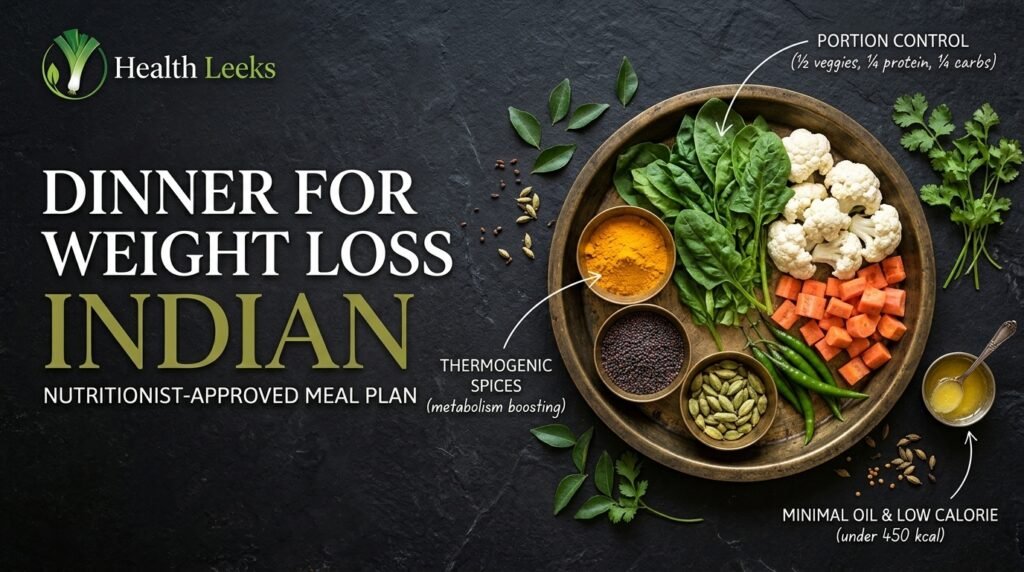
Dinner for weight loss Indian cooking starts with dal, sabzi, and a measured grain portion, not with a separate diet menu. Family dishes already work well when oil is measured, vegetables fill half the plate, and creamy gravies stay occasional. Spices add flavour without calories, while oil, ghee, and large grain portions drive most dinner calories.
Indian food is regionally diverse, with different grains, vegetables, spices, and traditions across North, South, East, and West India. No single dinner represents all Indian cooking, and no single rule fits every household. Dinners below draw from several traditions, adapted for US kitchens, US grocery stores, and US measuring units.
How to Build a Weight Loss Thali
Half Plate Sabzi and Salad
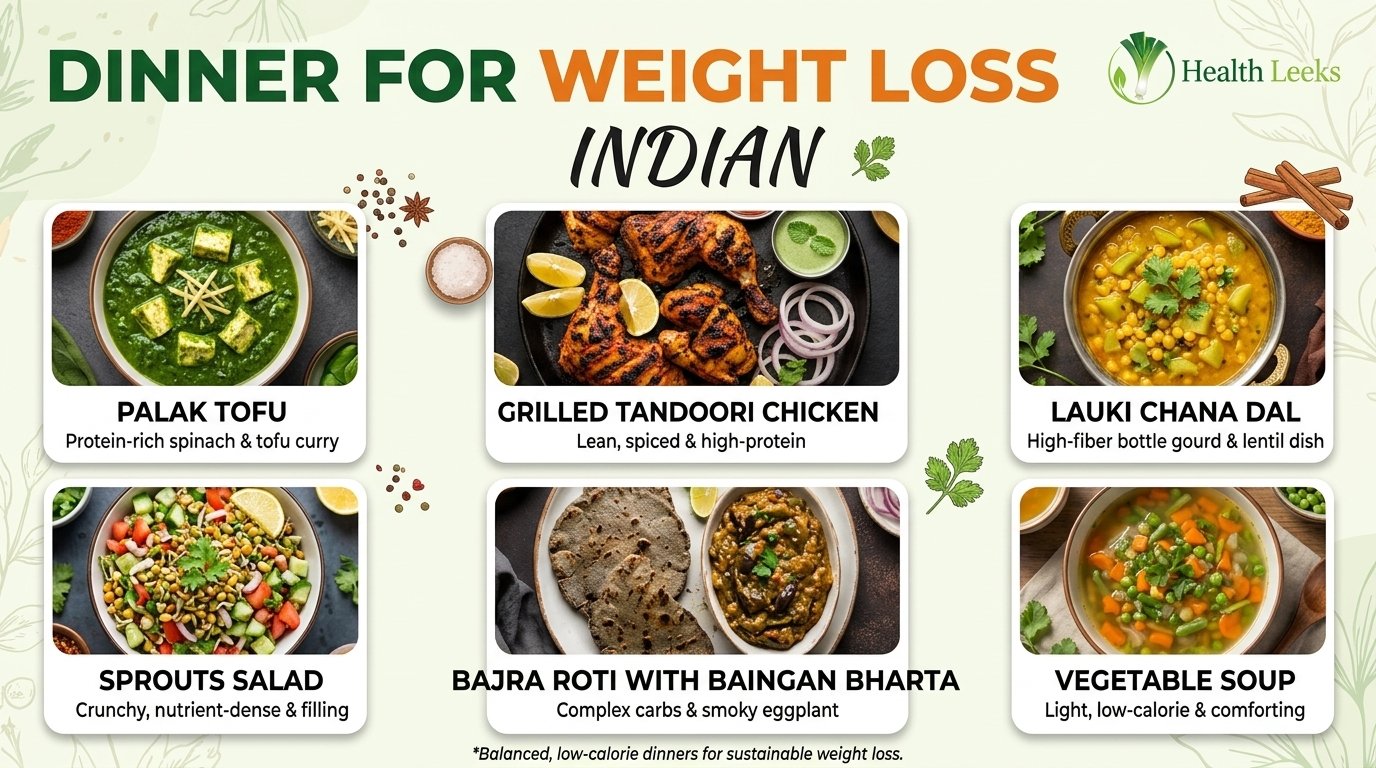
Fill half the plate with sabzi, salad, soup, or cooked vegetables, such as bhindi, lauki, cabbage, cauliflower, or spinach. Vegetables add fibre, volume, and colour, helping a moderate dinner feel complete. Raw salad with lemon and salt adds crunch, while cooked sabzi adds warmth and spice depth.
Start dinner with soup or salad when appetite feels high, since a light starter slows the main course naturally. Clear vegetable soup, tomato carrot soup, and spinach garlic soup all suit late, light dinners. Avoid creamy soups for regular dinners, since cream adds fat quickly without much protein or fibre.
Dal or Lean Protein Quarter
Fill one quarter of the plate with dal, paneer, tofu, chicken, fish, or eggs, depending on household tradition. Dal plus grain provides complementary plant protein across the day, while paneer, chicken, and eggs provide concentrated protein in smaller portions. Choose protein you enjoy, since repeatable dinners matter more than perfect protein choices.
Protein supports satiety after dinner, reducing late-night snacking for many people. Dal also provides fibre, which slows eating and adds fullness. Combine dal with vegetables, not merely with large grain portions, for a balanced thali.
One Measured Grain Portion
Fill the remaining quarter with one measured grain portion, such as one roti, 1/2 to 3/4 cup cooked rice, or cauliflower rice. Grain portions change dinner calories more than spice choices, so measure at first until portions feel familiar. A second roti or a second rice serving often adds 100 to 200 calories, depending on size.
Cauliflower rice suits days when a lighter grain base is preferred, while brown rice suits days when a heartier grain is wanted. Basmati rice, brown rice, and broken wheat (dalia) all fit, with portion control mattering more than grain type alone. Keep grain portions consistent, then adjust vegetables and protein for fullness.
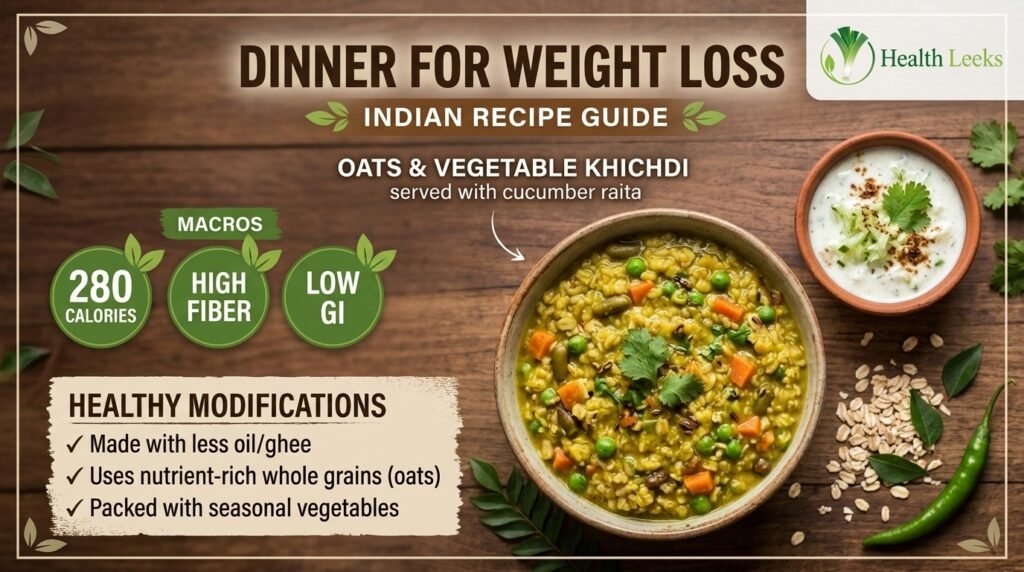
Moong Dal Khichdi
Moong dal khichdi combines moong dal and rice in one comforting, easily digested pot. Estimated nutrition is about 180 to 220 calories per bowl, depending on oil, rice portion, and dal ratio. Estimates vary by recipe version, so treat them as guides, not exact values.
Ingredients
- Moong dal, 1/4 cup dry per serving, rinsed
- Basmati or brown rice, 1/4 cup dry per serving, rinsed
- Onion, 1/4 medium per serving, diced
- Carrots, 1/4 cup per serving, diced
- Ginger, 1 teaspoon per serving, grated
- Cumin seeds, 1/4 teaspoon per serving
- Turmeric, 1/4 teaspoon per serving
- Oil, 1 teaspoon per serving, measured
- Salt and black pepper, to taste
Method
- Heat measured oil in a pot or pressure cooker over medium heat.
- Add cumin seeds and cook until they sizzle lightly.
- Add onion, carrots, and ginger, cooking for 3 minutes.
- Stir in dal, rice, turmeric, and salt.
- Add water, about 3 cups per 1/2 cup combined dal and rice.
- Simmer for 25 minutes, or pressure cook for 8 to 10 minutes.
- Rest for 5 minutes, stir well, and adjust water for desired consistency.
- Serve with a small salad or steamed vegetables on the side.
Why It Works
Khichdi provides plant protein from dal, gentle carbohydrates from rice, and fibre from vegetables in one bowl. Soft texture suits late dinners, low-appetite evenings, and days when heavy food feels unappealing. A single pot also reduces cooking time, cleanup, and decision fatigue.
Oil control matters most here, since khichdi needs little fat for flavour. Ginger, cumin, and turmeric add warmth without cream or fried bases. A vegetable side increases volume, so the bowl itself can stay moderate without feeling small.
Swaps and Leftovers
Swap moong dal for masoor dal or toor dal, adjusting cooking time accordingly. Swap rice for broken wheat (dalia) for a higher-fibre khichdi-style bowl. Add spinach, peas, or cauliflower for extra vegetables, keeping dal and grain portions consistent.
Refrigerate khichdi for 3 to 4 days in sealed containers, adding water when reheating. Freeze portions for up to 3 months, thawing safely in the refrigerator before reheating. Reheat until steaming throughout, stirring well for even heating.
Palak Chicken
Palak chicken combines spinach and chicken in a spiced, tomato-based sauce without heavy cream. Estimated nutrition is about 300 to 380 calories per serving, depending on chicken cut, oil, and whether rice or roti accompanies it. Breast meat keeps the dish leaner than thigh meat, though both can fit with portion control.
Ingredients
- Chicken breast, 4 ounces per serving, cut into pieces
- Fresh spinach, 2 cups per serving, washed
- Onion, 1/4 medium per serving, diced
- Tomatoes, 1/2 cup per serving, diced
- Garlic and ginger, 1 teaspoon each per serving, minced or grated
- Garam masala, cumin, and coriander powder, to taste
- Oil, 1 teaspoon per serving, measured
- Plain yoghurt, 2 tablespoons per serving, optional, for lightness
- Salt and black pepper, to taste
Method
- Heat measured oil in a pan over medium heat.
- Cook onion for 3 minutes, until softened and lightly golden.
- Add garlic, ginger, and spices, stirring for 1 minute.
- Add chicken pieces and cook for 5 minutes, until lightly browned.
- Add tomatoes and simmer for 5 minutes, until sauce thickens slightly.
- Add spinach in batches, stirring until wilted.
- Stir in yoghurt off the heat when using it, to prevent splitting.
- Check chicken with a thermometer until it reaches 165 degrees Fahrenheit internally.
- Serve with 1 roti or 1/2 cup cooked rice and salad.
Why It Works
Spinach adds volume, colour, and fibre, while chicken adds lean protein that keeps dinner satisfying. Tomato and spices create depth without cream, butter, or fried onion paste. Yoghurt, when used off heat, adds tang and lightness instead of heavy cream richness.
Palak dishes suit family dinners, since spinach wilts into the sauce and children often accept it more readily than plain greens. A measured grain portion completes the plate, while extra spinach or salad increases volume without large calorie increases. Leftovers also improve, as spices meld overnight.
Swaps and Leftovers
Swap chicken for paneer, tofu, or chickpeas, adjusting cooking times accordingly. Swap spinach for kale, chard, or methi leaves, cooking greens until tender before adding protein. Omit yoghurt for a dairy-free version, and finish with lemon juice for brightness instead.
Refrigerate palak chicken for 3 to 4 days in sealed containers. Reheat until steaming hot, reaching 165 degrees Fahrenheit for poultry leftovers. Freeze portions for up to 3 months, thawing safely in the refrigerator before reheating.
Tandoori Paneer With Vegetables
Tandoori paneer with vegetables offers grilled protein, smoky spice flavour, and colourful peppers without a heavy gravy. Estimated nutrition is about 280 to 350 calories per serving, depending on paneer portion, oil, and marinade ingredients. Grilling or baking keeps the dish light, while yoghurt marinade adds tang and tenderness.
Ingredients
- Paneer, 3 to 4 ounces per serving, cut into cubes
- Bell peppers, 1 cup per serving, cut into chunks
- Onion, 1/2 medium per serving, cut into chunks
- Plain yoghurt, 2 tablespoons per serving, for marinade
- Tandoori spice blend or garam masala, 1 teaspoon per serving
- Lemon juice, 1 teaspoon per serving
- Oil spray or 1 teaspoon oil, measured, for grilling
- Salt, turmeric, and chili powder, to taste
Method
- Mix yoghurt, lemon juice, spices, and salt in a bowl.
- Add paneer, peppers, and onion, coating gently and evenly.
- Marinate for 20 to 30 minutes in the refrigerator.
- Thread paneer and vegetables onto skewers, or spread on a sheet pan.
- Grill or bake at 425 degrees Fahrenheit for 12 to 15 minutes.
- Turn once halfway, until edges brown lightly.
- Serve with salad, mint chutney in a small portion, and 1 roti when desired.
Why It Works
Paneer provides concentrated protein and calcium, with a firm texture that grills well. Vegetables add volume, colour, and fibre, while yoghurt marinade adds flavour without cream. Grilling creates smoky depth, reducing the need for fried bases or rich sauces.
Portion control matters for paneer, since it is more calorie-dense than dal or vegetables. A 3 to 4 ounce portion, paired with generous vegetables, balances protein and volume. Mint chutney adds freshness, but sugary chutneys should stay in small portions.
Swaps and Leftovers
Swap paneer for tofu, chicken, or mushrooms, adjusting marinade time and cooking temperature accordingly. Swap bell peppers for zucchini, cauliflower, or mushrooms when preferred. Omit roti for a lower-carbohydrate dinner, serving extra salad or cauliflower rice instead.
Refrigerate leftovers for 3 to 4 days, and reheat gently until steaming. Paneer can dry when over-reheated, so warm briefly with a splash of water or lemon. Freeze marinated, uncooked paneer and vegetables for up to 1 month, thawing safely before grilling.
Lauki Curry With Roti
Lauki curry, made with bottle gourd, offers a light, water-rich sabzi that pairs perfectly with one roti. Estimated nutrition for lauki curry with 1 roti is about 200 calories in one competitor table, though oil and roti size change that figure sharply. Treat that figure as a light-dinner estimate, not a guaranteed total.
Ingredients
- Lauki (bottle gourd), 1 cup per serving, peeled and cubed
- Onion, 1/4 medium per serving, diced
- Tomatoes, 1/4 cup per serving, diced
- Garlic and ginger, 1 teaspoon each per serving
- Cumin seeds, 1/4 teaspoon per serving
- Turmeric and coriander powder, to taste
- Oil, 1 teaspoon per serving, measured
- Roti, 1 per serving, whole wheat
- Salt and black pepper, to taste
Method
- Heat measured oil in a pan over medium heat.
- Add cumin seeds and cook until they sizzle.
- Add onion, garlic, and ginger, cooking for 3 minutes.
- Add tomatoes and spices, cooking until tomatoes soften.
- Add lauki and a small amount of water, then cover.
- Simmer for 12 to 15 minutes, until lauki turns tender.
- Season with salt, and finish with fresh coriander when available.
- Serve with 1 roti and a small salad or dal when desired.
Why It Works
Lauki is high in water and low in calories, making it ideal for a light dinner that still feels like a full sabzi. Tomato and onion base adds flavour without cream, while cumin and turmeric add warmth. One roti provides a measured grain portion, completing the plate without excess.
Lauki cooks quickly and absorbs spices well, suiting busy weeknights. It also pairs with dal for extra protein on days when a purely vegetable sabzi feels too light. A salad starter increases volume further, without adding a second grain portion.
Swaps and Leftovers
Swap lauki for zucchini, cabbage, cauliflower, or green beans, adjusting simmer time accordingly. Add dal on the side for extra protein, keeping grain portions measured. Use frozen lauki or zucchini when fresh lauki is unavailable in US grocery stores.
Refrigerate lauki curry for 3 to 4 days, and reheat until steaming. Roti stores best separately, wrapped to prevent drying, for 1 to 2 days. Freeze lauki curry for up to 3 months, thawing safely before reheating.
Chana Salad Bowl
Chana salad combines chickpeas, cucumber, tomato, onion, lemon, and chaat masala in a fresh, no-cook dinner. Estimated nutrition is about 200 calories per serving in competitor tables, depending on chickpea portion, oil, and added toppings. Estimates vary with portion size, so measure chickpeas rather than pouring freely.
Ingredients
- Cooked chickpeas, 1/2 cup per serving, rinsed when canned
- Cucumber, 1/2 cup per serving, diced
- Tomato, 1/2 cup per serving, diced
- Onion, 2 tablespoons per serving, finely diced
- Lemon juice, 1 teaspoon per serving
- Chaat masala, 1/4 teaspoon per serving
- Fresh coriander, 1 tablespoon per serving, chopped
- Olive oil, 1 teaspoon per serving, optional
- Salt and black pepper, to taste
Method
- Combine chickpeas, cucumber, tomato, and onion in a bowl.
- Add lemon juice, chaat masala, salt, and pepper.
- Toss gently until evenly coated.
- Add oil when using it, tossing again lightly.
- Rest for 5 minutes, allowing flavours to meld.
- Top with fresh coriander and serve immediately.
- Add a small roti or salad greens when a larger dinner is desired.
Why It Works
Chickpeas provide plant protein and fibre, while cucumber and tomato add crunch, water, and volume. Lemon and chaat masala add tang and spice without sugar or heavy dressing. A no-cook salad suits hot evenings, busy nights, and days when cooking feels overwhelming.
Chana salad also travels well for packed dinners, since it holds texture better than leafy salads. Add sprouted moong for extra crunch and protein variety when available. Keep portions measured, since chickpeas are more calorie-dense than leafy vegetables alone.
Swaps and Leftovers
Swap chickpeas for black beans, sprouted moong, or kidney beans, keeping portions similar. Add paneer cubes or boiled egg for extra protein on non-vegan days. Add avocado in a small portion for creaminess, noting that avocado adds calories quickly despite its nutrients.
Refrigerate chana salad for 1 to 2 days, since cut tomato and cucumber soften over time. Store dressing separately when preparing ahead, adding it just before serving. Do not keep cut salads beyond safe storage times, even when they still look fresh.
Egg Bhurji With Vegetables
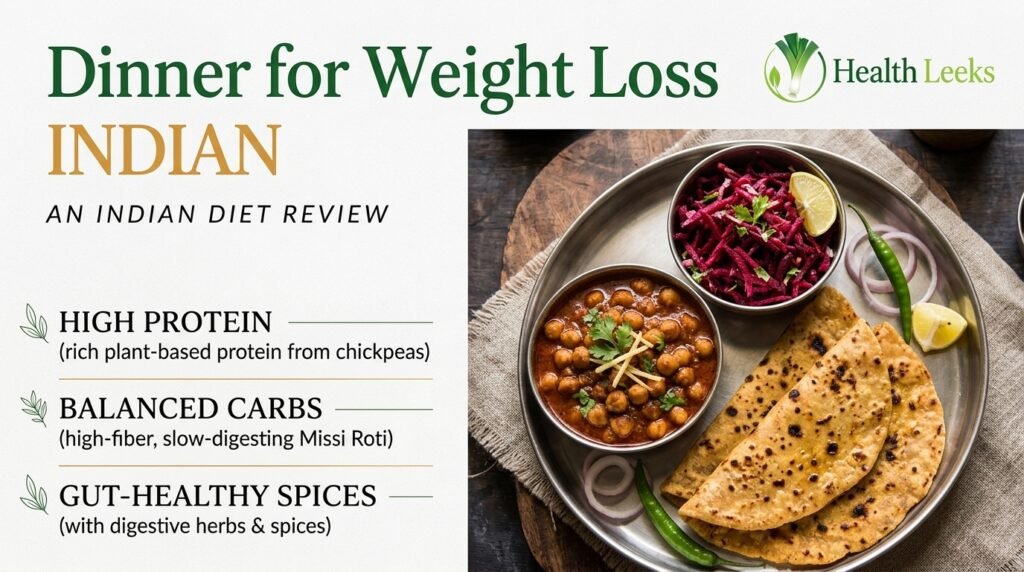
Egg bhurji scrambles eggs with onion, tomato, peppers, and spices for a quick, high-protein dinner. Estimated nutrition is about 220 to 260 calories per serving for 2 eggs with sauteed vegetables, depending on oil and bread or roti accompaniment. Eggs cook in minutes, making bhurji ideal for late, busy dinners.
Ingredients
- Eggs, 2 per serving, beaten
- Onion, 1/4 medium per serving, diced
- Tomato, 1/4 cup per serving, diced
- Bell pepper, 1/4 cup per serving, diced
- Green chili, optional, finely chopped, to taste
- Turmeric and cumin powder, to taste
- Oil, 1 teaspoon per serving, measured
- Fresh coriander, for serving
- Salt and black pepper, to taste
Method
- Heat measured oil in a nonstick pan over medium heat.
- Cook onion and pepper for 3 minutes, until softened.
- Add tomato and spices, cooking until tomatoes soften.
- Pour in beaten eggs, stirring gently with a spatula.
- Cook for 2 to 3 minutes, until eggs set softly.
- Remove from heat while eggs remain slightly soft, since they continue cooking.
- Top with coriander and serve with salad, 1 roti, or toast when desired.
Why It Works
Eggs provide complete protein in a small, affordable portion, with vegetables adding volume and fibre. Scrambled texture suits low-appetite evenings, while spices add familiar Indian flavour without heavy gravy. Cooking time under 15 minutes makes bhurji practical for weeknights.
Oil control matters here, since eggs absorb oil quickly in a hot pan. A nonstick pan and measured oil keep the dish light without sticking. Serve with salad or sabzi for extra volume, rather than adding a second roti by default.
Swaps and Leftovers
Swap eggs for tofu scramble, paneer bhurji, or chickpea flour scramble, adjusting seasoning accordingly. Add spinach, mushrooms, or zucchini for extra vegetables, cooking them before adding eggs. Omit green chili for milder flavour, or add black pepper for warmth without heat.
Egg bhurji tastes best fresh, so refrigerate leftovers for only 1 to 2 days when necessary. Reheat gently until steaming, without overcooking, since eggs dry quickly. Do not keep egg dishes at room temperature for extended periods, even when they look unchanged.
Besan Chilla With Mint Chutney
Besan chilla, a chickpea flour pancake, offers plant protein and fibre in a thin, savoury pancake. Competitor guidance suggests limiting chilla to one medium piece for a light dinner, with mint chutney in a small portion. Estimates vary by size, oil, and filling, so measure batter and oil carefully.
Ingredients
- Besan (chickpea flour), 1/4 cup per serving
- Onion, 2 tablespoons per serving, finely diced
- Tomato, 2 tablespoons per serving, finely diced
- Fresh coriander, 1 tablespoon per serving, chopped
- Turmeric and chili powder, to taste
- Water, as needed for a thick batter
- Oil, 1 teaspoon per serving, measured, for cooking
- Mint chutney, 1 tablespoon per serving, for serving
- Salt, to taste
Method
- Mix besan, onion, tomato, coriander, spices, and salt in a bowl.
- Add water gradually, stirring until a thick, pourable batter forms.
- Heat a nonstick tawa over medium heat with measured oil.
- Pour batter thinly, spreading gently into a round shape.
- Cook for 2 to 3 minutes, until edges firm and underside browns lightly.
- Flip carefully and cook for 1 to 2 minutes more.
- Serve immediately with mint chutney and salad.
Why It Works
Besan provides plant protein and fibre, while vegetables add texture and volume inside the pancake. Thin cooking uses less oil than deep frying, and mint chutney adds freshness without heavy sauces. Chilla suits light dinners, especially when appetite is low or time is short.
Batter consistency matters, since thick batter cooks unevenly and thin batter tears easily. A nonstick tawa and measured oil prevent sticking without excess fat. Serve chilla immediately, since it softens quickly when stored.
Swaps and Leftovers
Add spinach, grated carrot, or zucchini to the batter for extra vegetables. Swap mint chutney for plain yoghurt or lemon wedges when chutney sugar or salt is a concern. Fill chilla with paneer, tofu, or vegetables for a heartier dinner, keeping portions measured.
Chilla tastes best fresh, so refrigerate leftovers for only 1 day when necessary. Reheat on a dry tawa until warm, without adding extra oil. Do not stack hot chillas, since steam softens their crisp edges.
Baingan Bharta
Baingan bharta mashes smoky eggplant with tomatoes, onions, and spices for a fibre-rich, low-calorie sabzi. It pairs well with 1 roti, dal, or salad, and suits both vegetarian and vegan dinners. Roasting eggplant creates depth without cream or fried bases.
Ingredients
- Eggplant, 1 medium per 2 servings, whole
- Onion, 1/4 medium per serving, diced
- Tomatoes, 1/4 cup per serving, diced
- Garlic and ginger, 1 teaspoon each per serving
- Green chili, optional, to taste
- Cumin seeds, 1/4 teaspoon per serving
- Turmeric and coriander powder, to taste
- Oil, 1 teaspoon per serving, measured
- Fresh coriander, for serving
Method
- Roast whole eggplant over an open flame, grill, or oven until soft and smoky.
- Cool slightly, peel skin, and mash flesh with a fork.
- Heat measured oil in a pan over medium heat.
- Add cumin seeds, onion, garlic, and ginger, cooking for 3 minutes.
- Add tomatoes and spices, cooking until tomatoes soften.
- Stir in mashed eggplant and cook for 5 minutes, until flavours meld.
- Season with salt, and top with fresh coriander.
- Serve with 1 roti, dal, or salad.
Why It Works
Eggplant provides fibre and volume with relatively few calories, while roasting adds smoky flavour without fat. Tomato and onion base adds sweetness and acidity, balancing eggplant earthiness. A small amount of oil carries spices, without turning the dish into a fried sabzi.
Baingan bharta suits batch cooking, since roasted eggplant stores well and flavours deepen overnight. It also works as a side for dal or grilled protein, increasing vegetable volume across the plate. Smoky flavour satisfies comfort-food cravings without heavy gravy.
Swaps and Leftovers
Swap eggplant for cauliflower, zucchini, or mushrooms, adjusting roasting time accordingly. Add paneer cubes or peas for extra protein, keeping portions measured. Use frozen roasted eggplant when fresh eggplant is unavailable, draining excess water well.
Refrigerate baingan bharta for 3 to 4 days in sealed containers. Reheat until steaming, stirring well for even heating. Freeze portions for up to 3 months, thawing safely in the refrigerator before reheating.
Cauliflower Rice Biryani

Cauliflower rice biryani offers biryani flavour with grated cauliflower instead of a large rice portion. It suits days when a lighter grain base is preferred, while keeping spices, vegetables, and protein familiar. Biryani spices, not rice quantity, carry most of the flavour.
Ingredients
- Cauliflower rice, 2 cups per serving, fresh or frozen
- Chicken, paneer, or tofu, 3 to 4 ounces per serving, cut into pieces
- Onion, 1/4 medium per serving, sliced thinly
- Mixed vegetables, 1/2 cup per serving, such as carrots, peas, and beans
- Biryani spice blend or garam masala, 1 teaspoon per serving
- Turmeric and chili powder, to taste
- Oil, 1 teaspoon per serving, measured
- Fresh mint and coriander, for serving
- Salt, to taste
Method
- Heat measured oil in a large pan over medium heat.
- Cook onion until softened and lightly golden.
- Add protein and cook until lightly browned.
- Add spices, vegetables, and salt, stirring for 2 minutes.
- Add cauliflower rice and stir well, cooking for 5 to 7 minutes.
- Cover briefly, allowing cauliflower to steam until tender-crisp.
- Rest for 3 minutes, fluff gently, and top with herbs.
- Serve with raita in a small portion and salad.
Why It Works
Cauliflower rice provides vegetable volume with fewer calories than an equal volume of rice, while spices preserve biryani character. Protein and vegetables keep the dish satisfying, without requiring a large grain portion. Raita adds cooling contrast, but portions should stay small when full-fat yoghurt is used.
Cauliflower rice cooks quickly and can become soggy when overcooked, so tender-crisp texture matters. Stirring gently prevents mashing, and resting allows excess moisture to settle. A salad starter increases volume further, without adding another grain serving.
Swaps and Leftovers
Swap cauliflower rice for brown rice in a 1/2 cup cooked portion, when a traditional grain base is preferred. Swap chicken for paneer, tofu, chickpeas, or eggs, adjusting cooking times accordingly. Add saffron threads soaked in warm milk for aroma, keeping dairy portions small.
Refrigerate cauliflower rice biryani for 3 to 4 days, and reheat until steaming. Texture softens after storage, so reheat gently without adding water. Freeze portions for up to 3 months, thawing safely before reheating.
Soup Starters for Late Dinners
Clear Vegetable Soup
Clear vegetable soup combines carrots, beans, cabbage, and spices in a light, broth-based starter. Estimated nutrition is about 80 to 150 calories per serving, depending on vegetables and oil. Clear soup suits late dinners, low-appetite evenings, and days when a full thali feels too heavy.
Simmer vegetables in low-sodium broth with ginger, garlic, and black pepper until tender. Avoid cream, butter, and fried garnishes for regular light dinners. Serve soup first, wait a few minutes, then decide on main course portion with clearer hunger cues.
Tomato Carrot Ginger Soup
Tomato carrot ginger soup blends tomatoes, carrots, ginger, and black pepper into a smooth, warming starter. Ginger adds warmth without calories, while carrots add natural sweetness. Blending creates a creamy texture without cream, butter, or cheese.
Boil chopped vegetables until soft, blend until smooth, and simmer briefly with seasoning. Serve warm with a small salad or as a starter before dal and sabzi. Tomato acidity pairs well with cumin and coriander, keeping flavour bright.
Spinach Garlic Soup
Spinach garlic soup blanches spinach quickly, blends it with garlic, and simmers lightly with seasoning. It offers a light, hydrating starter with green vegetable volume and minimal fat. Garlic adds depth without frying, while black pepper adds warmth.
Serve spinach soup when appetite is low, or as a starter before a protein main course. Avoid adding cream for regular dinners, since cream changes a light starter into a heavier course. Fresh spinach wilts quickly, so cook briefly to preserve colour and texture.
Oil, Roti, and Rice: The Three Levers
Oil Measurement Table
| Oil amount | Approximate calories from oil alone | Practical meaning |
|---|---|---|
| 1 teaspoon | About 40 calories | Measured, light cooking amount |
| 1 tablespoon | About 120 calories | Three times a teaspoon, easy to pour unmeasured |
| 3 tablespoons | About 360 calories | Common unmeasured ladle amount, competitor arithmetic |
| 4 tablespoons | About 480 calories | Large unmeasured amount, competitor arithmetic |
Oil figures above use standard oil calorie density, about 120 calories per tablespoon, as an illustrative calculation, not a measured dish total. Cutting oil from 3 to 4 tablespoons to 1 teaspoon saves roughly 320 to 440 calories from oil alone, before other ingredients change. Measure oil with spoons, use spray for grilling, and drain fried bases when they appear in older recipes.
Roti Versus Rice Versus Cauliflower Rice
| Grain choice | Typical dinner portion | Calorie pattern to verify per recipe |
|---|---|---|
| 1 whole wheat roti | 1 medium roti | About 100 to 150 calories, varies by size and ghee |
| 1/2 cup cooked basmati rice | 1/2 cup cooked | About 100 to 120 calories, varies by variety |
| 1 cup cooked basmati rice | 1 cup cooked | About 200 to 240 calories, double the half-cup portion |
| 2 cups cauliflower rice | 2 cups | About 50 to 80 calories, varies by preparation |
Grain portions change dinner totals more than spice choices, so measure grains at first until portions feel familiar. A second roti or a second rice serving often matters more than a sauce swap. Cauliflower rice suits lighter days, while brown rice suits heartier days, with portion control in both cases.
Ghee Versus Oil
Ghee and oil both provide about 120 calories per tablespoon, so switching fat type alone does not reduce calories. Ghee adds distinct flavour and aroma, making small amounts satisfying for some households. Oil adds neutral flavour and suits measured cooking, grilling, and sauteing.
Use ghee in teaspoons for flavour, when tradition or taste calls for it, rather than in ladles for cooking. Measure both fats with spoons, and avoid finishing dishes with extra melted ghee by default. Flavour from spices, lemon, herbs, and yoghurt often replaces the need for extra fat.
Restaurant Versus Home Indian Dinners
Why Restaurant Portions Differ
Restaurant Indian dinners often use larger oil amounts, creamy gravies, sweetened chutneys, and larger grain portions than home versions. Naan, paratha, and butter chicken-style gravies add calories quickly, even when the main protein is lean. Shared family-style ordering also makes individual portions hard to track.
Home cooking controls oil, cream, grain portions, and vegetable volume directly. Restaurant meals can still fit balanced eating, but they require deliberate choices, such as grilled proteins, vegetable sides, and measured bread portions. Awareness, not avoidance, makes restaurant dinners manageable.
| Choice | Restaurant pattern | Lighter home or restaurant choice |
|---|---|---|
| Gravy | Cream, butter, cashew paste | Tomato onion base, yoghurt finish |
| Bread | Butter naan, paratha, multiple pieces | 1 roti, or salad instead of bread |
| Protein | Fried, creamy, large portion | Grilled, tandoori, measured portion |
| Vegetables | Small side, oily sabzi | Half plate sabzi or salad |
| Chutney and pickle | Sugary chutney, salty pickle, large portions | Mint chutney, small pickle portion |
Ordering Lighter at Restaurants
Order grilled or tandoori protein, a vegetable sabzi, dal, salad, and 1 roti, rather than creamy gravy plus naan plus rice together. Ask for sauce on the side when possible, and share bread portions at the table. Drink water with dinner, and keep sweetened drinks and alcohol for deliberate, occasional choices.
Take leftovers home in a container, rather than finishing large restaurant portions from politeness alone. Leftovers make excellent next-day lunches when stored safely. Restaurant awareness also helps home cooking, since it highlights oil, cream, and grain portions to control at home.
US Grocery Guide
Dal, Paneer, and Spices
US Indian grocery stores and many mainstream stores stock moong dal, masoor dal, toor dal, chana, besan, paneer, and spice blends. Dried dal stores well, costs little per serving, and cooks without soaking for moong and masoor varieties. Paneer freezes well, so buy in bulk when on sale and thaw safely in the refrigerator.
Spice blends vary by brand and salt content, so read labels for sodium and added sugar. Whole spices, such as cumin seeds, coriander seeds, turmeric, and chili powder, offer flavour control without premixed salt. Store spices away from heat and light, replacing them when aroma fades.
Frozen Vegetables and Ready Bases
Frozen vegetables, such as peas, beans, cauliflower, spinach, and mixed vegetables, suit busy US kitchens without waste. Frozen cauliflower rice and frozen lauki or zucchini, when available, save prep time for weeknight dinners. Choose plain frozen vegetables without added sauces, butter, or salt when possible.
Ready tomato onion bases and curry pastes vary widely in oil, salt, and sugar, so read labels carefully. Homemade onion tomato base, cooked with measured oil, usually offers better control than ready pastes. Keep one or two reliable ready bases for emergencies, rather than relying on them daily.
Mistakes to Avoid
- Pouring oil freely from a bottle, instead of measuring teaspoons.
- Adding a second roti or second rice serving by habit, without checking hunger.
- Using creamy gravies daily, instead of tomato onion bases with yoghurt finishes.
- Choosing sugary chutneys and large pickle portions without noticing sodium and sugar.
- Skipping vegetables, then adding extra grain to feel full.
- Treating restaurant portions as home portions, especially for naan and gravy.
- Frying onion bases deeply, instead of sauteing lightly with measured oil.
- Skipping protein at dinner, then snacking heavily later in the evening.
- Cooking only one new, complex dinner per week, then returning to takeout.
- Expecting one Indian dinner, or one week, to produce a specific weight outcome.
Tips That Make Indian Dinners Easier
- Measure oil with spoons for one week, until portions feel familiar by eye.
- Cook dal in bulk, portioning it for several dinners and lunches.
- Keep frozen vegetables, canned beans, and dal stocked for busy nights.
- Start dinner with soup or salad when appetite feels high.
- Serve bread and rice from the kitchen, not from the table, to control seconds.
- Season boldly with spices, lemon, herbs, and yoghurt before adding salt or fat.
- Roast or grill proteins when possible, instead of frying them.
- Plan one family dinner for all, adjusting grain portions individually rather than cooking twice.
- Label leftovers with dinner name and date, using older portions first.
- Choose dinners you enjoy, since repeatable family dinners support long-term habits.
Frequently Asked Questions
What is a healthy Indian dinner for weight loss?
A healthy Indian dinner for weight loss usually combines dal or lean protein, half a plate of sabzi or salad, and one measured grain portion. Oil stays measured in teaspoons, while spices, lemon, and herbs add flavour. No single dinner causes weight loss alone, since overall eating patterns, activity, sleep, and health factors all matter.
Can I eat roti for weight loss dinner?
Yes, roti can fit a weight-loss dinner when portions stay measured, usually 1 medium roti per dinner for many adults. Roti size, thickness, and ghee brushing change calories, so measure and brush lightly. Pair roti with dal and sabzi, rather than with creamy gravy plus rice together.
How much rice should I eat for weight loss dinner?
Many balanced Indian dinners use 1/2 to 3/4 cup cooked rice per serving, paired with dal and half a plate of vegetables. A full cup of cooked rice doubles that portion, so measure at first until portions feel familiar. Cauliflower rice suits lighter days, while brown rice suits heartier days.
Is dal good for weight loss dinner?
Yes, dal provides plant protein and fibre, supporting fullness after dinner. Moong, masoor, and toor dal all suit weight-loss dinners, with oil and grain portions controlling total calories. Dal alone, without vegetables or protein variety, may feel less filling, so pair it with sabzi or salad.
Is paneer good for weight loss?
Paneer can fit a weight-loss dinner in measured portions, usually 3 to 4 ounces, paired with generous vegetables. Paneer is more calorie-dense than dal or vegetables, so portion control matters more than paneer type alone. Grilled or baked paneer suits lighter dinners better than fried paneer in creamy gravy.
Is ghee bad for weight loss?
Ghee is not inherently forbidden, but it provides about 120 calories per tablespoon, similar to oil. Small amounts for flavour can fit balanced eating, while ladle amounts add calories quickly. Measure ghee with teaspoons, and use spices, lemon, and herbs for additional flavour.
How much oil should I use for an Indian dinner?
Many light Indian dinners use 1 teaspoon of oil per serving for cooking, plus measured oil for tadka when needed. A tablespoon provides about three times that amount, so unmeasured pouring changes totals sharply. Use nonstick pans, spray for grilling, and measured spoons for consistent control.
What is a weight loss thali?
A weight loss thali is a balanced Indian plate with half vegetables, one quarter dal or lean protein, and one quarter measured grain. It may include salad, raita in a small portion, and chutney in a small portion. Thali balance matters more than any single dish, since portions across the plate determine total intake.
Is khichdi good for weight loss dinner?
Khichdi can suit a weight-loss dinner, especially for light, late, or low-appetite evenings. Moong dal khichdi provides plant protein, gentle carbohydrates, and fibre in one bowl. Keep oil measured, add vegetables for volume, and pair khichdi with salad when a larger dinner is desired.
Is biryani good for weight loss?
Traditional biryani, with large rice portions, ghee, and fried onions, is usually heavy for regular weight-loss dinners. Cauliflower rice biryani, with measured protein and vegetables, offers biryani flavour in a lighter form. Portion control, oil measurement, and vegetable volume matter more than biryani spices alone.
Can I eat Indian dinner late at night for weight loss?
Late eating alone does not determine weight outcomes, but late dinners often involve larger portions, takeout, and creamy gravies. Choose a light, balanced dinner when eating late, such as soup plus dal, or sabzi plus 1 roti. Avoid heavy, high-fat meals close to bedtime when they disrupt sleep.
How do I make Indian gravy without cream?
Use a tomato onion base, cooked with measured oil, spices, and a splash of water or broth. Finish with plain yoghurt off the heat, lemon juice, or a small amount of blended cashews only when portions are measured. Simmering concentrates flavour, reducing the need for cream richness.
Are Indian restaurant dinners good for weight loss?
Restaurant dinners can fit balanced eating, but portions, oil, cream, and bread servings often exceed home versions. Choose grilled proteins, vegetable sabzi, dal, salad, and 1 roti, with sauce on the side when possible. Share bread, take leftovers home, and drink water with dinner for better portion control.
What Indian dinner is lowest in calories?
Clear vegetable soup, moong dal soup, and light sabzi with salad rank among the lowest-calorie Indian dinners, often estimated at 80 to 260 calories per serving in competitor tables. Those figures depend on oil and portion, so they suit light dinners rather than regular main courses for everyone. Add protein when a soup-only dinner leaves hunger shortly after eating.
Can I eat pickles and papad for weight loss dinner?
Pickles and papad can fit in small portions, but both add sodium, and papad adds calories when fried. Choose small pickle portions, baked or roasted papad when available, and avoid daily large servings. Mint chutney and raita in small portions offer fresher flavour with less sodium concern.
Is curd good for weight loss dinner?
Plain curd or yoghurt can suit weight-loss dinners, providing protein and cooling contrast to spicy dishes. Choose plain, unsweetened varieties, and keep portions small, such as 1/4 to 1/2 cup. Sweetened yoghurt drinks and large raita portions add sugar and calories quickly.
How do I cook Indian dinner for the whole family for weight loss?
Cook one family dinner, such as dal, sabzi, and roti, then adjust grain portions individually rather than cooking separate meals. Serve extra vegetables to adults who want larger portions, and keep children’s portions age-appropriate. Family compatibility supports adherence better than separate diet dinners that feel isolating.
How long do cooked dal and sabzi last in the fridge?
Cooked dal and sabzi generally last 3 to 4 days in the refrigerator, when stored promptly in sealed containers. Cooked fish lasts 1 to 2 days, while rice and grains last 3 to 4 days. Discard leftovers with off smells, slimy texture, or uncertain storage history, even when they look acceptable.
What is a good Indian dinner for diabetes?
Diabetes meal planning depends on medication, blood sugar targets, carbohydrate counting, and individual health factors, so generic dinner lists cannot replace clinician or dietitian guidance. Balanced Indian dinners with dal, vegetables, and measured grains offer a useful pattern, but portions and carbohydrate amounts must be individualised. Share any dinner plan with your care team before adopting it regularly.
Do Indian spices help weight loss?
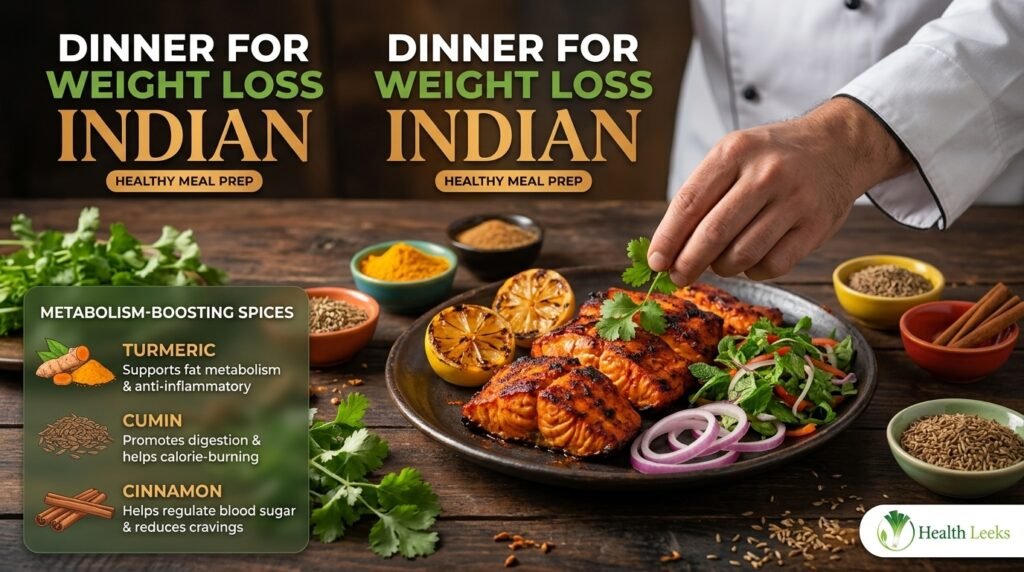
Spices add flavour without calories, which helps balanced dinners feel satisfying without extra fat or sugar. No spice causes weight loss on its own, and fat-burning spice claims should not be trusted. Use spices for enjoyment and variety, while controlling oil, grain portions, and creamy sauces for total intake.
How do I start cooking Indian dinners for weight loss as a beginner?
Start with one simple dinner, such as moong dal khichdi or lauki curry with 1 roti, using measured oil and a basic spice set. Cook the same dinner twice in one week, adjusting seasoning and vegetables each time. Add a second dinner only when the first feels comfortable, building skills gradually rather than learning ten dishes at once.
Conclusion
Dinner for weight loss indian cooking works best when family dishes stay familiar, oil stays measured, vegetables fill half the plate, and grain portions stay deliberate. Dal khichdi, palak chicken, tandoori paneer, lauki curry, chana salad, egg bhurji, besan chilla, baingan bharta, and cauliflower rice biryani all offer balanced, flavourful dinners without separate diet menus. Restaurant gravies, large bread portions, and unmeasured oil, not spices, usually explain why otherwise healthy Indian dinners become heavy.
Cook one Indian dinner this week with measured oil, one roti or a measured rice portion, and generous sabzi or salad. Adjust grain and protein portions to hunger, activity, and professional guidance, rather than copying a generic calorie target. Familiar, repeatable Indian dinners support long-term habits far better than restrictive, joyless diet meals ever will.