

It is 2 a.m. You have scratched your arms, your back, and your legs, and the itch has simply moved somewhere else. Sleep feels impossible, and every minute of scratching seems to make the itch louder.
If you are searching “how do I stop itching all over my body,” you want two things at once: relief right now and an answer that actually lasts. Both are possible, but they come from different steps.
Table of Contents
How Do I Stop Itching All Over My Body?

Start by cooling the skin with a cold, damp cloth for 5 to 10 minutes. Then apply a fragrance-free moisturizer, switch to lukewarm showers, wear loose cotton, and avoid scratching.
If the itch continues for more than two weeks, disrupts sleep, or comes with symptoms such as yellow skin, dark urine, fever, or weight loss, see a doctor. Whole-body itching can be caused by dry skin, but also by skin conditions, infections, and problems with the liver, kidneys, thyroid, or iron levels.
The Three-Part Strategy
| Step | Goal | Examples |
|---|---|---|
| Calm the itch now | Break the itch-scratch cycle | Cold cloth, oatmeal bath, menthol or pramoxine |
| Repair the skin | Rebuild the skin barrier | Daily moisturizer, gentle cleansing, humidity |
| Find the cause | Stop it from returning | Doctor visit, tests, treating the underlying issue |
Why Both Relief and Cause Matter
Soothing treatments reduce suffering, but they do not fix an underlying problem. If itching keeps returning, finding the cause is the only real long-term solution.
What to Do in the First 10 Minutes
When the itch is at its worst, a short routine can bring it down. Dermatologists at the American Academy of Dermatology recommend simple steps that you can do at home.
Step 1: Stop Scratching If You Can
Scratching feels good for a moment and then makes the itch worse. It also damages the skin and raises the risk of infection.
Press, pat, or tap the skin instead. Cover the area with a cool cloth if your hands keep wandering.
Step 2: Apply a Cold, Damp Cloth
Place a cool, damp washcloth or a cold pack wrapped in a cloth on the itchy skin. Leave it for 5 to 10 minutes, or until the itch fades.
Cold calms the nerves that carry itch signals. Never put ice directly on the skin.
Step 3: Moisturize Right Away
Apply a thick, fragrance-free moisturizer, ideally while the skin is still slightly damp. Choose products without added perfumes or dyes.
Many people keep their moisturizer in the refrigerator. The cooling effect adds extra comfort.
Step 4: Try a Cooling Ingredient
If moisturizer is not enough, a lotion with menthol or calamine can help. A cream or gel with pramoxine, a mild topical numbing agent, is another option recommended by dermatologists.
Test a small area first to make sure it does not sting.
Step 5: Change Your Environment
Move to a cooler room. Heat, sweat, and warm blankets can all intensify itching.
Remove rough or tight clothing, and switch to soft cotton.
How to Stop Itching All Over the Body at Night
Night is the hardest time. There are fewer distractions, skin temperature rises under the covers, and many people scratch while half asleep.
Prepare Before Bed
Take a lukewarm shower or bath about an hour before sleep. Apply moisturizer immediately after drying off.
Keep the bedroom cool. A slightly cool room is often easier on itchy skin.
Choose the Right Bedding
Use clean cotton sheets and avoid wool blankets. Wash bedding in a fragrance-free detergent.
Protect Your Skin From Night Scratching
Trim your nails short and file them smooth. Soft cotton gloves can prevent damage while you sleep.
Keep a Cold Pack Nearby
A cold pack or a damp cloth in the freezer can be a quick fix if you wake up itching. Wrap it in a towel before applying.
Know When Night Itching Needs Attention
Itching that is worse at night is common with dry skin, but it also appears with scabies and some liver conditions. For a deeper look, read about unexplained itching all over the body at night.
The Best Home Remedies for Itching All Over the Body

Not every home remedy works, and some can backfire. These options are generally considered safe and have support from dermatology guidance.
Oatmeal Baths
An oatmeal bath is a classic for a reason. The AAD lists it as a way to soothe itchy skin.
Use colloidal oatmeal made for bathing and soak in lukewarm water for 10 to 15 minutes. Pat dry gently and moisturize right away.
Cool Compresses
A cool, damp cloth is the simplest fix. It costs almost nothing and works within minutes for many people.
Fragrance-Free Moisturizers
Thick creams and ointments hold water in the skin better than thin lotions. Apply them at least once a day, and more often if skin feels tight.
Wet Wraps
Wet wraps involve moisturizing the skin, covering it with a damp layer of cloth or bandage, and adding a dry layer over the top. Dermatologists use this method for stubborn itching, especially in eczema.
Ask a clinician before trying it over large areas or broken skin.
Baking Soda Bath
Some people find baking soda baths helpful for irritated, blistered skin. Use a small amount in lukewarm water and rinse well.
Stop if the skin stings or becomes more irritated.
Cooling Lotions
Calamine lotion and menthol-based products create a cooling feeling that can interrupt itching. Avoid using them on broken or inflamed skin unless the label says it is safe.
Over-the-Counter Products That May Help
The pharmacy aisle is full of options. Knowing what each product does helps you choose wisely.
| Product | How It Helps | Cautions |
|---|---|---|
| Fragrance-free moisturizer | Repairs the skin barrier | Avoid scented formulas |
| Pramoxine cream or gel | Numbs the itch temporarily | Test a small area first |
| Menthol or calamine | Cooling sensation | Not for broken skin |
| Hydrocortisone 1% cream | Reduces inflammation in itchy rashes | Short-term use; follow the label |
| Oral antihistamines | Help hives and some allergic itch | May cause drowsiness; not helpful for all itch |
| Colloidal oatmeal products | Soothe dry, irritated skin | Rinse well after bathing |
Hydrocortisone Cream
The AAD notes that an over-the-counter hydrocortisone cream applied once daily to the itchy area can help certain itchy rashes. It is a mild steroid and should be used according to the label.
Do not use it for long periods, on the face or genitals, or on infected skin without medical advice. Never use it on suspected scabies before getting examined, since it can hide the signs.
Oral Antihistamines
Antihistamines can relieve itching caused by hives and some allergic conditions. The AAD points out that they are not helpful for every type of itch.
Older sedating antihistamines may help you sleep, but they can cause grogginess and are not ideal for everyone. Older adults, children, and people with certain health conditions should ask a pharmacist or doctor first.
Topical Antihistamine Creams
Many clinicians advise against creams that contain antihistamines. They can sometimes trigger allergic skin reactions and do not work well for most people.
Read the Label
Follow dosage directions exactly. Do not combine multiple products with the same active ingredient.
Habits That Make Itching Worse
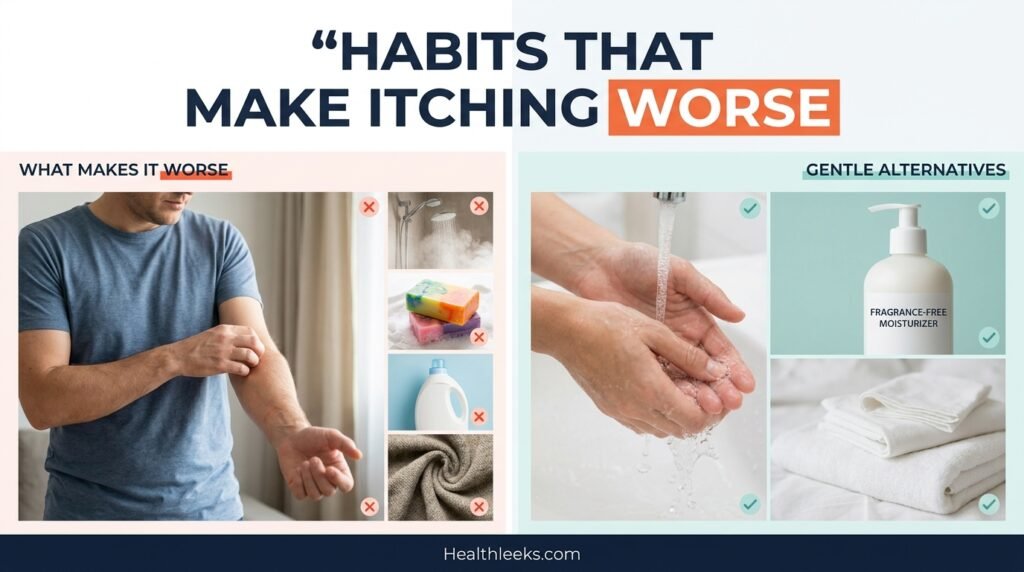
Sometimes the fix is as much about what you stop doing as what you start. These common habits keep the itch alive.
Long, Hot Showers
Hot water strips natural oils from the skin and leaves it drier. Dermatologists recommend lukewarm water and showers of about 10 minutes or less.
Harsh or Scented Soaps
Perfumed soaps, bubble baths, and strong detergents irritate sensitive skin. Choose fragrance-free, mild cleansers.
Scratching
Scratching damages the skin barrier and triggers more itch. It can also lead to infection. If a scratched area becomes red, warm, swollen, or painful, learn the warning signs in this guide on whether a belly button infection can kill you, which explains how skin infections can progress.
Rough Fabrics
Wool and other scratchy materials can irritate the skin. Soft cotton is gentler.
Dry Indoor Air
Heaters and air conditioning can dry out the air. A humidifier in winter can help, especially for people with dry skin or eczema.
Over-Washing
Washing too often removes protective oils. Once a day is usually enough for most people unless you are sweaty or dirty.
Everyday Habits That Help Prevent Itching
Prevention keeps the itch from coming back. These habits take little effort and add up over time.
Moisturize Daily
Apply moisturizer after every shower and whenever your skin feels dry. Think of it as brushing your teeth for your skin.
Choose Gentle Laundry Products
Use fragrance-free detergent and skip fabric softeners if they bother you. Rinse laundry well.
Wear Breathable Clothes
Loose cotton and moisture-wicking fabrics let skin breathe. Avoid tight synthetic clothing during hot weather.
Keep Cool
Heat and sweat trigger itching in many people. Dress in layers so you can cool down quickly.
Drink Enough Water
Hydration supports overall health, although drinking more water will not cure every itch. If you notice headaches along with dry skin, this guide on what dehydration headaches feel like may be useful.
Support Your Nutrition
A balanced diet supports healthy skin. For practical ideas, see these body nutrition tips.
Finding the Cause: Why Is My Whole Body Itching?
If the itch keeps returning, you need to know why. Whole-body itching has many possible causes, and some people have more than one.
| Category | Examples | Clues |
|---|---|---|
| Skin conditions | Dry skin, eczema, hives, psoriasis | Visible rash, dry or scaly skin |
| Infections and infestations | Scabies, lice, chickenpox, fungal infections | Night itching, itchy contacts, bumps or burrows |
| Medicines | Antibiotics, opioids, blood pressure drugs | Itching began after a new drug |
| Internal conditions | Liver, kidney, thyroid, iron problems, diabetes | Fatigue, jaundice, weight changes |
| Nutritional issues | Low iron, vitamin D, B12 | Fatigue, pale skin, brittle nails |
| Pregnancy | Pregnancy-related liver condition | Itching on palms and soles |
| Nerves and stress | Anxiety, nerve conditions | Itching without a rash, stress triggers |
Dry Skin
Dry skin is the most common cause, especially in older adults and during winter. It often improves with consistent moisturizing and gentler bathing.
Eczema and Allergic Conditions
Eczema causes red, scaly, itchy patches. It tends to run in families and often appears with allergies or asthma.
Hives
Hives are raised, itchy welts that come and go over hours. Common triggers include foods, medicines, infections, and stress.
Scabies and Other Infestations
Scabies causes intense itching that is often worse at night. It spreads through close contact and needs prescription treatment.
Medication Reactions
Many medicines can cause itching, sometimes weeks after starting. Never stop a prescribed drug without talking to a clinician.
Liver, Kidney, and Thyroid Problems
These conditions can cause itching with little or no rash. Blood tests can usually find them.
Nutritional Deficiencies
Low iron, vitamin D, or B12 can sometimes be linked to itching. Learn more in this guide to what deficiency causes skin itching.
Stress and Anxiety
Stress can trigger or worsen itching, and itching can in turn raise stress. Simple routines may help, as described in these self care tips from LWSpeakCare.
Special Types of Whole-Body Itching

Different itching patterns point to different causes. Use these descriptions to guide your conversation with a doctor.
Itching Without a Rash
Many people itch all over with normal-looking skin. Dry skin, liver or kidney issues, thyroid disease, iron deficiency, and nerve problems are all possible causes.
Read this detailed guide on why you may be itchy all over but have no rash.
Itching That Moves Around
If the itch jumps from your arm to your back to your scalp, it may be linked to nerve signals, dry skin, or stress. Learn more about itching that moves around the body.
Sudden Itching
A sudden itch can follow a new soap, medicine, food, or insect exposure. This breakdown of what causes sudden skin itching covers common triggers.
Itching After a Shower
Hot water and dry skin often cause itching right after bathing. Switching to lukewarm water and moisturizing quickly often helps.
Itching in Older Adults
Older skin is thinner and produces less oil. Gentle skin care and humidity are especially helpful, but persistent itching should still be checked.
What Doctors Can Do When Home Care Is Not Enough
If home care does not work, a clinician can find the cause and offer stronger treatments. Many people feel relieved simply to have a diagnosis.
The Appointment
Expect questions about when the itching started, what makes it better or worse, and what medicines you take. The doctor will examine your skin and may order tests.
Common Tests
Blood tests may check liver function, kidney function, thyroid function, iron levels, and blood sugar. Skin scrapings can help diagnose scabies or fungal infections.
Prescription Treatments
Depending on the cause, treatments may include prescription-strength topical steroids, non-steroid anti-itch creams, antihistamines, or antiparasitic medicines for scabies.
For stubborn or chronic itch, doctors sometimes use light therapy or medicines that act on the nerves. Some liver-related itching responds to medicines that bind bile acids.
Treating the Underlying Condition
When the cause is an internal condition, treating it is the most effective way to stop the itch. This might mean managing thyroid disease, correcting low iron, or treating a liver condition.
Why Treatment Can Take Time
The AAD notes that itch treatment can take time to work. Staying consistent with skin care helps while the main treatment takes effect.
Treatment Options by Cause
The right treatment depends on what is behind the itch. This table gives a general picture, but a clinician should guide your plan.
| Cause | Typical Approach |
|---|---|
| Dry skin | Daily moisturizer, lukewarm baths, humidifier |
| Eczema | Moisturizers, prescription topical medicines, trigger avoidance |
| Hives | Antihistamines, identifying and avoiding triggers |
| Scabies | Prescription permethrin, spinosad, or ivermectin; treat close contacts |
| Fungal infections | Antifungal creams or tablets |
| Medication reaction | Review with prescriber; alternatives if needed |
| Liver-related itch | Treat liver condition; medicines to relieve itch |
| Iron or vitamin deficiency | Testing and supplementation guided by a clinician |
| Stress-related itch | Stress management, therapy, sleep support |
Mistakes to Avoid When Trying to Stop Itching
Well-meaning mistakes can slow recovery. Avoid these common traps.
Treating Before You Know the Cause
Steroid creams can hide scabies and make it harder to diagnose. If others in your home are also itchy, get examined first.
Using Veterinary or Unproven Products
Do not use medicines made for animals. They are not designed or dosed for people and can be dangerous.
Trying Too Many Remedies at Once
Layering several new products can irritate the skin. Introduce one change at a time.
Ignoring Warning Signs
Persistent itching with yellow skin, dark urine, fever, or weight loss is not something to handle at home. Book a medical visit.
Stopping Skin Care Too Early
Itch often returns when moisturizing stops. Keep the routine going even after the skin feels better.
Special Situations
Some people need extra care when treating itching. A few extra precautions make treatment safer.
Children and Babies
Children’s skin is delicate, and dosing depends on age and weight. Ask a pediatrician before using medicated products or oral antihistamines.
Pregnancy
Mild itching can be harmless, but intense itching, especially on the palms and soles in late pregnancy, needs prompt medical attention. Always check with a clinician before using any treatment.
Older Adults
Dry skin is the leading culprit, but medicines and medical conditions also play a role. Sedating antihistamines can cause confusion or falls, so ask a pharmacist before using them.
People With Chronic Conditions
If you have kidney, liver, or thyroid disease, itching may be part of that condition. Work with your care team on a long-term plan.
How Long Does It Take for Itching to Go Away?
The timeline depends on the cause. A quick cooling routine can calm the itch in minutes, but recovery takes longer.
| Situation | Typical Timeline |
|---|---|
| Mild dry skin | Days to a couple of weeks with moisturizing |
| Eczema flare | Often one to several weeks with treatment |
| Hives | Hours to days, sometimes longer |
| Scabies | Itching can last 2 to 4 weeks after treatment |
| Chronic itch | The AAD defines chronic itch as lasting more than six weeks |
What Counts as Chronic Itch?
The American Academy of Dermatology says an itch lasting more than six weeks is considered chronic. Chronic itch is more likely to disrupt daily life and should be evaluated.
Be Patient but Persistent
Skin heals slowly. Stick to your routine and track progress in a simple diary.
When to See a Doctor

Many itchy spells are minor. Some are not.
See a Doctor Soon If
- The itching lasts more than two weeks despite home care.
- It keeps you awake or affects daily life.
- You have a rash that is spreading, blistering, or painful.
- Other people in your home are itchy too.
- You have yellow skin or eyes, dark urine, or pale stools.
- You have unexplained weight loss, night sweats, or fever.
- You feel itchy everywhere, all the time, regardless of season or time of day.
Get Urgent Care If
- You have trouble breathing, or swelling of the face, lips, or throat.
- You feel faint or dizzy along with hives or itching.
- Your skin is red, hot, and swelling quickly.
- You have a widespread rash with high fever.
A Simple 7-Day Plan to Calm Whole-Body Itching
A short plan helps you stay consistent. Use it as a starting point while you arrange a medical visit if needed.
Days 1 and 2: Cool and Calm
Use cool compresses, switch to lukewarm showers, and moisturize twice a day. Wear soft cotton.
Days 3 and 4: Protect the Skin Barrier
Add an oatmeal bath if your skin is very dry. Trim nails and wash bedding in fragrance-free detergent.
Days 5 and 6: Look for Triggers
Note new soaps, foods, medicines, or stressors. Check for others at home who are itchy.
Day 7: Decide on Next Steps
If the itch is improving, keep your routine going. If not, or if you notice warning signs, book an appointment.
Understanding the Itch-Scratch Cycle
Knowing why scratching backfires makes it easier to resist. The itch-scratch cycle is one of the main reasons simple itching turns into a long-lasting problem.
How the Cycle Works
Scratching briefly distracts the nerves, which feels like relief. Then the skin becomes irritated and inflamed, which sends stronger itch signals.
The result is more itching, more scratching, and more damage. Over time, the skin can thicken and become even itchier.
How to Break It
Replace scratching with another action. Pat the area, press a cool cloth on it, or apply moisturizer.
Keep your nails short, and cover the skin with soft clothing if you scratch without noticing. Small changes protect the skin while it heals.
A Gentle Bathing Routine for Itchy Skin
Bathing can either help or harm itchy skin. A gentle routine keeps moisture in and irritants out.
Step-by-Step Shower Routine
- Use lukewarm water, not hot.
- Limit the shower to about 10 minutes.
- Wash only the areas that need cleansing with a mild, fragrance-free cleanser.
- Pat the skin dry with a soft towel instead of rubbing.
- Apply moisturizer within a few minutes while the skin is still slightly damp.
Why Timing Matters
Moisturizer works best when it seals in the water that is already in the skin. Waiting too long lets that moisture evaporate.
Choosing a Cleanser
Look for products labeled fragrance-free and designed for sensitive skin. Avoid antibacterial soaps unless a clinician recommends them.
Do and Don’t Quick Reference
When itching is intense, a simple checklist is easier to follow than a long article. Use this table as a reminder.
| Do | Don’t |
|---|---|
| Use cool compresses for 5 to 10 minutes | Apply ice directly to the skin |
| Moisturize after bathing | Take long, hot showers |
| Wear loose cotton | Wear wool or tight synthetics |
| Use fragrance-free products | Use scented soaps and detergents |
| Keep nails short | Scratch until the skin breaks |
| Track triggers in a diary | Try many new products at once |
| See a doctor if itching lasts over two weeks | Ignore yellow skin, dark urine, or fever |
Seasonal Itching: Winter, Summer, and Everything Between
Itching often changes with the seasons. Matching your routine to the weather prevents many flare-ups.
Winter Itch
Cold air and indoor heating strip moisture from the skin. Use thicker creams, add a humidifier, and keep showers short.
Summer Itch
Heat, sweat, and sun can all trigger itching. Rinse off after sweating, wear breathable fabrics, and use sun protection.
Allergy Season
Pollen and other allergens can trigger itchy skin in some people. Showering after time outdoors may help remove them.
Foods, Drinks, and Itching
Some people notice itching after certain foods or drinks, although the link is not the same for everyone. A simple diary can show patterns.
Possible Triggers
Alcohol, very spicy foods, and hot drinks can warm the body and increase itching in some people. True food allergies can also cause hives and itching.
How to Track Triggers
Write down what you ate, when the itch began, and how long it lasted. After a few weeks, patterns often appear.
Do Not Cut Out Foods Without Guidance
Removing many foods without medical advice can lead to nutrition gaps. If you suspect a food allergy, talk with a doctor or allergist.
Trusted Sources for Further Reading
Reliable information makes decisions easier. These organizations publish clear, evidence-based guidance on itchy skin.
- American Academy of Dermatology (AAD), for skin care and itch relief tips
- Centers for Disease Control and Prevention (CDC), for scabies, lice, and infectious causes
- National Institutes of Health (NIH), for research on chronic itch
- Merck Manual Consumer Version, for symptoms, diagnosis, and treatment
- Cleveland Clinic, for plain-language disease guides
Also Read
- What Causes Itching That Moves Around the Body? Causes, Clues, Tests and Treatment 2026
- Unexplained Itching All Over Body at Night: Causes, Tests, Relief and When to Worry 2026
- What Deficiency Causes Skin Itching? Vitamins, Minerals, Symptoms, Tests and Treatment 2026
- Why Am I Itchy All Over but No Rash? Causes, Relief & When to See a Doctor 2026
- What Causes Sudden Skin Itching: Triggers & Treatment Options
- Can a Belly Button Infection Kill You? Treatment & Warning Signs
- How to Treat Green Nails at Home
- What Happens If a Sinus Infection Goes Untreated?
- Can UTI Cause Bloating and Gas? Symptoms & Relief Tips
- What Do Dehydration Headaches Feel Like?
- Body Nutrition Tips: The Complete Guide to Fueling Your Fitness Journey
- LWSpeakCare Self Care Tips from LetWomenSpeak for Everyday Wellness
- Superfood Guide LWSpeakCare: A Complete Path to Healthier Living
- TheSpoonAthletic: Fitness, Nutrition & Recovery
- Tingling in Ear: Causes, Treatment, & When to Worry
- Why Do I Feel Shaky When I Wake Up? Causes & Solutions
- Hyaline Casts in Urine: Normal vs Abnormal and Care
- Why Do People Die in Their Sleep? The Hidden Truth
- What Does Poop Look Like With Diverticulitis?
- Can Constipation Cause Vomiting? Guide for Patients with Chronic Conditions
- Why Do I Have Diarrhea Every Morning? Causes & Relief
- What to Eat After Throwing Up: Safe Foods for Quick Recovery
- Spotting Between Periods: Causes, Diagnosis & Treatment
- Why Does My Ear Keep Popping When I Swallow? Relief Tips
Frequently Asked Questions (FAQs)
How do I stop itching all over my body fast?
Apply a cold, damp cloth for 5 to 10 minutes, then use a fragrance-free moisturizer. A cooling lotion with menthol or calamine, or a product with pramoxine, can add relief.
What is the best home remedy for itching all over the body?
Cool compresses, oatmeal baths, and thick fragrance-free moisturizers are the most widely recommended options. Dermatologists also advise lukewarm showers and loose cotton clothing.
Why am I itching all over my body for no reason?
Dry skin is the most common cause, but liver, kidney, thyroid, and iron problems, medicines, nerve issues, and infections such as scabies can also cause it. A doctor can help find the reason.
Why does itching get worse at night?
Skin temperature rises in bed, distractions fade, and some conditions such as scabies and liver-related itch tend to peak at night. Keeping the room cool and moisturizing before bed can help.
Does drinking water help stop itching?
Staying hydrated supports overall skin health, but water alone rarely cures itching. Moisturizing and gentle skin care matter more.
Can an oatmeal bath stop itching?
It can soothe itchy skin for many people. Use colloidal oatmeal in lukewarm water for 10 to 15 minutes, then moisturize.
Is hydrocortisone cream good for itching all over?
It can help some itchy rashes in small areas when used briefly and according to the label. It is not meant for long-term, whole-body use, and should not be used on suspected scabies before examination.
Do antihistamines stop all itching?
No. They help hives and some allergic itch, but they do not work for every type. Some cause drowsiness, so check with a pharmacist if unsure.
Should I use Benadryl for itching all over my body?
Sedating antihistamines may help some people sleep but can cause drowsiness and are not ideal for everyone. Ask a pharmacist or doctor, especially for children, older adults, or people with health conditions.
Can stress cause itching all over the body?
Yes. Stress and anxiety can trigger or worsen itching, and scratching can add to stress. Rule out medical causes if the itching persists.
Can dry skin make my whole body itch?
Yes, and it is the most common cause. Moisturizing daily and avoiding hot showers usually helps.
What does it mean if I itch all over but have no rash?
It can be dry skin, but also liver, kidney, thyroid, or iron problems, medicines, or nerve issues. Persistent itching without a rash should be evaluated.
Can a vitamin deficiency cause itching all over?
It can in some cases, for example with low iron, vitamin D, or B12. Testing is needed before taking supplements.
Can scabies cause itching all over the body?
Yes. Scabies causes intense itching that is often worse at night and may spread widely. It needs prescription treatment, and close contacts are usually treated too.
How often should I moisturize if I am itchy?
At least once daily, ideally right after bathing, and more often when skin feels dry or itchy. Thick, fragrance-free creams or ointments work best.
What fabrics are best for itchy skin?
Soft, loose cotton is usually the best choice. Wool and other rough fabrics can irritate the skin.
How long can itching last before I should worry?
If it lasts more than two weeks despite home care, see a doctor. The AAD considers itching that lasts over six weeks to be chronic.
When is itching an emergency?
Seek urgent care for trouble breathing, swelling of the face or throat, a rapidly spreading painful red rash, or a widespread rash with high fever.
Can I use essential oils for itching?
Essential oils can irritate skin and cause allergic reactions in some people. If you try them, use caution and stop if skin becomes red or sore.
Which doctor should I see for itching all over the body?
Start with a primary care doctor or a dermatologist. They can examine your skin, order tests, and refer you to a specialist if needed.
Conclusion
Stopping itching all over the body takes two goals working together: calm the itch today and discover why it started. Cool compresses, fragrance-free moisturizer, lukewarm bathing, soft clothing, and no scratching can bring real relief within minutes to days.
If the itch keeps returning, lasts more than two weeks, or comes with warning signs such as yellow skin, dark urine, fever, or weight loss, it is time to see a doctor. Whole-body itching can come from dry skin, but also from skin conditions, infections, medicines, or internal health problems, and the right treatment depends on the real cause.
Start with the simple steps tonight, keep them going consistently, and give your skin time to heal. If it does not settle, get answers rather than guessing, because lasting relief comes from treating the cause, not only the itch.