

It starts as a tickle on your shin at 2 a.m. Then your forearms. Then your back, right where you cannot reach. You check for a rash and find nothing, no bumps, no redness, just an itch that refuses to quit.
Most people reach for lotion, switch detergents, and hope for the best. Few stop to ask a different question: could something be missing inside the body?
That question is why searches for what deficiency causes skin itching keep growing. Sometimes the answer really is low iron, low vitamin D, or low B12. Other times, the real cause hides somewhere else entirely, and supplements would only waste your money.
Table of Contents
What Deficiency Causes Skin Itching? The Short Answer

Several nutrient deficiencies can be linked to itchy skin, but iron deficiency has the strongest and most consistent connection. Vitamin D, vitamin B12, zinc, vitamin A, essential fatty acids, and niacin may also play a role, usually by drying the skin or causing dermatitis.
Itching is rarely caused by a deficiency alone. Dry skin, eczema, thyroid problems, kidney disease, liver disease, diabetes, allergies, and medications are all more common causes.
Quick Takeaways
- Iron deficiency, with or without anemia, is the best-documented nutrient link to generalized itching.
- Vitamin D, B12, zinc, vitamin A, omega-3 fats, and niacin are connected to dry, flaky, or inflamed skin.
- Evidence for some links is limited or mixed, so blood tests matter more than guesses.
- Taking supplements without testing can be ineffective or even harmful.
- Persistent itching lasting more than six weeks deserves a doctor’s visit.
Understanding Skin Itching (Pruritus)
Itching has a medical name: pruritus. It is the unpleasant sensation that makes you want to scratch.
Itch signals travel from nerve endings in the skin to the brain. Anything that irritates, dries, or inflames these nerves can trigger the urge.
Acute vs Chronic Itching
Acute itching lasts a short time and usually has a clear trigger, such as a bug bite or a new soap. Chronic itching lasts six weeks or longer and often points to an underlying condition.
Chronic itch is the type most likely to involve a nutritional or medical cause.
Itching With a Rash vs Without a Rash
Itching with a rash often suggests eczema, hives, allergies, or infections. Itching without a visible rash is more likely to involve dry skin, internal conditions, nerve issues, or nutrient problems.
Scratching can create redness and bumps, so a rash may appear after the itch begins.
Why Nutrients Affect the Skin
Skin renews itself constantly. Vitamins and minerals support cell growth, the skin barrier, oxygen delivery, and immune defense.
When a key nutrient runs low, the barrier can weaken, the skin can dry out, and nerves can become more sensitive. Itching is often the first warning.
Iron Deficiency and Itchy Skin
Iron deficiency is the most commonly discussed nutrient cause of generalized itching. Doctors have long noticed that people with low iron sometimes itch all over, even without a rash.
The connection can appear before anemia develops, which surprises many patients.
How Low Iron May Cause Itching
Researchers do not fully understand the mechanism. One theory is that low iron thins and dries the skin, increasing water loss and nerve sensitivity.
Iron is also needed by enzymes in skin cells and by the blood cells that carry oxygen to the skin.
Common Signs of Iron Deficiency
Itching rarely appears alone. Look for a cluster of symptoms:
- Fatigue and weakness
- Pale skin or pale inner eyelids
- Brittle nails or spoon-shaped nails
- Hair thinning
- Cold hands and feet
- Shortness of breath on exertion
- Restless legs
- Cracks at the corners of the mouth
Who Is Most at Risk
Menstruating women, pregnant women, frequent blood donors, vegetarians and vegans, people with heavy periods, and those with digestive conditions such as celiac disease are at higher risk. Slow internal bleeding can also cause iron deficiency.
Because internal bleeding is possible, unexplained low iron always deserves a medical workup, especially in men and postmenopausal women.
Diagnosis and Treatment
A doctor may order a complete blood count and a ferritin test. Ferritin reflects stored iron and often drops before anemia appears.
Treatment may include dietary changes, iron supplements, or in some cases intravenous iron. Never start high-dose iron without testing, because excess iron can harm the body.
Iron-Rich Foods
- Red meat, poultry, and fish
- Lentils, chickpeas, and beans
- Spinach and other leafy greens
- Fortified cereals
- Pumpkin seeds
Pair plant-based iron with vitamin C foods such as oranges, peppers, or strawberries to improve absorption.
Vitamin D Deficiency and Itchy Skin
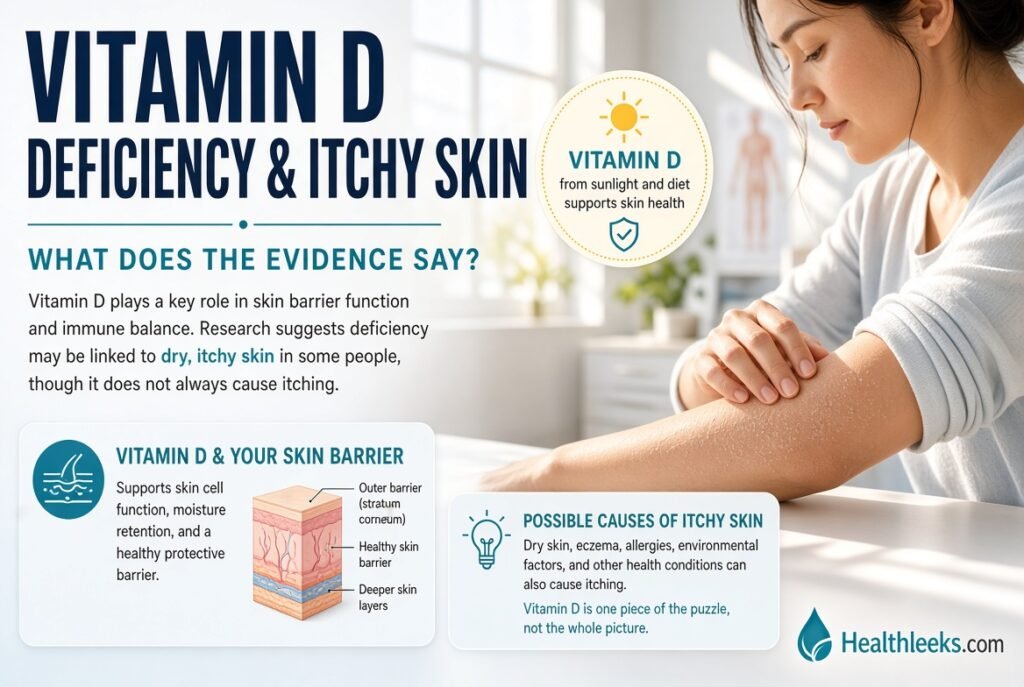
Vitamin D supports immune balance and skin health. Many articles link low vitamin D with dry, itchy, or inflamed skin, especially in winter.
The evidence is more mixed than for iron. Some studies connect low vitamin D with eczema and other itchy skin conditions, but results are not always consistent.
Why Vitamin D May Matter
Vitamin D helps regulate immune responses and supports the skin barrier. When levels are low, skin may become drier and more reactive.
Winter, dark skin tones, limited sun exposure, and indoor lifestyles all increase the risk of low levels.
Symptoms Beyond Itching
- Bone or muscle aches
- Tiredness
- Frequent illness
- Low mood
- Slow wound healing
Testing and Safe Intake
A blood test called 25-hydroxyvitamin D measures your level. Your doctor can interpret the result and suggest the right dose.
According to the National Institutes of Health Office of Dietary Supplements, the recommended daily intake for most adults is 600 IU, or 15 mcg, with 800 IU for adults over 70. The upper limit for adults is 4,000 IU per day, so avoid mega-doses unless your doctor prescribes them.
Food Sources
Fatty fish such as salmon, sardines, and mackerel are rich sources. Egg yolks, fortified milk, and fortified cereals contribute smaller amounts.
Vitamin B12 Deficiency and Itching
Vitamin B12 is essential for red blood cell formation and nerve health. A deficiency can cause fatigue and nerve symptoms, and some people notice skin changes.
Skin signs may include dryness, redness, dark patches, and in some cases itching. Itching linked to B12 is often tied to nerve irritation or anemia.
Who Is at Risk
Vegans and strict vegetarians, adults over 50, people with pernicious anemia, and those taking metformin or long-term acid-reducing medications are more likely to have low B12.
Weight-loss surgery and digestive disorders can also reduce absorption.
Signs to Watch For
- Numbness or tingling in hands and feet
- Memory problems or brain fog
- Pale or yellowish skin
- Sore, red tongue
- Weakness and fatigue
Treatment
Treatment depends on the cause. Some people need B12 injections because they cannot absorb it from food, while others do well with high-dose oral supplements.
The recommended daily intake for adults is about 2.4 mcg, according to NIH guidance. Foods include meat, fish, eggs, dairy, and fortified foods such as nutritional yeast and cereals.
Zinc Deficiency and Skin Rash
Zinc is vital for wound healing, immune function, and skin repair. Severe deficiency can cause a characteristic red, scaly, itchy rash, often around the mouth, hands, and groin.
True zinc deficiency is less common in the United States than iron deficiency, but it can occur.
Who Is at Risk
People with digestive diseases such as Crohn’s disease, those with alcohol use disorder, strict vegetarians, older adults, and people with malabsorption issues are at higher risk. A rare inherited condition called acrodermatitis enteropathica also causes severe zinc deficiency.
Other Signs
- Slow-healing wounds
- Hair loss
- Loss of taste or smell
- Frequent infections
- Diarrhea in severe cases
Safe Zinc Intake
The NIH lists a recommended daily intake of 11 mg for adult men and 8 mg for adult women, with an upper limit of 40 mg per day. Too much zinc can cause nausea and may interfere with copper absorption.
Good food sources include oysters, beef, pumpkin seeds, chickpeas, and cashews.
Vitamin A Deficiency and Dry, Itchy Skin
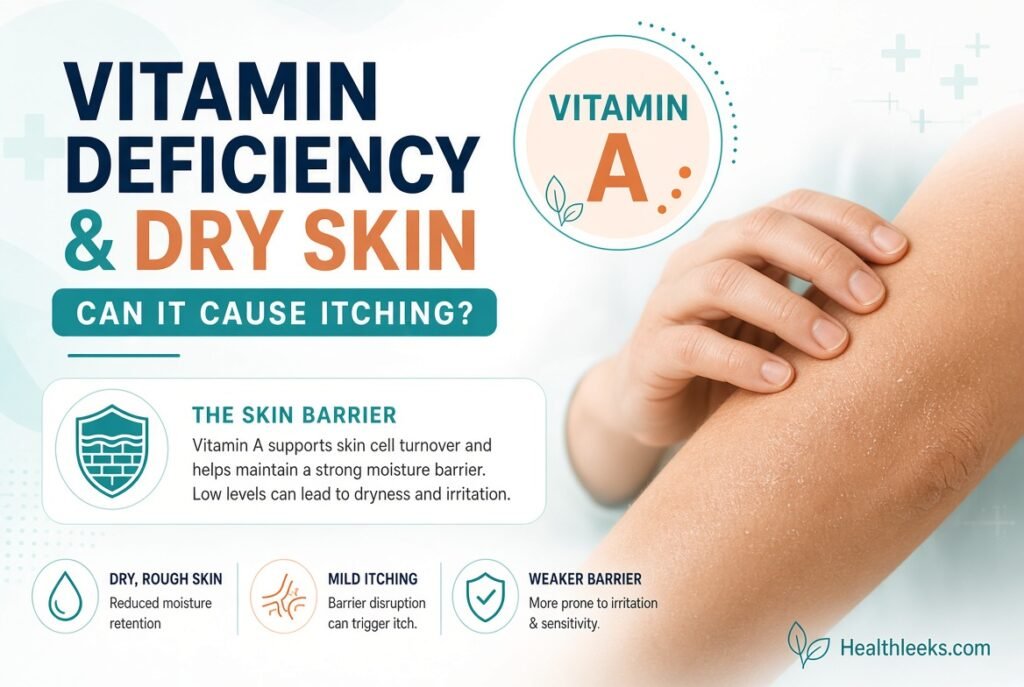
Vitamin A helps skin cells grow and repair. Without enough of it, skin can become rough, dry, and scaly.
One classic sign is follicular hyperkeratosis, where small, rough bumps form around hair follicles. These bumps can feel itchy and look like goosebumps that never go away.
Who Is at Risk
Severe vitamin A deficiency is uncommon in the United States but can occur with fat malabsorption, celiac disease, cystic fibrosis, liver disease, or very restricted diets.
Why Caution Matters
Vitamin A is fat-soluble, so excess builds up in the body. The NIH sets an upper limit of 3,000 mcg per day for preformed vitamin A in adults.
Too much can cause headaches, liver damage, and birth defects. Avoid high-dose supplements unless a doctor recommends them.
Food Sources
Beta-carotene from orange and green vegetables is converted by the body as needed. Sweet potatoes, carrots, spinach, and kale are excellent choices.
Essential Fatty Acid and Omega-3 Deficiency
Omega-3 and omega-6 fats are building blocks of the skin barrier. A shortage can lead to dry, scaly, flaky skin that itches.
Many people with diets low in fish, nuts, and seeds may not get enough omega-3 fats, although a severe true deficiency is rare.
Signs
- Dry, rough skin
- Flaky scalp
- Brittle hair and nails
- Slow wound healing
Food Sources
- Salmon, mackerel, sardines, and trout
- Walnuts
- Flaxseed and chia seeds
- Hemp seeds
Niacin (Vitamin B3) Deficiency and Pellagra
Severe niacin deficiency causes pellagra, a condition known for the “three Ds”: dermatitis, diarrhea, and dementia. The skin rash appears in sun-exposed areas and can be itchy, red, and scaly.
Pellagra is rare in countries with fortified foods, but it can occur with alcohol use disorder, malabsorption, or very limited diets.
Food Sources
Poultry, fish, peanuts, whole grains, and fortified cereals provide niacin.
Vitamin C Deficiency and Skin Changes
Severe vitamin C deficiency causes scurvy. Skin signs include dryness, easy bruising, tiny red spots around hair follicles, and slow wound healing.
Itching can occur with the dryness and follicular changes. Scurvy is rare but can affect people with extremely limited diets.
Citrus fruits, strawberries, bell peppers, kiwi, and broccoli are rich sources.
Biotin and Other B Vitamin Deficiencies
Biotin deficiency is rare, but when it occurs it can cause a scaly red rash around the eyes, nose, and mouth, along with hair loss and brittle nails.
Deficiencies of vitamin B6 and riboflavin can also cause skin inflammation around the mouth and nose. These cases are usually linked to poor absorption, alcohol misuse, or certain medications.
A Note on Biotin Supplements
High-dose biotin can interfere with some laboratory tests, including thyroid and cardiac tests. Tell your doctor if you take it.
Nutrients With Weaker Evidence
Some articles list magnesium, vitamin E, or vitamin K as causes of itching. The evidence here is limited.
These nutrients matter for overall health, but a direct, proven link to chronic itching is not well established. Do not assume they are the cause without testing and medical advice.
Nutrient Deficiencies and Itching at a Glance
The table below summarizes the most commonly discussed deficiencies. Evidence strength is a general guide, not a diagnosis.
| Deficiency | Typical Skin Effect | Other Signs | Evidence Strength |
|---|---|---|---|
| Iron | Generalized itch, dry skin | Fatigue, pallor, brittle nails | Stronger |
| Vitamin D | Dry, itchy, inflamed skin | Bone pain, low mood | Mixed |
| Vitamin B12 | Dryness, redness, dark patches | Tingling, fatigue | Moderate |
| Zinc | Red, scaly, itchy rash | Slow healing, hair loss | Moderate (severe cases) |
| Vitamin A | Rough, dry skin, follicle bumps | Night vision problems | Moderate (severe cases) |
| Omega-3 / EFAs | Dry, flaky skin | Brittle hair | Moderate |
| Niacin (B3) | Sun-exposed dermatitis | Diarrhea, confusion | Strong (severe cases) |
| Vitamin C | Dryness, bruising, follicle spots | Bleeding gums | Strong (severe cases) |
Why Am I Itchy All Over but Have No Rash?

Itching without a rash puzzles many people. Dry skin is the most common cause, especially in cold weather or after hot showers.
Deficiencies, particularly iron, can contribute, but several non-nutritional conditions deserve attention.
Possible Causes of Itching Without a Rash
- Dry skin (xerosis)
- Iron deficiency
- Thyroid disorders, both underactive and overactive
- Kidney disease
- Liver or bile duct problems
- Diabetes
- Medication side effects
- Nerve-related itch
- Pregnancy-related liver conditions
- Blood disorders such as polycythemia vera
- Rarely, certain cancers such as lymphoma
Most cases are harmless, but persistent itching without explanation is worth checking.
Itching at Night: Is a Deficiency the Cause?
Many people itch more at night. Skin temperature rises, moisture loss increases, and distractions fade, so the itch feels stronger.
Night itching can come from dry skin, eczema, scabies, allergies, or restless legs linked to low iron. If itching consistently wakes you up, tell your doctor.
Simple Night-Time Relief
- Use a thick, fragrance-free moisturizer after your evening shower
- Keep the bedroom cool
- Wear loose, breathable cotton
- Trim nails to reduce skin damage from scratching
Itchy Legs and Shins: A Common Iron and Dry Skin Clue
Itching on the lower legs is very common, especially in older adults. The skin there has fewer oil glands and dries out easily.
Low iron, poor circulation, and venous problems can add to the itch. Persistent leg itching with swelling, discoloration, or sores needs medical review.
Other Medical Causes That Mimic a Deficiency
Because itching has many causes, ruling out other conditions is essential. These are the most common ones doctors check.
Dry Skin and Eczema
Dry skin and atopic dermatitis are the leading causes of itching worldwide. A damaged skin barrier lets moisture escape and irritants enter.
Thyroid Disease
Hypothyroidism often causes dry, itchy skin, while hyperthyroidism can cause widespread itch. A simple TSH blood test helps check.
Kidney Disease
Chronic kidney disease can cause persistent, widespread itching because waste products build up in the blood. It often appears at night.
Liver Disease and Cholestasis
When bile flow is blocked, itching, especially on the palms and soles, can occur. Yellowing of the skin or eyes is a warning sign.
Diabetes
High blood sugar can dry the skin and increase infection risk. Both factors cause itching.
Medications
Opioids, certain blood pressure drugs, antibiotics, and statins can cause itching in some people. Never stop a prescription without medical advice.
Allergies and Contact Reactions
Detergents, fragrances, latex, and plants can all trigger itching. A rash usually appears in the contact area.
Skin Infestations and Infections
Scabies, lice, and fungal infections cause intense itching. Scabies is especially itchy at night and often affects finger webs and wrists.
How Doctors Diagnose the Cause of Itching
Diagnosis starts with a conversation and a physical exam. Your doctor will ask when the itch began, where it appears, what makes it worse, and which medications you take.
Common Blood Tests
| Test | What It Checks |
|---|---|
| Complete blood count (CBC) | Anemia and blood disorders |
| Ferritin and iron studies | Iron stores and iron deficiency |
| 25-hydroxyvitamin D | Vitamin D status |
| Vitamin B12 and folate | B12 and folate deficiency |
| Zinc | Zinc status |
| TSH | Thyroid function |
| Kidney function (creatinine, eGFR) | Kidney health |
| Liver panel | Liver and bile duct function |
| Fasting glucose or A1C | Diabetes |
Skin Exam and Further Testing
Your doctor may examine the skin for dryness, scratches, rashes, and signs of infestation. In some cases, a skin biopsy or allergy testing helps.
Treatment: How to Fix a Deficiency That Causes Itching

Treatment depends on the exact cause. The goal is to correct the underlying problem, not just soothe the itch.
Step 1: Confirm With Testing
Do not guess. A blood test shows which nutrient is actually low and by how much.
Step 2: Treat the Underlying Cause
Iron deficiency may need iron supplements, B12 deficiency may need injections, and vitamin D deficiency may need a prescribed dose. Your doctor will also look for the reason the level dropped.
Step 3: Improve Your Diet
A balanced diet with whole foods is the foundation. Include lean protein, vegetables, fruit, whole grains, nuts, and healthy fats.
Step 4: Support the Skin Barrier
Use a fragrance-free moisturizer within minutes of bathing. Take lukewarm showers and use gentle cleansers.
Step 5: Recheck Levels
Retesting after a few months shows whether treatment is working. Itching often improves as levels return to normal, though recovery time varies.
Foods That Support Itch-Free Skin
Food will not cure every itch, but a nutrient-rich diet supports your skin from the inside.
| Nutrient | Best Food Sources |
|---|---|
| Iron | Lean red meat, lentils, spinach, fortified cereal |
| Vitamin D | Salmon, sardines, egg yolks, fortified milk |
| Vitamin B12 | Fish, eggs, dairy, fortified foods |
| Zinc | Oysters, beef, pumpkin seeds, chickpeas |
| Vitamin A | Sweet potato, carrots, spinach |
| Omega-3 | Salmon, walnuts, flaxseed, chia |
| Vitamin C | Citrus, peppers, strawberries, kiwi |
| Niacin | Chicken, tuna, peanuts, whole grains |
Should You Take Supplements for Itchy Skin?
Supplements help when a deficiency is confirmed. They are not a shortcut for unexplained itching.
Taking nutrients you do not need can be wasteful and sometimes risky. Iron, vitamin A, vitamin D, and zinc all have upper limits.
Risks of Self-Treating
- Iron overload can damage organs and mask internal bleeding
- Excess vitamin A can harm the liver and fetus
- Too much zinc can cause nausea and reduce copper absorption
- High-dose vitamin D can raise blood calcium
- Biotin can distort lab results
Tips for Safe Supplement Use
Choose products tested by a third party, such as USP or NSF. Follow the dose your clinician recommends and recheck blood levels.
Tell your doctor about every supplement you take, including herbs and gummies.
Home Care That Helps Any Type of Itch
While you find the cause, gentle skin care can reduce itching and prevent damage from scratching.
Moisturize Like It Matters
Use a thick cream or ointment rather than a thin lotion. Apply it within three minutes after bathing to lock in moisture.
Look for ingredients such as ceramides, glycerin, petrolatum, and shea butter. Avoid heavy perfumes and dyes.
Rethink Your Shower
Hot water strips natural oils. Use lukewarm water and limit showers to about ten minutes.
Choose Mild Products
Switch to fragrance-free detergent and skip fabric softener if you suspect irritation. Wash new clothes before wearing them.
Cool Compresses
A cool, damp cloth calms intense itching. Apply it for a few minutes to the itchy area.
Avoid Scratching
Scratching damages the skin and fuels the itch-scratch cycle. Keep nails short and consider cotton gloves at night.
Humidify Dry Air
A humidifier can help in winter or in dry climates. Keep it clean to avoid mold.
Over-the-Counter Options
Some products offer temporary relief. Ask a pharmacist or doctor which one suits you.
- Hydrocortisone cream for small areas of inflamed skin, used short term
- Colloidal oatmeal baths for soothing dry skin
- Non-drowsy antihistamines if allergy is suspected
- Menthol or pramoxine lotions for cooling relief
These options calm symptoms but do not fix a deficiency.
Who Is Most at Risk of Nutrient-Related Itching?
Some groups face a higher chance of deficiency and should be more alert to persistent itching.
Vegans and Vegetarians
Plant-based eaters may run low on B12, iron, zinc, and omega-3 fats. Fortified foods and well-planned meals help, and B12 supplements are commonly recommended.
Older Adults
Absorption declines with age, and skin becomes drier. Many older adults also take medications that affect nutrient levels.
Pregnant Women
Pregnancy raises iron needs. Itching in late pregnancy can also signal a liver condition called intrahepatic cholestasis of pregnancy, so report it promptly.
People With Digestive Conditions
Celiac disease, Crohn’s disease, ulcerative colitis, and weight-loss surgery can limit absorption of iron, B12, zinc, and vitamin D.
Heavy Menstrual Bleeding
Regular blood loss depletes iron stores. Heavy periods deserve medical attention.
Children
Children with picky diets or restricted eating can develop low iron or zinc. Talk to a pediatrician before giving supplements.
Common Myths About Deficiency and Itching
The internet is full of oversimplified claims. Here are a few worth clearing up.
Myth: One Vitamin Cures All Itching
No single vitamin fixes every itch. The cause may not be nutritional at all.
Myth: Everyone With Itchy Skin Is Deficient
Most itchy skin comes from dryness, eczema, or irritants. Deficiency is just one possibility.
Myth: More Supplements Means Faster Healing
Extra nutrients beyond your need provide no benefit and can cause harm. Targeted treatment works better.
Myth: Itching Without a Rash Is Always Serious
Often it is simple dry skin. However, persistent unexplained itching should still be checked.
When to See a Doctor
Seek medical advice if itching lasts more than two weeks without improvement, or if it disrupts sleep and daily life. Chronic itching lasting six weeks or longer should be evaluated.
Red Flags That Need Prompt Care
- Itching all over with yellow skin or eyes
- Unexplained weight loss, fever, or night sweats
- Swollen lymph nodes
- Extreme fatigue or shortness of breath
- Dark urine or pale stools
- Itching with swelling, hives, or trouble breathing
- Itching in pregnancy, especially palms and soles
- Open sores or signs of infection from scratching
Call emergency services immediately if itching comes with difficulty breathing, throat swelling, or dizziness, as this may indicate a severe allergic reaction.
How to Prepare for Your Appointment
Bring clear information so your doctor can help faster.
- When the itching started and how it has changed
- Where it appears and what it feels like
- Any rash, dryness, or skin changes
- Medications, supplements, and new products
- Diet details, especially if you avoid certain foods
- Family history of thyroid, autoimmune, or blood disorders
A symptom diary with photos can be very helpful.
Preventing Nutrient-Related Itching
Prevention starts with a varied diet and good skin care habits.
Eat a Balanced Diet
Include protein, colorful vegetables, fruit, whole grains, nuts, seeds, and healthy fats. Variety is the best protection against deficiency.
Get Regular Checkups
Routine blood tests can catch low iron, vitamin D, and B12 before symptoms start, particularly if you are in a higher-risk group.
Get Safe Sun Exposure
Brief sun exposure supports vitamin D, but protect your skin from sunburn. Ask your clinician about the right balance for your skin type and location.
Stay Hydrated
Water supports skin hydration, though it will not replace moisturizers or treat deficiency.
Limit Alcohol
Heavy alcohol use interferes with absorption of several nutrients, including B vitamins and zinc.
Trusted Sources for Further Reading
For accurate, up-to-date information, consult these respected organizations:
- National Institutes of Health Office of Dietary Supplements
- American Academy of Dermatology
- Mayo Clinic
- Cleveland Clinic
- National Institute of Diabetes and Digestive and Kidney Diseases
- MedlinePlus from the National Library of Medicine
This article is for general education and does not replace advice from a qualified healthcare professional.
Also Read:
- Why Am I Itchy All Over but No Rash?
- What Causes Sudden Skin Itching: Triggers & Treatment Options
- Tingling in Ear: Causes, Treatment, & When to Worry
- Why Do I Feel Shaky When I Wake Up?
- Why Do I Have Diarrhea Every Morning?
- What Do Dehydration Headaches Feel Like?
- Body Nutrition Tips
- Is Zero Vitamin Water Good for You?
- Superfood Guide
- Can Constipation Cause Vomiting?
- Can UTI Cause Bloating and Gas?
- Untreated Sinus Infection
- Why Does My Ear Keep Popping?
- How to Treat Green Nails at Home
- Hyaline Casts in Urine
- Why Do People Die in Their Sleep?
- Spotting Between Periods: Causes, Diagnosis & Treatment
- Pulled Chest Muscle: Causes, Signs, & When to Worry
- Green Light Therapy for Migraines
- Does Medicare Cover Bone Density Tests?
- What to Eat After Throwing Up: Safe Foods for Quick Recovery
- Hibiscus Tea for Period Cramps
- What Does Poop Look Like With Diverticulitis?
- The Importance of Clinical Correlation
Frequently Asked Questions (FAQs)
What deficiency causes skin itching the most?
Iron deficiency is the most commonly documented nutrient link to generalized itching. Vitamin D, B12, zinc, vitamin A, and essential fatty acids may also contribute, mainly through dry or inflamed skin.
Can low iron cause itching all over the body?
Yes. Some people with iron deficiency, even without anemia, develop widespread itching without a rash. Itching often improves after iron levels return to normal.
Can vitamin D deficiency cause itchy skin?
It may contribute to dry, itchy, or inflamed skin, but studies show mixed results. A blood test can confirm whether your level is low.
Does vitamin B12 deficiency cause itching?
It can be associated with itching, dryness, and skin discoloration, often alongside fatigue or tingling. Diagnosis needs a blood test.
Can zinc deficiency make skin itch?
Severe deficiency can cause a red, scaly, itchy rash around the mouth, hands, and groin. It is uncommon but possible in people with absorption problems.
Can vitamin A deficiency cause itchy skin?
It can cause rough, dry skin and follicle bumps that may itch. Severe deficiency is rare in the United States.
Which vitamin is good for itchy skin?
No single vitamin works for everyone. If testing shows a deficiency, correcting it may help. Otherwise, moisturizing and treating the real cause matter more.
Can dehydration cause itchy skin?
Dehydration can contribute to dry skin, which may itch. Moisturizers and gentle bathing usually help more than drinking extra water alone.
Why is my skin itchy but there is no rash?
Dry skin is the most common reason. Other causes include iron deficiency, thyroid disease, kidney or liver problems, diabetes, medications, and nerve conditions.
Can anemia cause itching?
Iron deficiency anemia can cause itching in some people. Other blood conditions, such as polycythemia vera, can also cause itching, especially after warm showers.
Can low magnesium cause itching?
Evidence is limited. Magnesium is important for health, but a direct link to chronic itching is not well established.
Can omega-3 deficiency cause dry itchy skin?
Low intake of essential fatty acids may contribute to dry, flaky skin. Eating fish, walnuts, flax, and chia can support the skin barrier.
How do I know if my itching is from a deficiency?
You cannot tell by symptoms alone. Blood tests ordered by a doctor can show whether a nutrient is low.
How long does it take for itching to improve after treating a deficiency?
It varies. Some people notice improvement within weeks, while others need a few months as levels and skin recover.
Is it safe to take iron for itching without testing?
No. Excess iron can be harmful, and low iron may signal hidden blood loss that needs investigation. Test first.
What test checks for deficiency-related itching?
Doctors commonly order a CBC, ferritin, vitamin D, B12, folate, zinc, thyroid, kidney, and liver tests, depending on your symptoms.
Can stress cause itching?
Yes. Stress can worsen itching and trigger flare-ups in conditions such as eczema. It can also cause itching without any skin disease.
Why does my skin itch more at night?
Skin loses more moisture at night, body temperature rises, and fewer distractions make itching noticeable. Dry skin, eczema, scabies, and low iron can all play a part.
When should I worry about itching?
See a doctor if itching lasts more than two weeks, spreads, disturbs sleep, or comes with yellow skin, fever, weight loss, or extreme fatigue. Seek emergency help for breathing difficulty or facial swelling.
Can itching be a sign of a serious disease?
Occasionally. Persistent generalized itching can accompany liver, kidney, thyroid, or blood disorders and, rarely, certain cancers. A medical evaluation helps rule these out.
Conclusion
What deficiency causes skin itching? The most reliable answer is iron, with vitamin D, vitamin B12, zinc, vitamin A, essential fatty acids, and niacin also playing roles in certain people. Most of these work by drying the skin, weakening its barrier, or irritating nerves.
Still, deficiency is only one possible explanation. Dry skin, eczema, thyroid problems, kidney or liver disease, diabetes, medications, and allergies are all common causes that need to be considered.
The smartest next step is simple. Track your symptoms, moisturize well, and ask your doctor about blood tests before buying supplements. Treat the true cause, and the itching has the best chance of going away for good.
If your itching is intense, lasts more than a few weeks, or comes with warning signs such as yellow skin, weight loss, or fatigue, do not wait. Early medical care protects both your comfort and your health.