

It starts quietly. A faint prickle between your fingers at dinner. A restless itch on your waist while you watch TV. By midnight, your arms, back, and thighs are crawling, and no amount of scratching makes it stop.
You check the mirror and find tiny bumps, or maybe nothing at all. That is when the question appears: could this be an infection? Which Infection Causes Itching All Over the Body?
The honest answer is sometimes yes. Several infections can make the whole body itch, and some of them hide behind skin that looks almost normal.
Table of Contents
Which Infection Causes Itching All Over the Body?

The most common infection-type cause of widespread itching is scabies, a skin infestation caused by a tiny mite. It produces intense itching that is usually worse at night and can spread across much of the body.
Other infections can also cause whole-body itching, including body lice, chickenpox, chronic hepatitis B or C, certain parasitic infections, and widespread fungal or bacterial skin infections.
The Main Suspects at a Glance
| Cause | Type | Typical Clue |
|---|---|---|
| Scabies | Mite infestation | Night itching, burrows, family members itchy too |
| Body lice | Insect infestation | Itching where clothing seams touch skin |
| Chickenpox | Viral infection | Itchy blisters in waves, often with fever |
| Hepatitis B or C | Viral liver infection | Itching with fatigue, dark urine, or yellow skin |
| Parasitic worms | Parasitic infection | Travel history, itchy tracks, digestive symptoms |
| Fungal infections | Fungal infection | Ring-shaped or scaly patches |
| Bacterial skin infections | Bacterial infection | Pus, crusts, tender red bumps |
One Important Point
Infection is only one of many reasons the whole body itches. Dry skin, allergies, medicines, and liver, kidney, thyroid, or iron problems are all common. A doctor should sort out which one applies to you.
Why Do Infections Make the Whole Body Itch?
Infections trigger itch in several different ways. Knowing the mechanism helps explain why symptoms can appear far from the original problem.
An Allergic Reaction to the Invader
In scabies, the itch is mainly an allergic reaction to the mites, their eggs, and their waste. The Merck Manual notes that people can have severe itching even when only a few mites are present.
This also explains why itching can continue for weeks after the mites are dead.
Inflammation and Histamine
Many viral and bacterial infections release chemicals that inflame the skin. Histamine and other signals activate itch nerves, which is why some rashes itch intensely.
Bile Salts and the Liver
When a liver infection slows the flow of bile, substances build up in the blood and skin. Researchers link this build-up to itching, often without any visible rash.
Nerve Irritation
Some infections irritate nerves directly. Itching, tingling, or burning can then appear in areas that look normal.
The Scratch Cycle
Scratching damages the skin, which causes more inflammation and more itch. It also opens the door to secondary bacterial infection.
Scabies: The Classic Cause of Itching All Over the Body

If a single infection deserves the top spot, it is scabies. The World Health Organization estimates that at least 200 million people worldwide have scabies at any one time.
It is not a sign of poor hygiene. The Merck Manual states clearly that scabies is not related to poor hygiene, and that crowded living conditions are the main risk factor.
What Is Scabies?
Scabies is caused by the mite Sarcoptes scabiei. The female mite burrows into the top layer of skin and lays eggs.
The body’s reaction to the mites and their products causes the intense itching.
How Scabies Spreads
Scabies spreads mainly through prolonged skin-to-skin contact. It can move through a whole household, a dormitory, a daycare, or a care facility.
Mites can sometimes spread through shared bedding, towels, or clothing, although they do not survive long away from the human body.
Symptoms of Scabies
The hallmark symptom is intense itching, usually worse at night. Small red bumps, thin wavy burrow lines, and scratch marks often appear too.
In adults, the rash often starts in the webs between the fingers, the wrists, inner elbows, underarms, belt line, and buttocks. The Merck Manual notes that bumps do not usually appear on the face in adults.
How Long Before Symptoms Appear?
After a first exposure, symptoms typically begin around 4 to 6 weeks later. During that time, the person can already spread scabies to others.
If you have had scabies before, symptoms can appear much faster, often within a few days.
Scabies Without Much of a Rash
In older adults, scabies can cause intense itching with very mild skin changes. This makes it easy to miss and a challenge for doctors to diagnose.
If you are itchy all over but see almost nothing on the skin, read this guide on why you may be itchy all over but have no rash.
Crusted Scabies
Crusted scabies, sometimes called Norwegian scabies, is a severe form. It tends to affect people with weakened immune systems, including people with advanced HIV or those taking immune-suppressing medicines.
It causes thick, crusted skin and can spread very easily. Notably, the crusted areas may not itch much at all.
How Doctors Diagnose Scabies
Doctors usually diagnose scabies from the pattern of itching and the look of the bumps and burrows. Sometimes they use a magnifying lens or scrape a bump and examine it under a microscope.
A household member with the same itch is a strong clue.
How Scabies Is Treated
Scabies does not go away on its own. Treatment kills the mites, and it usually involves a prescription medicine.
- Permethrin cream, applied from the neck down and washed off after 8 to 14 hours, then repeated a week later.
- Spinosad lotion for older children and adults.
- Oral ivermectin, taken in two doses a week apart, for people who cannot use creams or have severe infestations.
In the United States, there are no over-the-counter products that treat scabies, according to California Department of Public Health guidance. Lice shampoos are not a substitute.
Why the Itch Continues After Treatment
Even after the mites die, itching and bumps can last two to four weeks. The skin is still reacting to the mite remnants.
A doctor may suggest antihistamines or, after the mites are gone, a mild steroid cream.
Treating the Whole Household
Close contacts should be treated at the same time, even if they have no symptoms. Otherwise, mites bounce back and forth between family members.
Wash bedding, towels, and recent clothing in hot water and dry them on high heat. Items that cannot be washed can be sealed in a plastic bag for at least three days.
Scabies Mistakes to Avoid
- Using steroid creams before treatment, which can hide the signs and make scabies harder to recognize.
- Treating only the person with symptoms.
- Skipping the second treatment a week later.
- Assuming it is eczema and never getting examined.
Lice: Another Cause of Itching That Can Spread Across the Body
Lice are tiny insects that live on humans and feed on blood. Three types affect people: head lice, body lice, and pubic lice.
Head Lice
Head lice live on the scalp and cause itching there. They do not spread disease, and they rarely cause itching all over the body.
Body Lice
Body lice live in clothing seams and move to the skin to feed. Itching is common around the waist, armpits, and shoulders, where clothing presses against the body.
Body lice are linked to crowding and limited access to laundry. Of the three types, body lice are the one known to spread certain diseases.
Pubic Lice
Pubic lice usually cause itching in the genital area. They spread mainly through close contact.
How Lice Are Diagnosed and Treated
Doctors look for lice or eggs, called nits, on the hair or in clothing seams. Treatment depends on the type and may include medicated lotions and thorough washing of clothes and bedding.
Bed Bugs, Fleas, and Mites: Itchy but Not True Infections

Some insect problems cause widespread itchy bites without being infections. They are worth knowing because they mimic scabies.
Bed Bugs
Bed bug bites often appear in lines or clusters on skin exposed during sleep. They itch, but the insects live in mattresses and furniture, not in the skin.
Fleas
Flea bites are usually small, itchy bumps around the ankles and lower legs. Pets are the common source.
Animal Mites
Mites from animals can cause temporary itching in humans. They typically do not survive long or need the same treatment as scabies.
Chickenpox and Other Viral Infections That Itch
Viral illnesses can cause itchy rashes across the body. Most of them come with other symptoms, such as fever or fatigue.
Chickenpox
Chickenpox is the best-known itchy viral rash. It causes clusters of itchy, fluid-filled blisters that appear in waves, often with fever and tiredness.
The itch can be intense. Children usually recover at home, but adults, pregnant people, newborns, and people with weak immune systems can become seriously ill and need medical advice quickly.
Shingles
Shingles is caused by the same virus as chickenpox. It usually appears as a painful or tingling band of blisters on one side of the body.
It is usually localized rather than all over, but the itching, burning, or tingling can be intense.
Other Viral Rashes
Several viral infections cause mild to moderate itchy rashes. Examples include some mosquito-borne illnesses such as Zika and certain childhood viral rashes.
These usually appear with fever, joint pain, red eyes, or fatigue. Recent travel or exposure to sick contacts is an important clue.
Post-Viral Itching
Some people notice itching after a viral illness, even once the rash is gone. The skin and nerves can take time to settle.
Hepatitis B and C: How Liver Infections Cause Itching
Chronic viral hepatitis is one of the less obvious infectious causes of itching all over the body. The itch often appears without a visible rash.
Why Hepatitis Can Cause Itching
When the liver is inflamed, bile flow can slow down. Researchers describe a link between this problem, called cholestasis, and chronic itching in hepatitis C.
Bile acids and other substances build up in the blood and are believed to trigger itch nerves. The exact mechanism is still being studied.
How Common Is Itching in Hepatitis?
Estimates vary between studies. One Polish study of people with chronic hepatitis B or C found that about one in five had pruritus.
A French study found chronic itching in 15% of people with hepatitis C compared with 4% of comparison patients with other liver conditions. These are small studies, so the numbers should be read as general guidance.
What Hepatitis Itching Feels Like
It is often described as deep, burning, or pinching, and it tends to be worse in the evening or at night. In many liver-related conditions, the palms and soles are affected.
There may be no rash at all, only scratch marks.
Other Hepatitis Symptoms to Watch For
Itching plus any of the following should prompt a medical check:
- Yellowing of the skin or eyes
- Dark urine
- Pale or clay-colored stools
- Unusual fatigue
- Loss of appetite
- Pain in the upper right abdomen
Testing for Hepatitis
Doctors use blood tests to check liver enzymes and bilirubin. They also test for hepatitis B and C infection.
Early testing matters, because hepatitis C is now curable with modern antiviral medicines.
Can Hepatitis Treatment Cause Itching?
Some research notes that itching can also occur as a side effect of hepatitis treatment. Always tell your doctor about new symptoms after starting any medicine.
HIV and Itchy Skin

Skin problems are very common in people with HIV, and itching is one of them. Itching by itself does not mean someone has HIV.
Why HIV Can Lead to Itching
A weakened immune system makes people more prone to skin infections, inflammatory rashes, and severe forms of scabies. Dry skin and medicine reactions also play a role.
Which Skin Conditions Are Common?
Examples include fungal infections, seborrheic dermatitis, and itchy bumpy eruptions. Crusted scabies is a particular concern in people with advanced immune suppression.
What to Do
Anyone with persistent, unexplained itching and a possible exposure should talk with a doctor about testing. HIV testing is simple, confidential in most settings, and widely available in the United States.
Parasitic Worms and Travel-Related Infections
Some parasitic infections cause itching, especially in people who have traveled or lived in tropical and subtropical regions. These are less common in the United States but important to know.
| Infection | How It Itches | Clue |
|---|---|---|
| Pinworm | Itching around the anus, worse at night | Mostly children and households |
| Cutaneous larva migrans | Winding, itchy red tracks on the skin | Walking barefoot on contaminated sand or soil |
| Swimmer’s itch | Itchy bumps on skin exposed to lake water | Appears after freshwater swimming |
| Strongyloidiasis | Itchy rash plus stomach symptoms | Exposure to contaminated soil |
| Schistosomiasis | Itching or hives after freshwater exposure | Travel to affected regions |
| Onchocerciasis | Severe itching and skin changes | Long-term residence in affected regions |
Pinworm
Pinworm infection causes itching around the anus, especially at night. It is localized, not whole-body, but the disturbed sleep and scratching can spread irritation.
Swimmer’s Itch
Swimmer’s itch is an allergic reaction to certain parasites released by birds and mammals into freshwater. It causes itchy bumps on exposed skin and usually fades within days.
Creeping Eruption
This infection comes from larvae in contaminated soil or sand. It causes intensely itchy, snake-like tracks on the skin, most often on the feet or buttocks.
Other Tropical Infections
Infections such as onchocerciasis and schistosomiasis can cause itching that spreads. Anyone with a history of travel and unexplained itching should tell their doctor about it.
How Doctors Test for Parasites
Tests may include stool exams, blood counts that show higher levels of eosinophils, and specific blood tests. There is no single test that finds every parasite.
Fungal Infections That Itch
Fungal skin infections are common and usually itchy. They typically appear as patches, not true all-over itching, but they can be widespread.
Ringworm
Ringworm, or tinea corporis, causes ring-shaped scaly red patches. The name is misleading, since no worm is involved.
Tinea Versicolor
This yeast-related condition produces discolored patches, mostly on the trunk and shoulders. It causes mild itching in some people.
Candida Skin Infections
Yeast infections thrive in warm, moist skin folds. They cause red, itchy rashes under the breasts, in the groin, and between skin folds.
Athlete’s Foot and Jock Itch
These infections can spread to other parts of the body, especially with scratching. Treating them early prevents spread.
Nail Infections
Nail problems, including bacterial discoloration such as green nails, can accompany skin irritation. Here is a helpful guide on how to treat green nails at home.
Treatment
Mild fungal infections respond to over-the-counter antifungal creams. Widespread or stubborn cases need a doctor and sometimes oral medicine.
Bacterial Skin Infections and Secondary Infection From Scratching
Bacteria rarely cause true whole-body itching. They often make an existing itch worse.
Impetigo
Impetigo causes honey-colored crusts and itchy sores, especially in children. It spreads easily through contact.
Folliculitis
Folliculitis is an infection or irritation of hair follicles. It causes itchy red bumps, sometimes after hot tub use.
Secondary Infection
Scratching breaks the skin and allows bacteria to enter. This is a common complication of scabies, chickenpox, and eczema.
Warning signs include spreading redness, warmth, pus, fever, or red streaks. For a clear look at how serious a skin infection can become, read this guide on whether a belly button infection can kill you.
Infection or Not? Other Causes of Itching All Over the Body
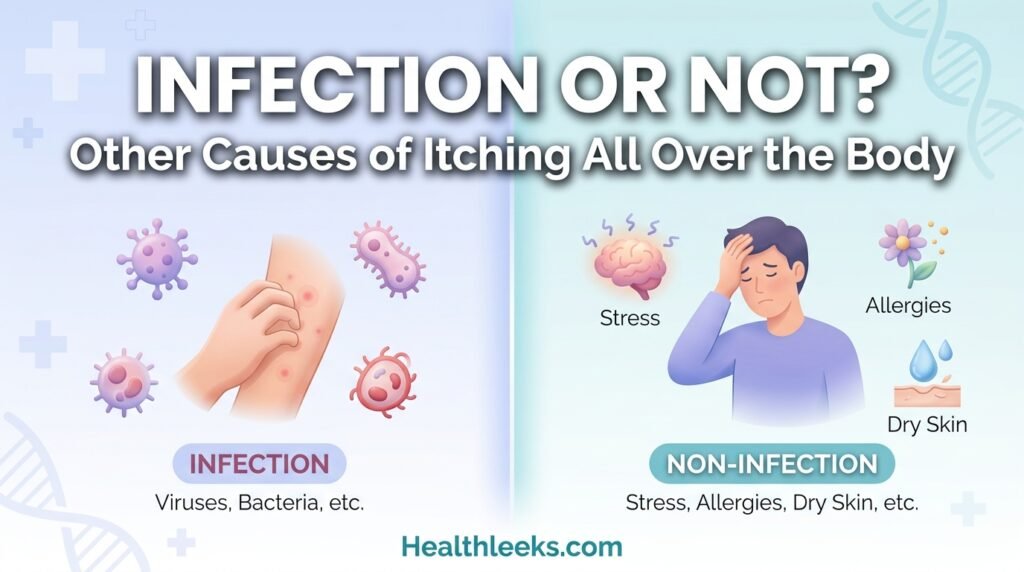
Many people assume itching means infection. In reality, non-infectious causes are far more common.
| Possible Cause | Clue |
|---|---|
| Dry skin | Worse in winter, flaky skin, relief with moisturizer |
| Eczema | Red, scaly patches, history of allergies |
| Hives | Raised welts that come and go within hours |
| Medication reaction | Itching began after starting a new drug |
| Iron deficiency | Fatigue, pale skin, brittle nails |
| Thyroid disease | Weight changes, heat or cold intolerance |
| Kidney disease | Fatigue, swelling, changes in urination |
| Liver disease | Yellow skin, dark urine, itching without rash |
| Diabetes | Increased thirst, frequent urination, dry skin |
| Pregnancy-related cholestasis | Intense itching on palms and soles in late pregnancy |
| Anxiety or stress | Itching that worsens during stressful periods |
Nutritional Causes
Low iron, vitamin D, or B12 can sometimes be linked to itching. This guide explains what deficiency causes skin itching.
Sudden Itching Without a Clear Reason
If the itching began suddenly, triggers such as new soaps, medicines, or foods are worth checking. Here is a helpful breakdown of what causes sudden skin itching.
Clues That Point Toward an Infection
No symptom proves an infection, but certain patterns raise the odds. Use these clues to prepare for a doctor’s visit.
Itching Worse at Night
Scabies and liver-related itching both tend to worsen at night. Dry skin can too, so night itching alone is not proof.
If sleepless nights are your main problem, read about unexplained itching all over the body at night.
Other People Are Itchy
Itching in a partner, child, roommate, or classmate strongly suggests an infestation such as scabies or lice.
Burrows or Bumps in Typical Spots
Bumps between the fingers, on the wrists, around the waist, or on the buttocks raise suspicion for scabies.
Fever, Fatigue, or Illness
A rash with fever points toward a viral infection. Itching with fatigue, jaundice, or dark urine points toward the liver.
Travel or Exposure History
Recent travel, freshwater swimming, barefoot walking on beaches, or stays in crowded housing are all important clues.
Itching That Moves
If the itch jumps from place to place, there are many possible causes. This guide on what causes itching that moves around the body covers them in detail.
Which Tests Do Doctors Use?
The right test depends on the symptoms. A good doctor will start with questions and an examination before ordering anything.
Skin Examination and Scraping
For suspected scabies or fungus, a doctor may scrape the skin and look at it under a microscope. Magnifying tools can also reveal burrows.
Blood Tests
Common blood tests include a complete blood count, liver tests, kidney tests, thyroid tests, iron levels, and blood sugar. They help find non-skin causes of itching.
Infection Tests
Depending on risk factors, doctors may order hepatitis B and C tests, HIV tests, or tests for parasites. They may also take a swab for bacteria.
Allergy Evaluation
If hives or a medicine reaction is possible, an allergist may help identify triggers.
Treatment Overview by Cause
Treatment depends entirely on the cause. This table shows the general approach, but only a clinician can choose the right one for you.
| Cause | Typical Treatment |
|---|---|
| Scabies | Prescription permethrin, spinosad, or ivermectin; treat household |
| Lice | Medicated lotions, washing clothing and bedding |
| Chickenpox | Supportive care; medicines for high-risk people |
| Hepatitis B or C | Antiviral therapy managed by a specialist |
| Fungal infections | Topical or oral antifungals |
| Bacterial infections | Topical or oral antibiotics |
| Parasitic worms | Specific antiparasitic medicines |
| Dry skin or eczema | Moisturizers, topical steroids, trigger avoidance |
Do Not Guess the Medicine
Using the wrong treatment can delay recovery and worsen the problem. Steroid creams, for example, can hide scabies without curing it.
Avoid Unsafe Remedies
Do not use veterinary medicines intended for animals. Doses and formulas are different, and they can be dangerous for people.
Safe Home Relief While You Wait for Answers
While you see a doctor, you can calm the itch and protect your skin. These steps do not cure infection, but they reduce misery.
Keep Skin Cool
A cool compress or a lukewarm bath can quiet itching. Hot showers tend to make it worse.
Moisturize Often
Apply a fragrance-free moisturizer within minutes of bathing. Thick creams and ointments work better than thin lotions.
Trim Your Nails
Short nails reduce skin damage from scratching. Cotton gloves at night can also help.
Wear Loose Cotton Clothing
Tight or scratchy fabrics trigger itching. Soft, breathable fabrics are gentler.
Consider an Oral Antihistamine
Some people find that antihistamines help them sleep. Sedating types can cause drowsiness, so ask a pharmacist or doctor which one is safe for you.
Avoid Known Irritants
Skip harsh soaps, perfumes, and strong detergents. Choose mild, fragrance-free products.
Preventing the Spread of Infectious Itching
If you suspect a contagious cause, act early. Quick steps protect family members.
Limit Close Contact
Avoid sharing beds, towels, and clothing until a doctor has examined you. Skin-to-skin contact spreads scabies and lice.
Wash and Dry Hot
Wash bedding and clothing in hot water and dry on high heat. Seal items that cannot be washed in a plastic bag for several days.
Treat Everyone at Once
When a doctor recommends treatment for scabies, family members and close contacts usually need it too. Doing it together prevents reinfection.
Keep Hands Clean
Wash hands often, especially after scratching or touching affected skin.
Special Groups: Children, Older Adults, Pregnancy, and Travelers
Some people need extra care when itching appears. Certain infections are more serious in these groups.
Children
Children often get scabies, lice, chickenpox, and impetigo. They need dosing that fits their age and weight, so a pediatrician should guide treatment.
Older Adults
Older adults have drier skin and may have subtle scabies. Persistent itching without a rash should always be evaluated.
Pregnancy
Itching in pregnancy can be harmless, but intense itching on the palms and soles in late pregnancy needs prompt medical attention. Pregnant people should speak to a clinician before using any treatment.
People With Weak Immune Systems
Infections can behave unusually and spread faster. Crusted scabies and severe skin infections are of particular concern.
Travelers
Itching after a trip abroad deserves a mention to the doctor. Travel-related parasites and mosquito-borne illnesses may be involved.
When to See a Doctor
Many cases of itching are minor. Some are not.
See a Doctor Soon If
- Itching lasts more than two weeks.
- Itching disrupts sleep or daily life.
- You have a rash that is spreading.
- Other family members are itchy.
- You have no obvious cause, such as dry skin or a new soap.
- You have yellow skin or eyes, dark urine, or pale stools.
- You have unexplained weight loss, night sweats, or persistent fever.
Get Urgent Care If
- You have trouble breathing, swelling of the face or throat, or dizziness with itching or hives.
- Your skin is red, hot, swollen, and spreading quickly.
- You have a high fever with a widespread rash.
- You are pregnant and have severe itching with other symptoms.
Questions to Ask Your Doctor
Preparing a few questions helps you get more from the appointment. Bring a short symptom timeline too.
Helpful Questions
- Could this be scabies or another infestation?
- Should I be tested for liver or thyroid problems?
- Do my family members need treatment?
- Which medicines are safe for me?
- How long until the itching should improve?
What to Bring
Bring a list of medicines and supplements, recent travel, and any new soaps or products. A photo of the rash on a bad day can be very helpful.
Common Myths About Infection and Itching
Myths delay treatment and create unnecessary shame. Clearing them up helps people seek help sooner.
Myth: Scabies Means You Are Dirty
Scabies is not caused by poor hygiene. It spreads through close contact and can affect anyone.
Myth: No Rash Means No Infection
Some infections, including liver infections and mild scabies, cause itching with little or no visible rash.
Myth: Itching Always Means an Allergy
Allergies are common, but infection, liver disease, and nutrition problems can all cause itching.
Myth: Natural Remedies Cure Scabies
Home remedies may soothe the skin, but scabies mites need proven medicines to be killed.
Mistakes to Avoid
Small mistakes can stretch a short problem into months. Keep these in mind.
Waiting Too Long
Scabies and other infections spread while you wait. Early treatment protects those around you.
Stopping Treatment Early
Finish the full course, including repeat doses when advised. Stopping early can allow the infection to return.
Scratching Aggressively
Scratching worsens inflammation and increases infection risk. Use cold compresses and distraction instead.
Self-Diagnosing From Photos
Many itchy conditions look alike. A clinician can compare patterns and run tests that photos cannot.
A Simple Action Plan for Itching All Over the Body
If you are itchy now, a short plan helps you move forward without panic.
Step 1: Look for Clues
Check for burrows, bumps, fever, jaundice, or itchy household members. Note when the itching is worst.
Step 2: Protect Your Skin
Moisturize, cool the skin, trim your nails, and avoid hot showers.
Step 3: Limit Contact
Avoid sharing bedding and towels until you know the cause.
Step 4: See a Clinician
Book an appointment, especially if the itching lasts over two weeks or comes with warning signs.
Step 5: Follow Through
Use prescribed treatments exactly, treat close contacts when advised, and attend follow-up visits.
Trusted Sources for Further Reading
Reliable information is easier to find when you know where to look. These organizations publish clear, evidence-based guidance.
- Centers for Disease Control and Prevention (CDC), for scabies, lice, and parasitic infections
- World Health Organization (WHO), for scabies and global infection data
- Merck Manual Consumer Version, for symptoms, diagnosis, and treatment
- Cleveland Clinic, for plain-language disease guides
- American Academy of Dermatology, for skin conditions and treatment
Also Read
- What Causes Itching That Moves Around the Body? Causes, Clues, Tests and Treatment 2026
- Unexplained Itching All Over Body at Night: Causes, Tests, Relief and When to Worry 2026
- What Deficiency Causes Skin Itching? Vitamins, Minerals, Symptoms, Tests and Treatment 2026
- Why Am I Itchy All Over but No Rash? Causes, Relief & When to See a Doctor 2026
- What Causes Sudden Skin Itching: Triggers & Treatment Options
- What Happens If a Sinus Infection Goes Untreated?
- Can UTI Cause Bloating and Gas? Symptoms & Relief Tips
- Can a Belly Button Infection Kill You? Treatment & Warning Signs
- How to Treat Green Nails at Home
- Tingling in Ear: Causes, Treatment, & When to Worry
- Why Do I Feel Shaky When I Wake Up? Causes & Solutions
- Hyaline Casts in Urine: Normal vs Abnormal and Care
- Why Do People Die in Their Sleep? The Hidden Truth
- What Does Poop Look Like With Diverticulitis?
- Can Constipation Cause Vomiting? Guide for Patients with Chronic Conditions
- Why Do I Have Diarrhea Every Morning? Causes & Relief
- What to Eat After Throwing Up: Safe Foods for Quick Recovery
- Spotting Between Periods: Causes, Diagnosis & Treatment
- Why Does My Ear Keep Popping When I Swallow? Relief Tips
- What Do Dehydration Headaches Feel Like?
- Body Nutrition Tips: The Complete Guide to Fueling Your Fitness Journey
- Superfood Guide LWSpeakCare: A Complete Path to Healthier Living
- LWSpeakCare Self Care Tips from LetWomenSpeak for Everyday Wellness
- TheSpoonAthletic: Fitness, Nutrition & Recovery
Frequently Asked Questions (FAQs)
Which infection causes itching all over the body?
Scabies is the most common infection-type cause. Body lice, chickenpox, chronic hepatitis B or C, and some parasitic infections can also cause widespread itching.
Can a virus cause itching all over the body?
Yes. Chickenpox is the classic example. Chronic viral hepatitis can also cause itching through its effect on the liver.
Can hepatitis cause itching all over the body?
It can. Liver inflammation may slow bile flow, which is linked to itching, often worse at night and sometimes without a rash.
Does scabies itch all over the body?
It can spread widely, but it often begins in the finger webs, wrists, waist, and buttocks. The itching is typically worse at night.
Why is scabies itching worse at night?
The reason is not fully understood. Warmth in bed and fewer distractions may make the itch more noticeable.
Can you have scabies without a rash?
Yes, especially older adults. They may have intense itching with only mild skin changes.
How long does scabies itching last after treatment?
It can continue for two to four weeks after the mites are killed. Persistent itching beyond that should be rechecked by a doctor.
Is scabies a sign of poor hygiene?
No. Scabies spreads through close contact and affects people of all backgrounds and hygiene habits.
Can a fungal infection cause itching all over?
Fungal infections usually cause patchy itching, but they can be widespread in some people, especially those with weak immunity.
Can a bacterial infection cause all-over itching?
Bacteria rarely cause all-over itching by themselves. They often complicate itching caused by something else through scratching.
Can HIV cause itching all over the body?
HIV can lead to skin conditions and infections that itch. Itching alone does not mean a person has HIV, but testing is reasonable if there is risk.
Can parasites cause itching all over the body?
Some can. Scabies and lice are parasites, and certain worm infections can cause itching, especially after travel.
Can an infection cause itching without a rash?
Yes. Liver-related infections and mild scabies can cause itching with little or no visible rash.
What blood tests are used to find the cause of itching?
Doctors may check liver, kidney, and thyroid function, iron levels, blood sugar, and a complete blood count. They may also test for hepatitis B, hepatitis C, or HIV.
Can I treat scabies with over-the-counter products?
In the United States, there are no over-the-counter products that treat scabies. Prescription permethrin, spinosad, or ivermectin are used instead.
Does everyone in the house need treatment for scabies?
Close contacts are usually treated at the same time, even without symptoms. This prevents reinfection.
How do I tell scabies from eczema?
Scabies often itches intensely at night and may affect others in the home. Burrows and bumps in the finger webs or wrists are clues, but a doctor should confirm it.
When is itching an emergency?
Seek urgent care for trouble breathing, facial or throat swelling, a rapidly spreading red and painful rash, or a widespread rash with high fever.
Can stress cause itching all over the body?
Yes. Stress and anxiety can trigger or worsen itching, although infection and medical causes should be ruled out first.
Should I see a doctor for itching all over the body?
See a doctor if itching lasts more than two weeks, disrupts sleep, spreads, or comes with symptoms such as jaundice, fever, or weight loss.
Conclusion
Itching all over the body is a symptom, not a diagnosis. Scabies is the infection most often behind it, but lice, chickenpox, liver infections such as hepatitis B and C, parasites, and fungal or bacterial problems can all play a part.
The details are what point to the answer: when the itch is worst, whether others at home are scratching too, what the skin looks like, and whether the liver, travel, or a weakened immune system is involved. Gentle skin care can help in the meantime, but only a proper exam and, when needed, tests can confirm the cause.
If the itch has lasted more than two weeks, keeps you awake, or comes with warning signs, book a visit. Finding the real cause is the fastest way to finally stop scratching.